In short
Bleeding after birth, called lochia, is normal for a few weeks. It starts red and fairly heavy, turns pink and then brown, and usually stops after 6 to 8 weeks, though it can last longer. Soaking two pads an hour for more than 1 to 2 hours, feeling faint, a fever or a foul smell are not normal.
Emergency if: Your bleeding is sudden and very heavy, soaks through 2 pads an hour for more than 1 to 2 hours, or is gushing with large clots; you feel faint, dizzy or weak, your skin is pale or clammy, or your heart is pounding; or you have chest pain, gasping for air, a seizure, severe lower tummy pain, a painful swollen leg, severe pain and swelling around the vagina, or thoughts of hurting yourself or your baby: call emergency services now or go to an emergency department now. The NHS and ACOG say this can be a postpartum haemorrhage or another emergency. Also act now for signs of postpartum preeclampsia, which can start up to 6 weeks after birth: a home blood pressure reading with a top number of 140 or more or a bottom number of 90 or more, a headache that does not go away or does not get better with painkillers, blurred vision or seeing spots, sudden swelling of the face or hands, pain under the ribs on the right, or new shortness of breath. Call your doctor or maternity unit now, and if you cannot reach them straight away, go to an emergency department now.
On this page
01
How many days does bleeding last after delivery?
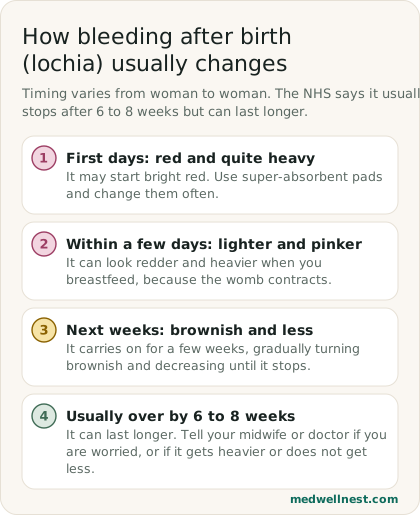
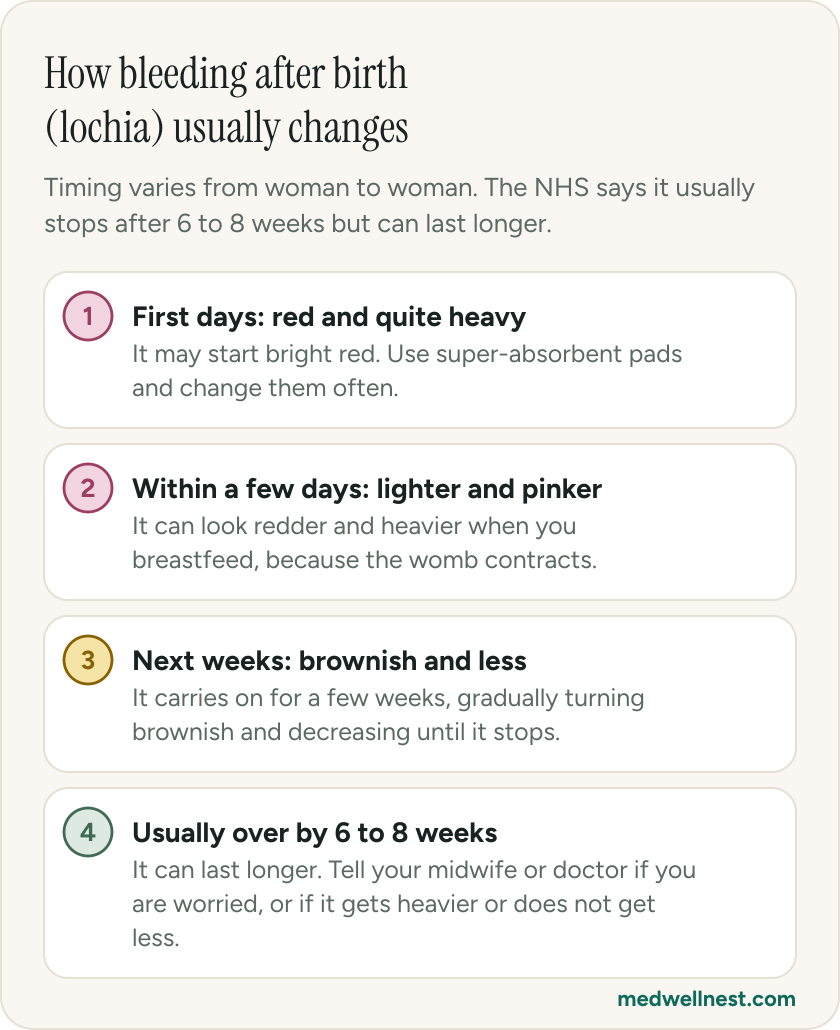
The NHS says you will have bleeding, called lochia, from the vagina for a few weeks after you give birth. It says the bleeding usually stops after 6 to 8 weeks, but it can last longer, and to speak to your midwife or doctor if you are worried. The sources give a range, not one number of days, so it helps to watch the direction: the bleeding should gradually get lighter. You may also have some vaginal bleeding after a caesarean, and the NHS says to use pads and to get medical advice if the bleeding is heavy.
ACOG says some bleeding and discharge after delivery is normal. It may start bright red, and within a few days it should become lighter and more pink. The NHS says it is quite heavy at first, so you will need super-absorbent pads, changed regularly with hands washed before and after. It then gradually turns a brownish colour and decreases until it finally stops.
02
Why does the bleeding look heavier when I breastfeed?
The NHS says you may notice the bleeding is redder and heavier when you breastfeed. This happens because breastfeeding makes the womb contract, and you may feel cramps like period pains. The NHS also says tummy pain as the womb shrinks back, especially when breastfeeding, is normal.
Use pads, not tampons, until after your 6-week postnatal check, because tampons could increase the chance of an infection. The NHS says that if you are losing blood in large clots you should tell your midwife, as you may need some treatment. ACOG adds that passing large clots together with heavy or gushing bleeding is a warning sign, which is covered below.
03
When is bleeding after delivery too heavy? What is postpartum haemorrhage?
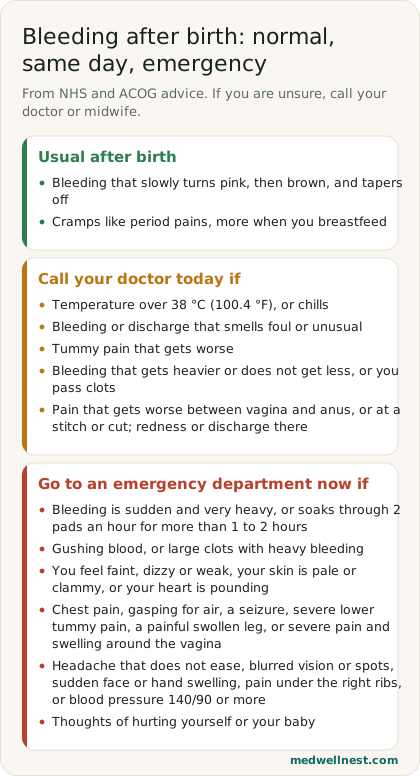
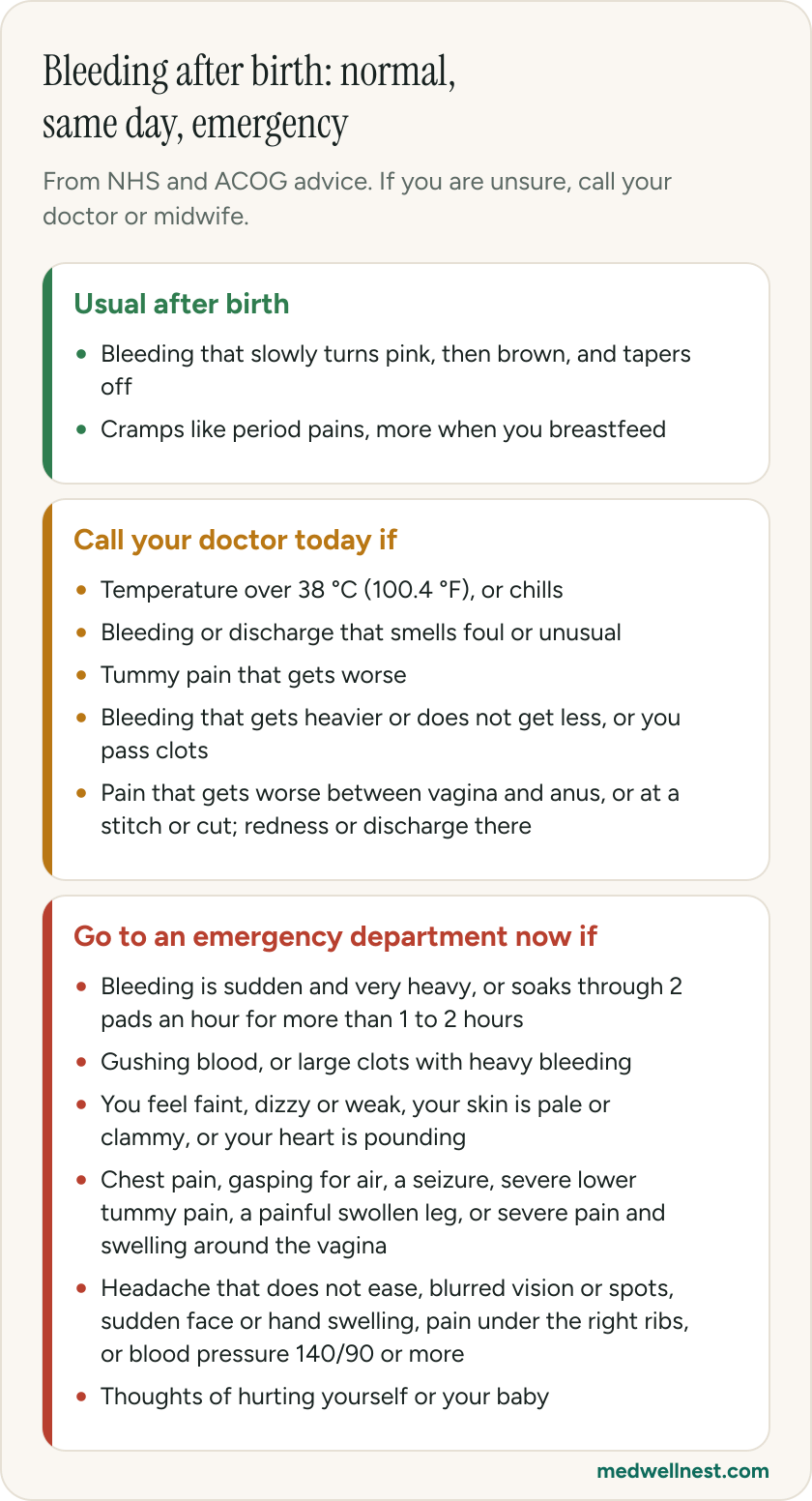
ACOG defines postpartum haemorrhage as bleeding after birth that is much heavier than usual, meaning you are soaking through two pads an hour for more than 1 to 2 hours. It usually happens within 24 hours of delivery, but ACOG says it can occur up to 12 weeks later. The main sign is heavy or gushing blood from the vagina, and you may pass large clots. Other signs are low blood pressure, pale or clammy skin, feeling faint, dizzy or weak, confusion, a rapid heart rate, and pain and swelling near the vagina or perineum. The NHS says bleeding that is sudden and very heavy, or comes with feeling faint, dizzy or having a pounding heart, could be a very heavy bleed that needs emergency treatment.
Do not wait to see whether it settles. ACOG says to call your doctor right away with any of these signs and, if you cannot reach them or feel you need immediate care, to go to the hospital. ACOG also says family and friends should learn the signs, so they can notice a problem. Its emergency list for the weeks after birth includes chest pain, gasping for air, seizures, severe lower tummy pain, a painful swollen leg, and thoughts of hurting yourself or your baby. A blood pressure problem called postpartum preeclampsia can also start up to 6 weeks after delivery; ACOG says to call right away for a home reading with a top number of 140 or more, or a bottom number of 90 or more. It also says to call immediately for a headache that does not go away or does not get better with medicine, changes in vision such as blurring or seeing spots, swelling of the face or hands, pain under the ribs on the right, or shortness of breath. If you cannot reach your doctor straight away, go to an emergency department. Our preeclampsia guide explains it.
04
How do I know if the bleeding or discharge is from an infection?
The NHS says to speak to your midwife or doctor if you have bleeding after birth and a temperature over 38 °C, bleeding that smells unusual for you, tummy pain that gets worse, bleeding that gets heavier or does not get less, clots, or pain between the vagina and anus that gets worse, because it could be a sign of infection. ACOG puts a fever of more than 100.4 °F, discharge that smells bad, and redness or discharge from a tear, episiotomy or incision on its call-right-away list.
The infection ACOG describes is endometritis, an infection of the lining of the womb. It usually happens 2 to 10 days after delivery but can develop up to 6 weeks later. ACOG says to call your doctor immediately for fever and chills, feeling tired or sick, tummy pain or tenderness, or foul-smelling discharge, because if it is not treated quickly it can cause sepsis, shock and organ failure. It is treated with antibiotics, usually through a drip. After a caesarean, the NHS says to contact your midwife or doctor straight away for heavy bleeding, a wound that is more red, painful or swollen, pus or foul-smelling fluid from it, a cough or shortness of breath, or swelling or pain in a lower leg. Our sepsis warning signs guide explains what to look for if someone is getting worse fast.
05
Is it still lochia, or is it my first period?
The NHS says it is hard to be exact. If you bottle feed, or combine bottle feeding with breastfeeding, your first period could start as soon as 5 to 6 weeks after the birth. If you fully breastfeed, including at night, without any bottle feeding, periods may not start again until you begin to reduce breastfeeding. So a return of bleeding at around 5 to 6 weeks can be a period, but if the bleeding is heavy, smells unusual or comes with fever or pain, treat it as in the sections above.
The NHS also says you can get pregnant again just 3 weeks after the birth, even if you are breastfeeding and your periods have not started. Our contraception options guide covers the choices. If you are unsure whether what you are seeing is normal, you can always ask your midwife or doctor, and the 6-week postnatal check is a good time to raise anything that is still worrying you.
When to act
Emergency — act now
Your bleeding is sudden and very heavy, soaks through 2 pads an hour for more than 1 to 2 hours, or is gushing with large clots; you feel faint, dizzy or weak, your skin is pale or clammy, or your heart is pounding; or you have chest pain, gasping for air, a seizure, severe lower tummy pain, a painful swollen leg, severe pain and swelling around the vagina, or thoughts of hurting yourself or your baby: call emergency services now or go to an emergency department now. The NHS and ACOG say this can be a postpartum haemorrhage or another emergency. Also act now for signs of postpartum preeclampsia, which can start up to 6 weeks after birth: a home blood pressure reading with a top number of 140 or more or a bottom number of 90 or more, a headache that does not go away or does not get better with painkillers, blurred vision or seeing spots, sudden swelling of the face or hands, pain under the ribs on the right, or new shortness of breath. Call your doctor or maternity unit now, and if you cannot reach them straight away, go to an emergency department now.
Same-day — call promptly
You have a temperature over 38 °C (100.4 °F) or chills, bleeding or discharge that smells foul or unusual, tummy pain that gets worse, bleeding that gets heavier or does not get less, clots, or worsening pain, redness or discharge at a stitch, tear or wound: call your doctor or midwife today. ACOG says to call right away, since it can be an infection.
Routine — see a doctor
The bleeding is slowly getting lighter and browner but you are unsure how long it should last, or you are worried about it going on for weeks: tell your midwife or doctor, and raise it at your 6-week postnatal check. The NHS says it usually stops after 6 to 8 weeks but can last longer.
Sources
Share this story
Curious where your own values stand?
Two minutes from upload to a full visual picture. Free to analyze.