In short
WHO says polluted air raises the chance of early birth and low birth weight, and children absorb more of it because they breathe faster, yet the national AQI says nothing about pregnancy. Here is what to do on poor-air days, from purifier size to masks by age to the emergency signs.
Emergency if: Difficulty breathing, bluish lips or face, skin of the chest or neck sucking in with each breath, or severe drowsiness or confusion, in a child or in you: go to an emergency department now. MedlinePlus lists these as emergency symptoms of asthma in children.
On this page
01
Why pregnancy, babies and children are more affected
The World Health Organization (WHO) reports that when pregnant women are exposed to polluted air, they are more likely to give birth prematurely and to have small, low-birth-weight children. It adds that air pollution affects neurodevelopment and can trigger asthma, and that it damages children's lung function even at lower levels of exposure.
For children there is a plain mechanical reason as well: WHO says children are particularly vulnerable because they breathe more rapidly than adults and so absorb more pollutants. A paediatric environmental health information sheet supported by the American Academy of Pediatrics (AAP) puts the pregnancy point simply: if you are not breathing well, your baby is not either. The general basics, such as what an N95 does and how the bands work for adults, are in our earlier story on protecting your lungs; this one covers what changes for pregnancy, babies and children.
02
What the national AQI bands say, and what they leave out
The national index prints a health statement for each band: Good, 0 to 50, minimal impact; Satisfactory, 51 to 100, minor breathing discomfort to sensitive people; Moderate, 101 to 200, breathing discomfort to people with lung disease, asthma or heart disease; Poor, 201 to 300, breathing discomfort to most people on prolonged exposure; Very poor, 301 to 400, respiratory illness on prolonged exposure; and Severe, 401 to 500, which affects healthy people and seriously affects those with existing disease. The short statements printed on the daily bulletin do not name pregnancy, babies or children. The fuller statements published when the index was launched add children and older adults from 101, the Moderately polluted band. Neither version names pregnancy.
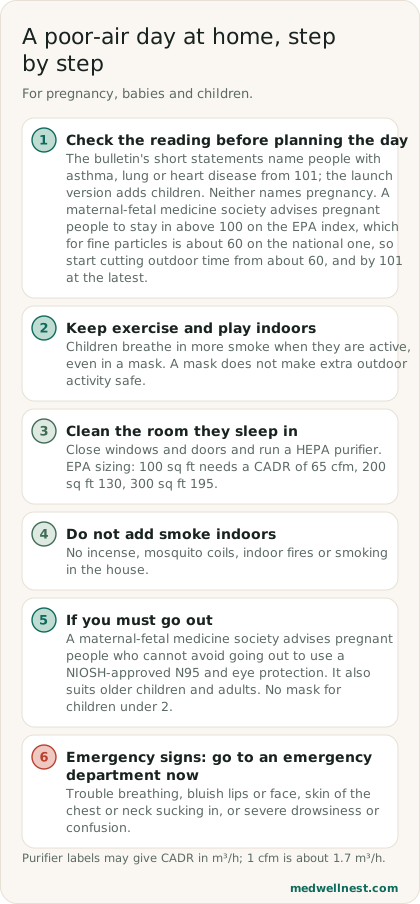
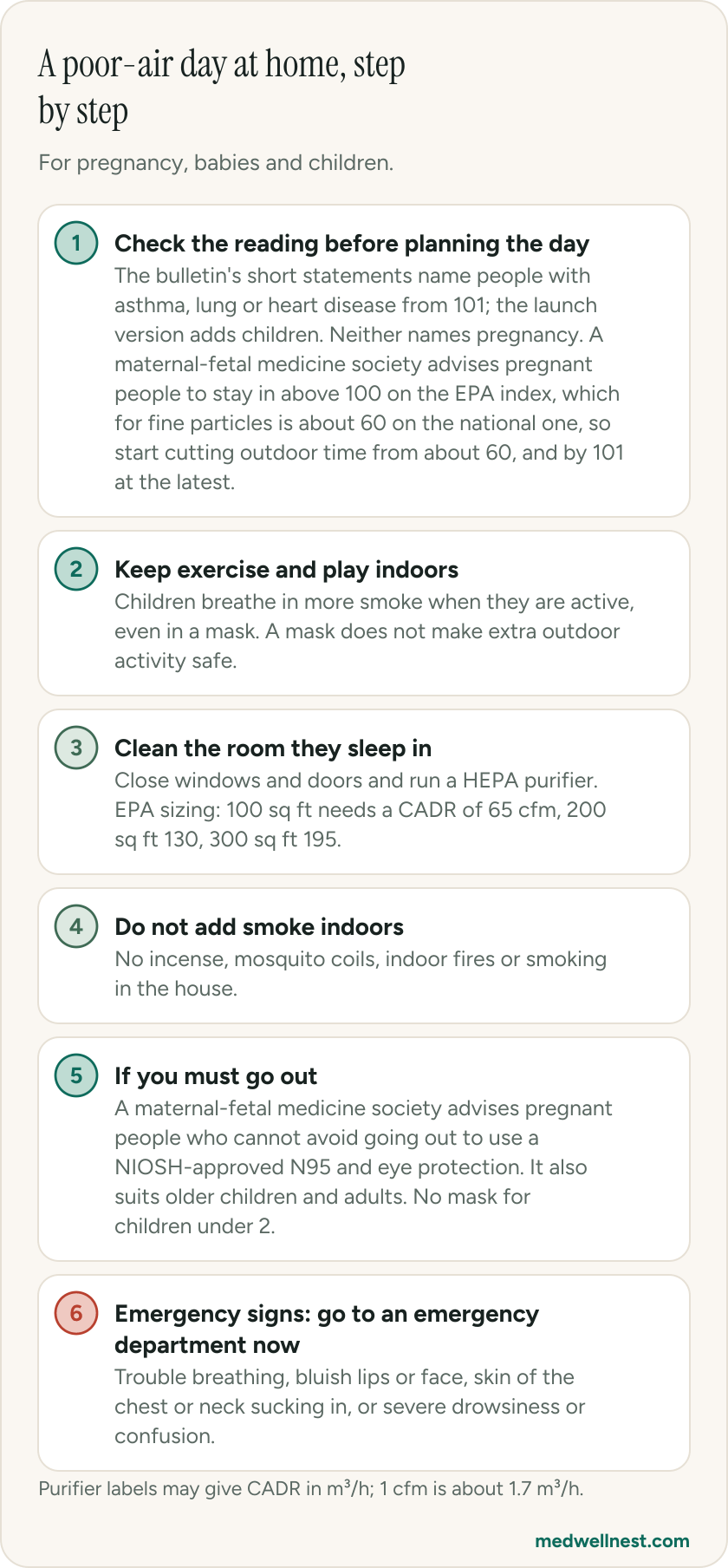
The Society for Maternal-Fetal Medicine (SMFM) gives specific advice for pregnancy, written for wildfire smoke: monitor the AQI, avoid going outdoors when it exceeds 100, keep indoor air clean by closing windows and doors and using a HEPA or MERV 13 filter above 100, and use a NIOSH-approved N95 with protective eyewear if going outdoors cannot be avoided. Breathing through a respirator takes more effort, so if you have a heart or lung condition, check with your doctor first, as our lungs story explains. SMFM also recommends that anyone exposed to smoke in pregnancy be counselled on the signs of preterm labour. SMFM's alert points readers to the index of the Environmental Protection Agency (EPA), and the two scales do not line up. For fine particles (PM2.5), the EPA's 100 is reached at a lower concentration than the national 100. The level at which SMFM already advises staying in falls inside the national Satisfactory band, at roughly 60. Our own suggestion, not a quoted rule: for a pregnant woman or a small child, start cutting outdoor time once the national reading passes about 60 with PM2.5 as the main pollutant, and by 101 at the latest.
03
Limit exertion, clean the sleeping room and size the purifier
The AAP-supported sheet says a child should not take part in extra outdoor activities such as playing sports on smoky days, whether or not they wear a mask, because a mask lowers the particles breathed in but children still breathe some, especially when they are active. Move play, sport and the evening walk indoors on poor days.
The EPA's guide to air cleaners says the most effective ways to improve indoor air are to reduce or remove the sources of pollution and to ventilate with clean outdoor air, with filtration a useful supplement. A portable air cleaner filters one room, so the room where the baby or child sleeps is the sensible place for it. Choose one with a clean air delivery rate (CADR) large enough for the room; the EPA's chart, for an 8-foot ceiling, asks for a CADR of 65 for a 100 sq ft room, 130 for 200 sq ft and 195 for 300 sq ft, in cfm. Many labels give m³/h instead, and 1 cfm is about 1.7 m³/h. HEPA filters are how many units reach a high CADR, filters need regular replacement, and units that deliberately produce ozone should be avoided because ozone is a lung irritant. The EPA says the health gains from HEPA cleaners in studies are typically small, so purifiers help but do not replace staying in.
04
Masks: what suits whom
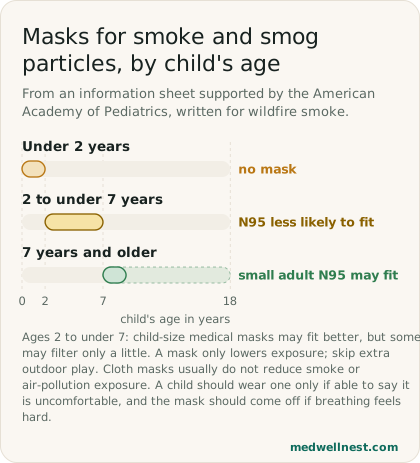
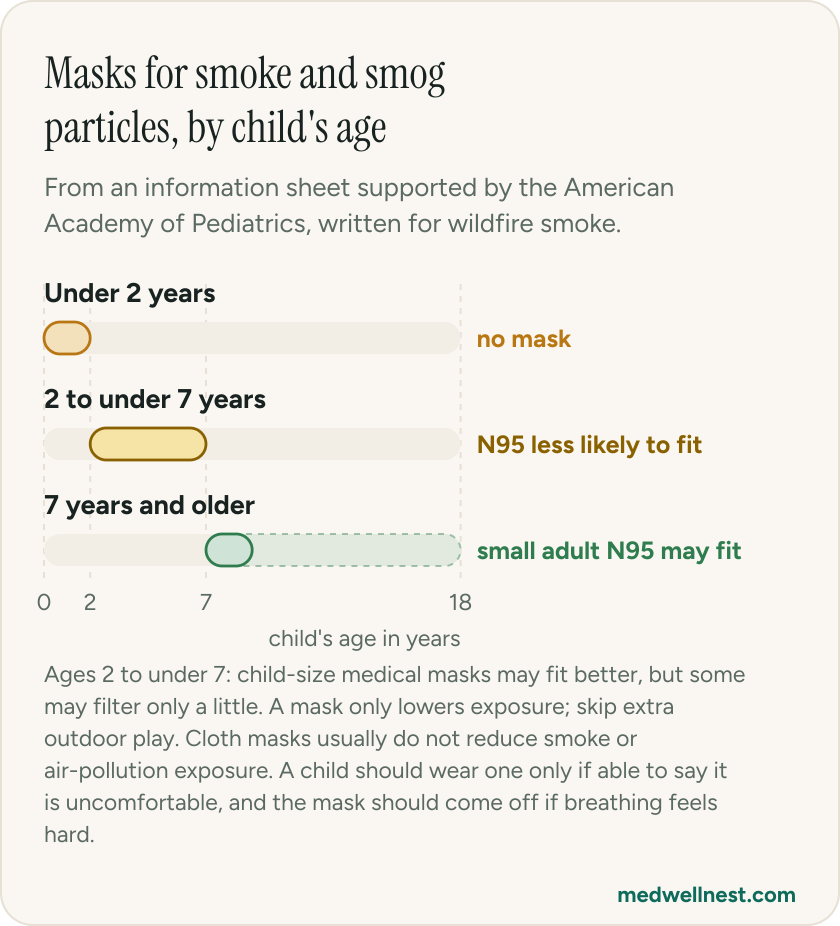
A mask that is made to keep out small particles, an N95 respirator, is the best type, and it works best when it seals well to the face. The AAP-supported sheet says that a child aged 7 or older will likely fit an adult small N95; that for ages 2 to 7 an N95 is less likely to fit well, though child-size medical masks may; that children should only wear masks if they are over 2 and able to tell you they are uncomfortable; and that masks should not be used for children under 2. This means no mask at all under age 2. From age 2, a young child should wear one only with an adult present, and not at all if the child often puts things in their mouth or keeps pulling at the mask, because of the risk of choking.
It also warns that cloth masks usually do not reduce exposure to wildfire smoke and air pollution, and that masks certified only to other standards, such as KN95s, may not have been tested to the same rules as NIOSH-approved ones. If a child says breathing is hard, take the mask off. The sheet was written for wildfire smoke; the particles in smog are of the same fine kind, but it is worth knowing the source. For a baby, the plan is not a mask but a clean room and fewer trips out.
05
A child with asthma: the action plan is the main tool
Air pollution can trigger asthma, as WHO notes, so smog season is when the plan matters. MedlinePlus says long-term control medicines are taken every day to prevent symptoms and that a child should take them even if no symptoms are present, so smog is not a time to cut them. Quick-relief medicines are used when a child is coughing, wheezing, having trouble breathing or having an attack.
The written asthma action plan tells you how to avoid triggers, monitor symptoms, measure peak flow, take medicines, and when to contact the child's doctor, and the school should have a copy. MedlinePlus advises contacting the doctor when symptoms get more frequent and more severe even though the child is following the plan, and adds that no one should smoke in the house or around a child with asthma and that indoor fireplaces should not be used. Our childhood asthma guide covers the rest.
06
What to keep out of the house, and the emergency signs
The EPA's first step is to reduce or remove the sources of indoor pollution before relying on a filter. In practice that means no incense, no mosquito coils, no burning of any kind indoors, and above all no smoking in the house: MedlinePlus calls getting rid of tobacco smoke the single most important thing a family can do for a child with asthma. Mosquito coils in particular give off large amounts of fine particles, as our earlier story on protecting your lungs explains; nets and screens avoid the smoke.
Some signs mean going to an emergency department now, whatever the AQI reading says. MedlinePlus lists the emergency symptoms in a child as difficulty breathing, a bluish colour to the lips and face, rapid pulse, sweating, severe anxiety due to shortness of breath, and a decreased level of alertness such as severe drowsiness or confusion, and notes that when a child is having a hard time breathing the skin of the chest and neck may suck inward. It also lists breathing faster than normal as a symptom of asthma in children.
Smog and young lungs: what can wait and what cannot
Emergency — act now
Difficulty breathing, bluish lips or face, skin of the chest or neck sucking in with each breath, or severe drowsiness or confusion, in a child or in you: go to an emergency department now. MedlinePlus lists these as emergency symptoms of asthma in children.
Same-day — call promptly
A child with asthma whose symptoms are getting more frequent and more severe even though the action plan is being followed, or a pregnant woman with breathlessness or a cough that will not settle during a smog spell: call your doctor today. Ask your maternity team which signs of preterm labour to watch for, as SMFM advises. A child breathing much faster than normal: see a doctor today, and go to an emergency department now if any emergency sign above appears.
Routine — see a doctor
A cough, sore throat or itchy eyes in a pregnant woman or child during smog that does not settle once the air improves: reduce exposure, keep the sleeping room filtered, and book an ordinary appointment. Bring the child's asthma action plan if there is one.
Sources
- More than 90% of the world's children breathe toxic air every day — WHO news releasewho.int
- National Air Quality Index launch: AQI categories, health breakpoints and health statements — Press Information Bureaupib.gov.in
- SMFM Alert: Wildfire Smoke and Pregnancy — Society for Maternal-Fetal Medicinesmfm.org
- Masks to Protect from Wildfire Smoke During Pregnancy or Early Child Years — Western States PEHSU, supported by the AAPwspehsu.ucsf.edu
- A Guide to Air Cleaners in the Home — EPAepa.gov
- Asthma in children — MedlinePlus Medical Encyclopediamedlineplus.gov
Share this story
Curious where your own values stand?
Two minutes from upload to a full visual picture. Free to analyze.