In short
Earwax is normal and usually falls out on its own. Cotton buds and ear candles can push wax in or injure the ear. Pain, discharge or bleeding need checking, sudden hearing loss needs a doctor today, and a drooping face needs emergency services now.
Emergency if: You have sudden hearing loss or sudden dizziness together with a drooping face, weakness or numbness in an arm or down one side of the body, slurred speech or trouble finding words, blurred vision or loss of sight, sudden confusion or a severe headache: call emergency services now. These can be signs of a stroke, not wax, and the NHS says to call emergency services immediately for stroke signs even if they have stopped.
On this page
01
What is earwax, and should I clean my ears?
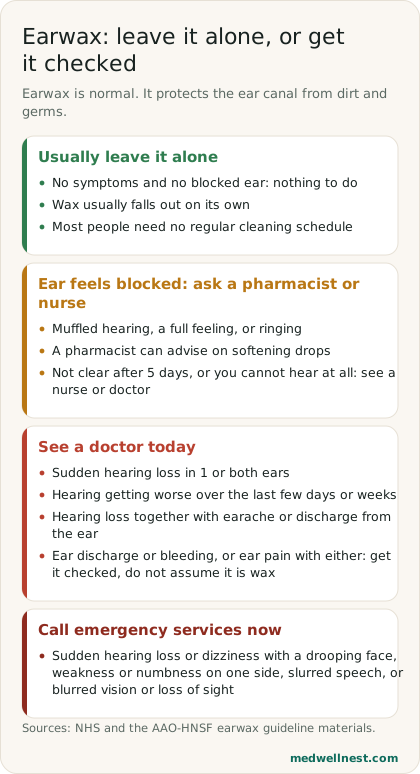
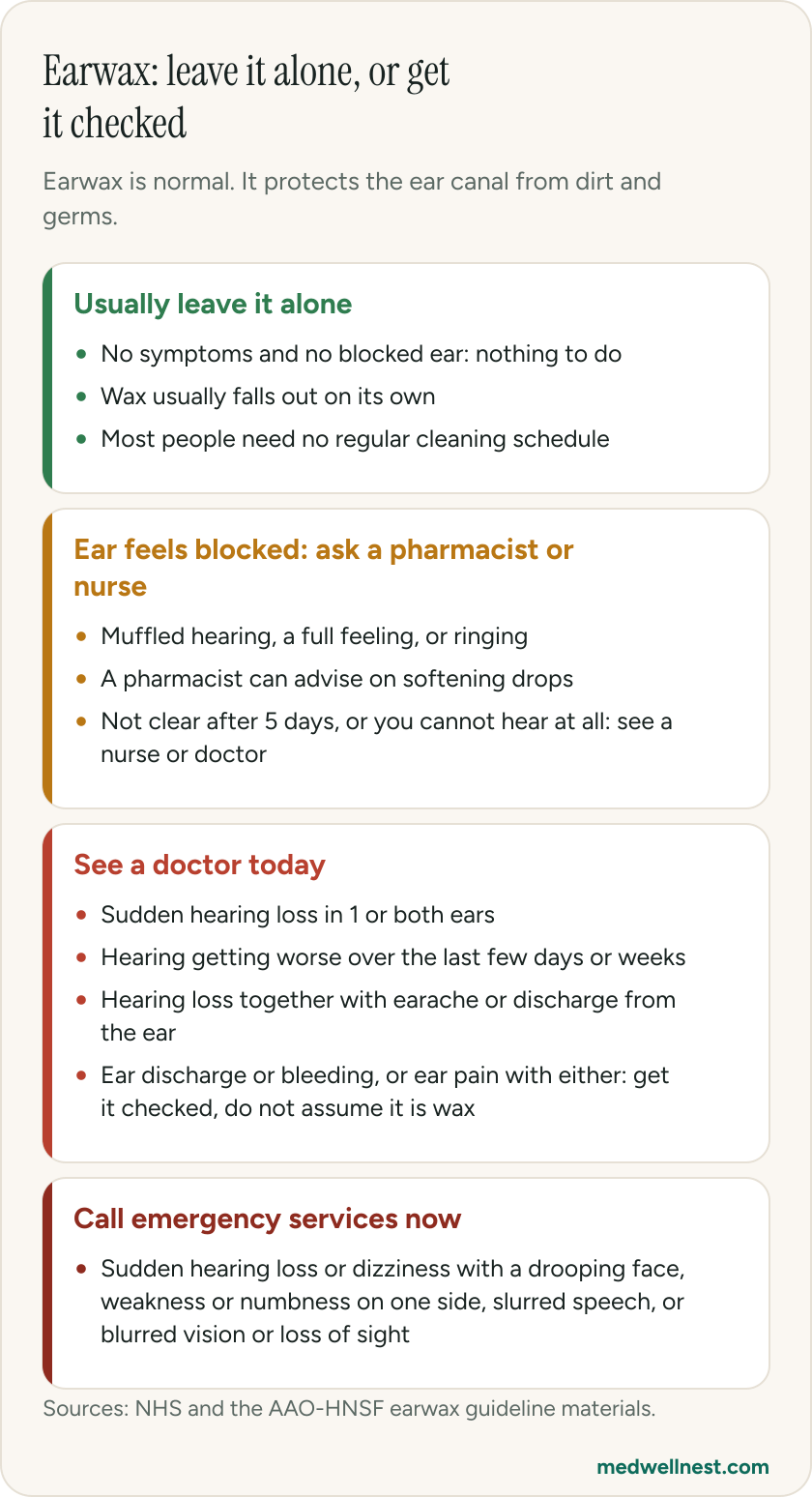
Earwax is normal. The NHS says earwax normally just falls out on its own, and that you cannot prevent it because it is there to protect your ears from dirt and germs. The AAO-HNSF FAQ handout adds that the body makes earwax to protect the skin of the ear canal and kill germs, and that earwax that does not cause symptoms or block the ear canal should be left alone.
The 2017 AAO-HNSF guideline advises clinicians not to routinely treat wax in people who have no symptoms and whose ears can be examined properly. The handout also warns against over-cleaning, because too much cleaning may bother the ear canal, cause infection and even increase the chance of wax blocking the ear, and its FAQ says most people do not need a regular schedule for cleaning.
02
Is it safe to clean my ears with a cotton bud, hairpin or key?
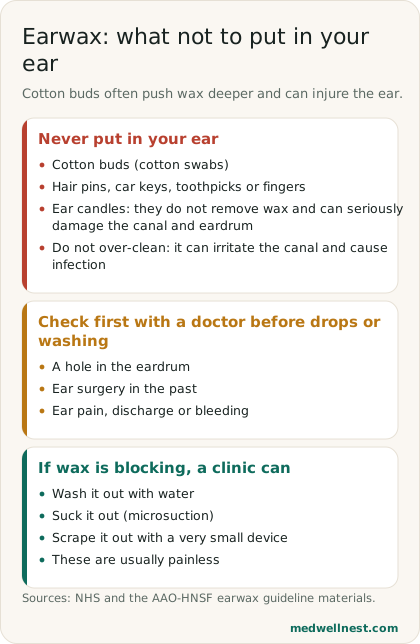
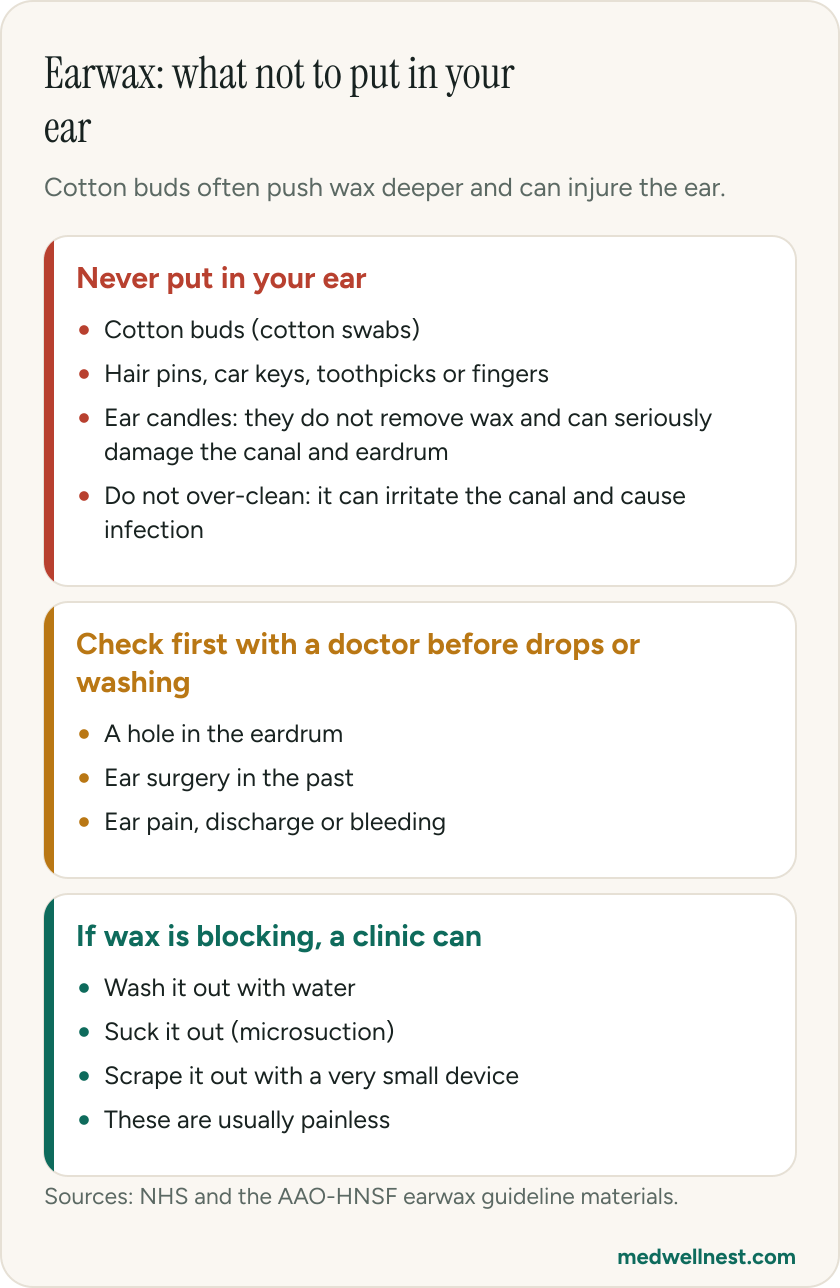
No. The NHS says not to use your fingers or any objects like cotton buds to remove earwax, because this pushes it in and makes it worse. The AAO-HNSF handout lists cotton swabs among the things never to put in the ear.
Along with cotton swabs, it names hair pins, car keys, toothpicks and other objects, and says they can injure the ear: they may cut the ear canal, poke a hole in the eardrum or hurt the hearing bones, leading to hearing loss, dizziness, ringing and other symptoms of ear injury. The NHS perforated eardrum page also says not to put anything inside the ear, such as cotton buds or eardrops, unless a doctor recommends them.
03
Do ear candles work for removing earwax?
No. The NHS says there is no evidence that ear candles or ear vacuums get rid of earwax. The AAO-HNSF handout says ear candles do not remove earwax and can cause serious damage to the ear canal and eardrum, and the 2017 guideline recommends against ear candling for treating or preventing wax build-up.
The AAO-HNSF handout names serious damage to the ear canal and eardrum as the harm. If someone has already tried a candle and now has pain, discharge, bleeding or new hearing loss, see a doctor rather than trying to fix it at home.
04
How do I know it is earwax and not an ear infection?
The NHS lists the symptoms of wax build-up as hearing loss, earache or a feeling that your ears are blocked, ringing or buzzing (tinnitus), and vertigo. But the AAO-HNSF handout warns that a middle ear infection, an ear canal infection and sudden inner ear hearing loss can seem like a wax blockage, and says pain, drainage or bleeding are not symptoms of wax and need to be checked by a health care provider. Because the NHS does list earache among wax symptoms, treat any of them as a reason to get the ear checked rather than assuming it is wax. Our ear infection guide explains how infections differ.
Children and some adults cannot say what is wrong. The 2017 guideline asks clinicians to identify blocked ears in young children and in people with cognitive impairment, who may not be able to express symptoms, and to promptly evaluate the need for treatment. It also says to check for wax in people who use hearing aids. If your child tugs at an ear, is unusually irritable or seems not to hear, have the ears examined rather than guessing.
05
My ear feels blocked: can I use oil or drops at home?
The NHS describes a home method for wax that blocks the ear: lie on your side with the affected ear up, put a few drops of olive or almond oil in the ear (not almond oil if you are allergic to almonds), stay lying down for several minutes, and repeat for a few days. Over about 2 weeks, lumps of wax should fall out and symptoms should improve. A pharmacist can also advise, and may suggest medicines that dissolve earwax. Follow the pack or the pharmacist's directions for amounts rather than guessing.
Some people should not do this without being checked. The NHS says not to use drops if you have a hole in your eardrum. The AAO-HNSF handout says not to irrigate or try wax-softening drops if you have had previous ear surgery or have a hole in the eardrum unless your ear, nose and throat surgeon has cleared it. The 2017 guideline lists blood thinners, a weakened immune system, diabetes, earlier radiation to the head and neck, a narrow ear canal, bony growths in the canal and a damaged eardrum as factors that change how wax should be managed. If any of these apply, or you have pain, discharge or bleeding, check with a doctor first.
06
When should I see a doctor for earwax, and what can the clinic do?
The NHS says to see a nurse or doctor if wax symptoms have not cleared after 5 days, or if your ear is so badly blocked that you cannot hear anything, because you could get an infection if it does not clear. Treatments at a clinic include flushing the wax out with water (electronic ear irrigation), sucking it out (microsuction) and scraping it out with a very small device, which are usually painless. Not every clinic offers them, and you may be referred elsewhere.
The 2017 guideline makes a strong recommendation that wax causing symptoms, or preventing the ear from being examined, should be treated or referred, using wax-softening agents, irrigation or manual removal. The AAO-HNSF FAQ handout says removal should not cause any pain, and that when the ear canal is completely or almost completely blocked, removing the wax lets hearing return to its earlier level.
07
Which ear symptoms need a doctor today?
The NHS says to get an urgent doctor's appointment the same day if you have sudden hearing loss in 1 or both ears, if your hearing has been getting worse over the last few days or weeks, or if you have hearing loss together with earache or discharge from the ear. It says this might not be anything serious but may need to be treated quickly. A hole in the eardrum can start suddenly after an ear infection, an injury such as a blow to the ear, a loud noise or a sudden change in air pressure such as flying, with hearing loss, ringing, pain, dizziness, or clear fluid, blood or pus leaking from the ear.
Tinnitus on its own is covered in our tinnitus guide, and dizziness in our vertigo guide, and our ear infection guide explains the signs of a spreading infection, including when ear pain with a stiff neck or confusion needs emergency care. Sudden hearing loss with ringing or spinning should not wait; if it comes with a drooping face, weakness or numbness in an arm or down one side, slurred speech, blurred vision or loss of sight, sudden confusion or a severe headache, call emergency services now. The NHS says to call emergency services immediately for stroke signs, even if they have stopped.
When to act
Emergency — act now
You have sudden hearing loss or sudden dizziness together with a drooping face, weakness or numbness in an arm or down one side of the body, slurred speech or trouble finding words, blurred vision or loss of sight, sudden confusion or a severe headache: call emergency services now. These can be signs of a stroke, not wax, and the NHS says to call emergency services immediately for stroke signs even if they have stopped.
Same-day — call promptly
You have sudden hearing loss in 1 or both ears, hearing that has got worse over the last few days or weeks, hearing loss with earache or discharge, ear discharge or bleeding or ear pain that comes with either, or sudden hearing loss after an ear infection, an injury to the ear, a loud noise or a sudden change in air pressure such as flying, which can mean a hole in the eardrum: see a doctor today. The NHS lists the hearing signs as needing an urgent appointment because they may need to be treated quickly, and the AAO-HNSF says to seek medical attention for ear pain, drainage or bleeding rather than assuming it is wax.
Routine — see a doctor
Your ear feels blocked or muffled and has not cleared after 5 days of home care, you cannot hear anything in that ear, you have a hole in the eardrum or past ear surgery and think wax is building up, or wax keeps blocking your ears or your hearing aid: book a doctor's visit. Do not use cotton buds, hairpins or ear candles, and do not use drops if there may be a hole in the eardrum.
Sources
- Earwax build-up — NHSnhs.uk
- Dos and Don'ts of Earwax (Cerumen) — AAO-HNSF patient handoutentnet.org
- Frequently Asked Questions: Earwax Prevention — AAO-HNSF patient handoutentnet.org
- Clinical Practice Guideline (Update): Earwax (Cerumen Impaction) — Otolaryngology-Head and Neck Surgery, 2017europepmc.org
- Perforated eardrum — NHSnhs.uk
- Stroke: symptoms — NHSnhs.uk
Share this story
Curious where your own values stand?
Two minutes from upload to a full visual picture. Free to analyze.