In short
Lice crawl from head to head; they do not jump, fly, or come from dirty hair or pets. Only a live louse means an active infestation, wet combing works if you keep to the schedule, and there is no need to keep a child off school.
Emergency if: A scalp that is hot, swollen, weeping or crusted with fever or swollen neck glands suggests a spreading skin infection and needs urgent medical care.
On your report
Absolute Eosinophil Count, Total IgE, WBC / Total Leukocyte Count, Hemoglobin
On this page
01
What they are, and the myths
Head lice are small insects, up to about three millimetres long, that live in scalp hair and feed on tiny amounts of blood. They are very common in young children and the families of young children. They do not spread disease, and having them says nothing about how clean anyone is — lice are not caused by dirty hair and cleanliness has nothing to do with catching them.
They cannot hop, jump or fly; they move only by crawling, which is why they spread almost entirely through direct head-to-head contact. Pets do not carry or spread human head lice. Sharing hats, combs and pillows can occasionally pass them on, but that route is rare compared with heads touching during play, hugs and selfies.
02
Only live lice mean an active infestation
The only way to be sure someone has head lice is to find a live louse. Itching is common but unreliable: it can take several weeks to develop after an infestation starts, and it continues for a while after lice have gone.
Nits are the egg cases, and they cause a great deal of unnecessary treatment. Empty white cases, and eggs found well away from the scalp along the hair shaft, are left over from an old infestation and do not mean lice are still present. The practical check is to comb wet, conditioned hair from the roots to the ends with a fine-toothed detection comb and look for moving lice on the comb.
03
Wet combing, done properly
Wash the hair with ordinary shampoo, apply plenty of conditioner — any conditioner works, because it slows the lice down and lets the comb glide — then comb the whole head section by section from the roots to the ends with the detection comb, wiping it after each stroke. Then comb through all of it a second time. Expect about ten minutes for short hair and twenty to thirty for long, curly or thick hair.
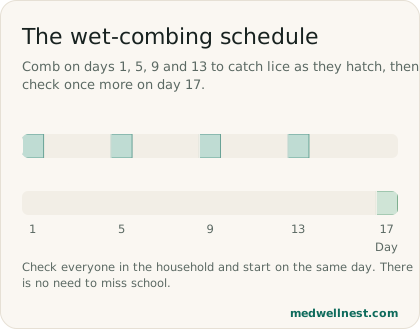
The schedule is what makes it work. Wet comb on days 1, 5, 9 and 13, which catches lice hatching from eggs that survived the first session before they are old enough to lay eggs of their own, and check again on day 17 to confirm everyone is clear. Stopping after a single session, or when the hair looks clean, is the usual reason lice appear to come back.
04
Lotions and sprays
If wet combing has not worked or is not practical, a medicated lotion or spray from a pharmacy is the alternative, and lice should die within a day of applying it. Eggs are harder to kill than lice, so many treatments have to be repeated about a week later to catch newly hatched ones — follow the product's instructions exactly on timing.
Several products are not recommended because they are unlikely to work: older insecticide treatments that lice have become resistant to, head lice repellents, electric combs, and plant-oil remedies such as tea tree, eucalyptus and lavender. Do not use medicated lotions to prevent lice in someone who does not have them; they irritate the scalp and there is nothing that reliably prevents head lice.
05
The whole household, on the same day
Check everyone you live with and anyone in close contact, and start treating anyone who has lice on the same day. Treating one child while a sibling or parent still carries lice is how a family ends up treating for months.
The house does not need deep cleaning. Lice die within a couple of days once off a head, and there is no need to hot-wash all your laundry or treat furniture. The effort belongs on the heads, not the house.
06
School, and when to get more help
There is no need to keep a child off school because of head lice, and current public health guidance does not advise sending children home early. By the time lice are found, a child has usually had them for weeks, so exclusion achieves little except missed lessons — and treatment can start that evening.
Head lice can be treated without seeing a doctor. If lotions or sprays have not worked after being used correctly, speak to a pharmacist about other treatments. Seek medical advice if the scalp becomes red, swollen, weeping or crusted, which suggests infection from scratching rather than the lice themselves.
When to act
Routine — see a doctor
A live louse found on detection combing: wet comb on days 1, 5, 9 and 13, check everyone in the household the same day, and there is no need to miss school.
Same-day — call promptly
Lice persisting after lotions or sprays used correctly — speak to a pharmacist about other treatments rather than repeating the same one.
Emergency — act now
A scalp that is hot, swollen, weeping or crusted with fever or swollen neck glands suggests a spreading skin infection and needs urgent medical care.
Values mentioned in this story
Each one opens a visual guide with its normal range and what moves it — upload a report and we place your own numbers on the same scale.
Sources
- Head Lice and Nits — NHSnhs.uk
- Head Lice — MedlinePlusmedlineplus.gov
- Head Lice — DermNetdermnetnz.org
Share this story
Curious where your own values stand?
Two minutes from upload to a full visual picture. Free to analyze.