In short
The NHS calls a reading below 90/60 low and MedlinePlus says 90/60 or lower, but both say it is a problem only when it causes symptoms. Here is what causes it, how the standing test works, what to do when you feel faint, and the signs that mean emergency help.
Emergency if: Cold, sweaty skin, fast breathing, blue or blotchy skin or a weak, fast pulse; fainting and not waking within 1 minute, not fully recovering, or being badly hurt; fainting while exercising or while lying down, or with jerking movements; chest pain or a pounding, fluttering or irregular heartbeat; sudden confusion, especially with a fever or infection; or black or maroon stools with dizziness or fainting: call emergency services now or go to an emergency department now. NHLBI, MedlinePlus and the NHS describe these as signs of shock, sepsis or other emergencies.
On this page
01
Is 90/60 low blood pressure? Is a low reading normal?
The NHS says low blood pressure is a reading of less than 90/60 mmHg, and MedlinePlus says 90/60 or lower. MedlinePlus gives the usual adult range as 90/60 to 120/80. The first number is the pressure when the heart beats and the second is the pressure between beats.
A low number on its own is not a disease. MedlinePlus says some people have low blood pressure all the time, have no symptoms, and for them the readings are normal. The NHS says it may be low because you are fit and healthy, or because you inherited it from your parents, and that pressure also changes with the time of day and with what you are doing. MedlinePlus says low blood pressure is a problem only if it causes dizziness, fainting or, in extreme cases, shock, and that in a healthy person with no symptoms it often needs no treatment.
MedlinePlus adds that a drop of as little as 20 mmHg can cause problems for some people, so your own usual reading matters. If you have not measured it properly, our guides to blood pressure basics and to measuring blood pressure at home explain how.
02
What are the symptoms of low BP, and what should I do when I feel dizzy?
The NHS lists lightheadedness or dizziness, feeling sick, blurred vision, generally feeling weak, confusion and fainting. NHLBI also lists tiredness, headache, a pounding or skipping heartbeat and neck or back pain. Many people have no symptoms at all.
MedlinePlus says that when symptoms start you should sit or lie down right away and raise your feet above heart level. The NHS says to get up slowly from sitting or lying, to eat small, frequent meals, to drink more water, to avoid sitting or standing for long periods, and to avoid too much alcohol.
You may have read that salt water fixes low blood pressure. It is not on the NHS self-care list. MedlinePlus mentions more salt only for one type of low blood pressure, and says to talk to your provider before trying it. If you have high blood pressure or a heart or kidney condition, ask your doctor first.
03
Why do I get dizzy when I stand up? What is postural hypotension?
The NHS says that if you get symptoms when you stand up or suddenly change position, you may have postural hypotension, also called orthostatic hypotension. MedlinePlus says the blood pressure drops when you move from lying down to standing, and that it usually lasts only a few seconds or minutes. It most often affects older adults, people with high blood pressure and people with Parkinson disease.
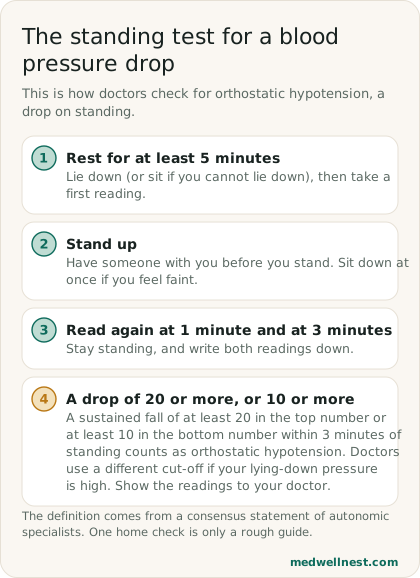
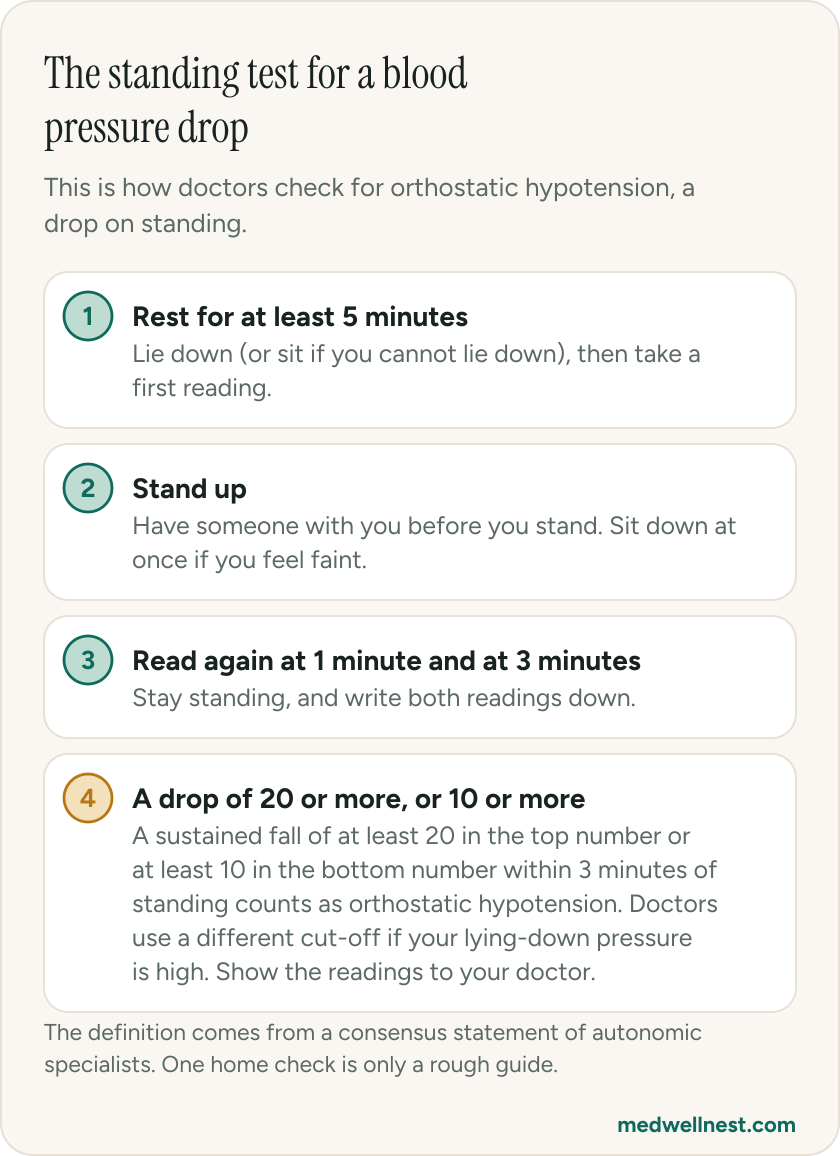
A consensus statement of autonomic specialists defines it as a sustained fall of at least 20 mmHg in the top number, or at least 10 mmHg in the bottom number, within 3 minutes of standing. The same paper describes the standard clinic method: rest lying down for at least 5 minutes, then stand for 3 minutes, with readings just before standing and again at 1 and at 3 minutes. For people whose lying-down pressure is high (150 or more in the top number, or 90 or more in the bottom number), the paper uses a larger fall in the top number, 30 mmHg, as the cut-off.
A single home check is only a rough guide, so take the readings to your doctor. Dizziness that comes from the inner ear, with a spinning feeling, is a different problem; our vertigo guide explains it. For older adults, MedlinePlus warns that falls from low blood pressure can lead to a broken hip or spine fracture, and our falls prevention guide covers what helps.
04
What causes low blood pressure? Is it dehydration, medicines or something serious?
NHLBI and MedlinePlus list the common causes. Not drinking enough fluids (dehydration) and blood loss from an injury can lower the pressure. Medicines are a frequent cause: MedlinePlus names diuretics, heart and blood pressure medicines, some antidepressants, anti-anxiety medicines, painkillers and alcohol, and NHLBI says older adults are more likely to get low blood pressure as a side effect of blood pressure medicines. Do not stop any medicine on your own; MedlinePlus and the NHS say a doctor may change the dose or the medicine.
Other causes are pregnancy, diabetes (including nerve damage from it), heart rhythm problems and heart failure. The NHS also says fainting can come from standing up too quickly, not eating or drinking enough, or being too hot.
Severe low blood pressure, called shock, is different. MedlinePlus says it can follow sudden blood loss, a severe infection, a heart attack or a severe allergic reaction. The NHS says sepsis, a life-threatening reaction to infection, can bring confusion, very fast breathing and blue, pale or blotchy skin. Our hydration guide covers how much fluid the body needs.
05
When is low blood pressure an emergency?
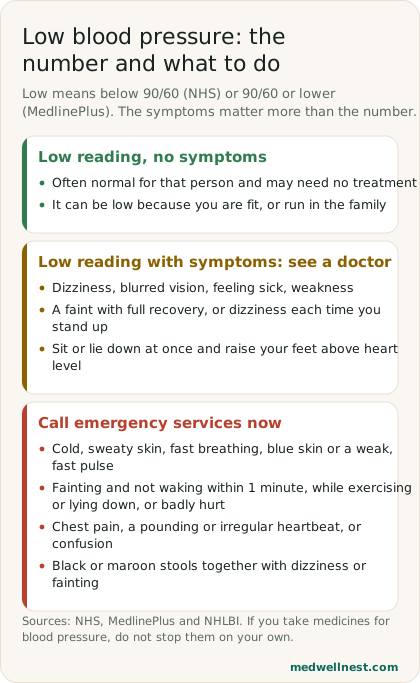
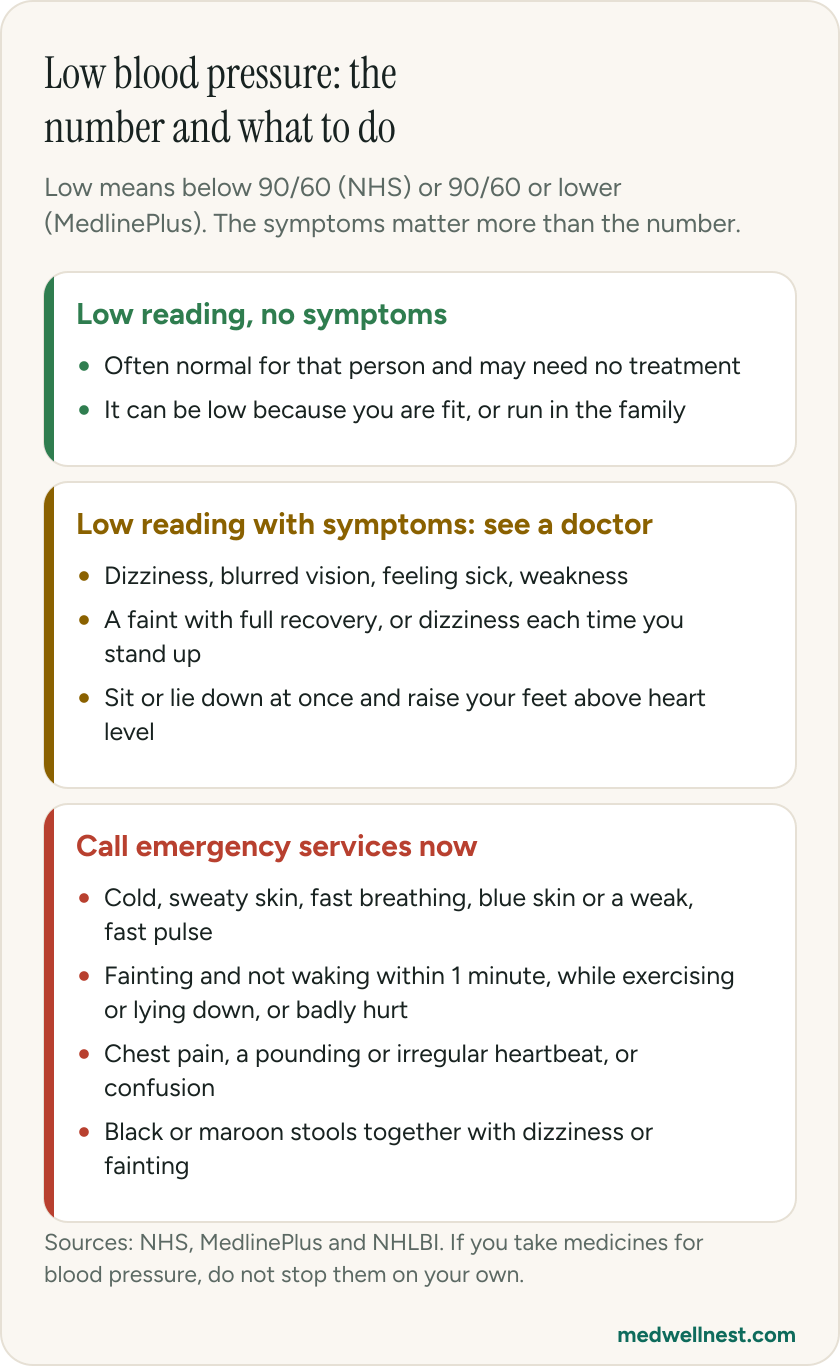
NHLBI says the signs of shock are cold and sweaty skin, rapid breathing, a blue skin tone, or a weak and rapid pulse, and that shock needs immediate medical attention. MedlinePlus says that if low blood pressure makes someone pass out you should seek treatment right away. The NHS says to get emergency help if a person who fainted cannot be woken within 1 minute, has not fully recovered, has chest pain or an irregular, pounding or fluttering heartbeat, was seriously hurt before or after fainting, was shaking or jerking, or fainted while exercising or while lying down.
MedlinePlus also lists black or maroon stools, chest pain, shortness of breath, an irregular heartbeat and a fever higher than 38.3 degrees Celsius as reasons to call your provider right away. Black stools with dizziness can mean bleeding, which is one cause of shock, so do not wait. For a single faint from which the person recovered fully, the NHS still says to be checked by a doctor, because the cause needs finding. Our fainting first-aid guide covers what to do while you wait.
When to act
Emergency — act now
Cold, sweaty skin, fast breathing, blue or blotchy skin or a weak, fast pulse; fainting and not waking within 1 minute, not fully recovering, or being badly hurt; fainting while exercising or while lying down, or with jerking movements; chest pain or a pounding, fluttering or irregular heartbeat; sudden confusion, especially with a fever or infection; or black or maroon stools with dizziness or fainting: call emergency services now or go to an emergency department now. NHLBI, MedlinePlus and the NHS describe these as signs of shock, sepsis or other emergencies.
Same-day — call promptly
You fainted once, recovered fully within a minute or two, and none of the emergency signs apply; or you keep getting dizzy or lightheaded, or feel faint every time you stand up: see a doctor today. MedlinePlus says to call your provider right away for dizziness, lightheadedness or fainting, and the NHS says anyone who has fainted should be checked.
Routine — see a doctor
Your readings are low but you feel well: tell your doctor at your next visit and ask whether any of your medicines could be a cause. Do not stop any medicine without advice.
Sources
- Low blood pressure (hypotension) — NHSnhs.uk
- Low blood pressure — MedlinePlus Medical Encyclopediamedlineplus.gov
- Low Blood Pressure — NHLBInhlbi.nih.gov
- The recommendations of a consensus panel for the screening, diagnosis, and treatment of neurogenic orthostatic hypotension and associated supine hypertension — Journal of Neurology (2017)pmc.ncbi.nlm.nih.gov
- Fainting — NHSnhs.uk
- Sepsis — NHSnhs.uk
Share this story
Curious where your own values stand?
Two minutes from upload to a full visual picture. Free to analyze.