In short
A faint line that appears within the reading time usually means hCG is there and you are pregnant, just early. Here is how home tests work, when to test again, what a chemical pregnancy is, and the ectopic warning signs that mean emergency care now.
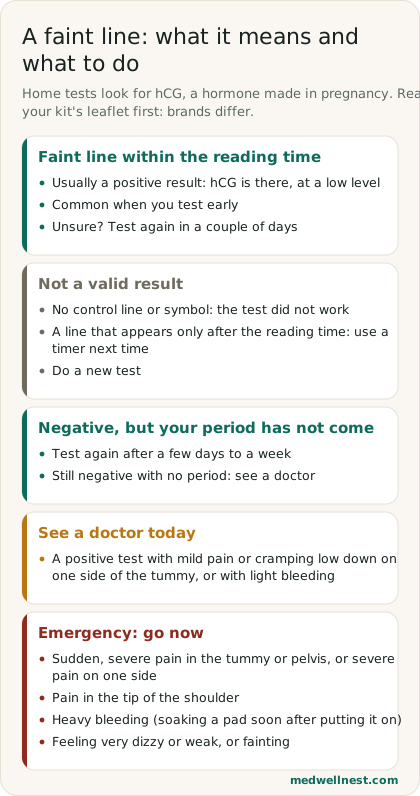
Emergency if: Sudden, severe pain in the tummy or pelvis, including severe pain on one side, pain in the tip of the shoulder, heavy bleeding (soaking a pad soon after putting it on), or feeling very dizzy, weak or faint, with a positive or even a faint test: go to an emergency department now. ACOG warns these can be signs of a ruptured ectopic pregnancy.
On this page
01
What a home test is looking for
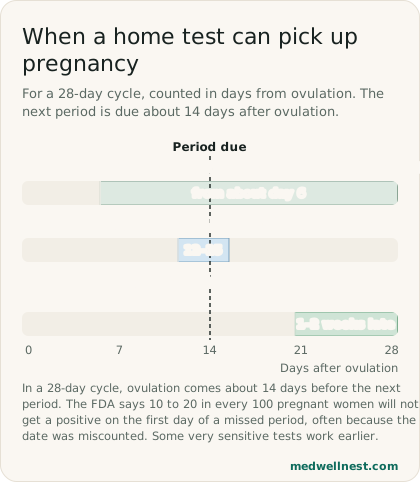
Every pregnancy test looks for human chorionic gonadotrophin (hCG), a hormone made by the placenta after a fertilised egg attaches to the lining of the womb. The NHS says it starts to be produced around 6 days after fertilisation. The FDA says that in a 28-day cycle, hCG can be found in urine 12 to 15 days after ovulation. Tommy's, a pregnancy charity, puts the first traces in urine at 6 days after the fertilised egg implants.
A home test is a yes-or-no test: the FDA describes it as qualitative, showing whether hCG is raised, not how much there is. Most strips show a coloured line, and the result takes about 5 minutes. MedlinePlus says to check the expiry date, follow the timing in the leaflet and make sure the control line or symbol appears, because without it the test has not worked.
02
What a faint line usually means
Tommy's says that in most cases even a faint line means a positive result, because your body has started to make hCG and the level is still low early in pregnancy. The NHS says a positive result is almost certainly correct, while a negative one is less reliable. The FDA agrees that a positive usually means you are pregnant, as long as you read the result correctly.
A line is faint for ordinary reasons: you tested early, the brand is less sensitive, or the urine was dilute. MedlinePlus advises not drinking a lot of fluid before testing, because it can dilute the hCG. How dark the line is does not tell you how the pregnancy is going; only a blood test repeated over days can show whether hCG is rising. One real cause of a false positive is fertility treatment: MedlinePlus warns that fertility medicines can make a test positive when you are not pregnant.
03
Lines that do not count
Some lines are not results at all. If the control line or symbol is missing, the test has failed and you need a new one. MedlinePlus says to use a timer, because guessing the timing can give an inaccurate result.
A line that turns up only after the reading time, sometimes called an evaporation line, should not be trusted either way. Read the test at the time the leaflet gives and ignore any change after that. If you are unsure what you saw, do a fresh test rather than studying the old one in different light.
04
When to test, and when to test again
Testing too early is the commonest reason for a faint or negative result. The FDA says tests are most reliable 1 to 2 weeks after a missed period, and MedlinePlus puts urine tests at 97% to 99% accurate at that point. The FDA adds that 10 to 20 in every 100 pregnant women will not get a positive on the first day of a missed period, often because the period date was miscounted. If you do not know when your period is due, the NHS suggests testing at least 21 days after you last had unprotected sex.
If the line is faint, Tommy's suggests testing again in a couple of days, as hCG rises quickly in early pregnancy. After a negative result, the NHS says to wait a few days, the FDA several days, and MedlinePlus a week; two negatives with still no period means seeing a doctor. The FDA suggests treating a negative as tentative, avoiding medicines, smoking and alcohol until you are sure.
The sources disagree on morning urine. The FDA and MedlinePlus advise using your first urine of the morning, which holds the most hCG. The NHS and Tommy's say any time of day is fine. If you are testing early, first-morning urine gives the best chance; once your period is clearly late, the time of day matters less.
05
A positive that fades: chemical pregnancy
Sometimes a test is positive, often faintly, and then turns negative or a period arrives. This can be a very early miscarriage, sometimes called a chemical pregnancy. The NHS lists bleeding and pain or cramping in the lower tummy as the usual signs of a miscarriage.
Tommy's says most early losses are due to genetic problems that mean the embryo cannot develop, and that no treatment is needed. You can try again straight away if you want to, though doctors usually suggest waiting for the next period so that dates are clear. It can still be upsetting, and it is fine to ask for support.
06
When a positive test needs a doctor now
A positive test does not show where the pregnancy is. ACOG says more than 90% of ectopic pregnancies grow in a fallopian tube, where they can burst and cause life-threatening internal bleeding, and about half of women who have one have no known risk factor. Early signs can be abnormal vaginal bleeding, low back pain, mild pain in the tummy or pelvis, and mild cramping on one side. ACOG says abnormal bleeding and pelvic pain in early pregnancy should be reported to your doctor.
Some signs mean emergency care now. ACOG lists sudden, severe pain in the tummy or pelvis, shoulder pain, and weakness, dizziness or fainting, and says to go to an emergency room if you have sudden severe pain, shoulder pain or weakness. These signs matter even if your test was only faint, and even if you have not yet had a scan.
When to act
Emergency — act now
Sudden, severe pain in the tummy or pelvis, including severe pain on one side, pain in the tip of the shoulder, heavy bleeding (soaking a pad soon after putting it on), or feeling very dizzy, weak or faint, with a positive or even a faint test: go to an emergency department now. ACOG warns these can be signs of a ruptured ectopic pregnancy.
Same-day — call promptly
A positive test with light bleeding, or with mild pain or cramping low down on one side of the tummy: see a doctor today. ACOG says abnormal bleeding and pelvic pain in early pregnancy should be reported, because it can be hard to tell an ectopic pregnancy from a normal one at first.
Routine — see a doctor
Two negative tests and still no period, or a positive test and no symptoms: see a doctor to confirm the result and start pregnancy care.
Sources
- Doing a pregnancy test — NHSnhs.uk
- Home Use Tests: Pregnancy — FDAfda.gov
- Pregnancy Test — MedlinePlusmedlineplus.gov
- When to take a pregnancy test and how they work — Tommy'stommys.org
- Ectopic Pregnancy — ACOGacog.org
- Miscarriage — NHSnhs.uk
Share this story
Curious where your own values stand?
Two minutes from upload to a full visual picture. Free to analyze.