In short
A stye is a painful lump at the lid edge that the NHS says should go away within a week; a chalazion is usually less painful, sits farther back on the lid and can take about a month. Use warm compresses and never squeeze. An eyelid swollen with fever or vision change needs emergency care.
Emergency if: Your eyelid, or your child's, is swollen and painful with a fever, your eye looks bulging, it hurts to move the eye, or you have double vision or reduced vision: go to an emergency department now. MedlinePlus lists these as signs of orbital cellulitis, which it calls a medical emergency that can get worse very quickly, especially in children, and that usually needs hospital treatment with antibiotics through a vein.
On this page
01
Why do I have a lump on my eyelid? Is it a stye or a chalazion?
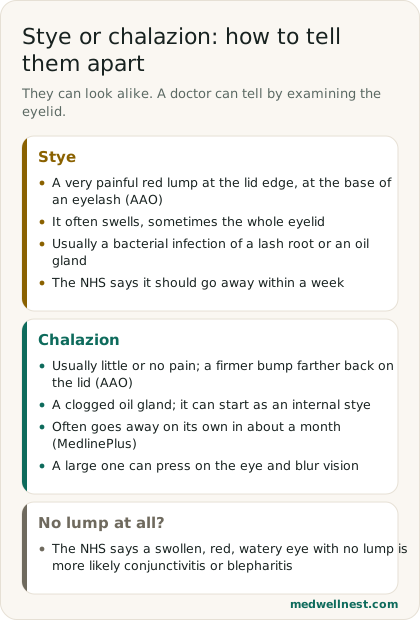
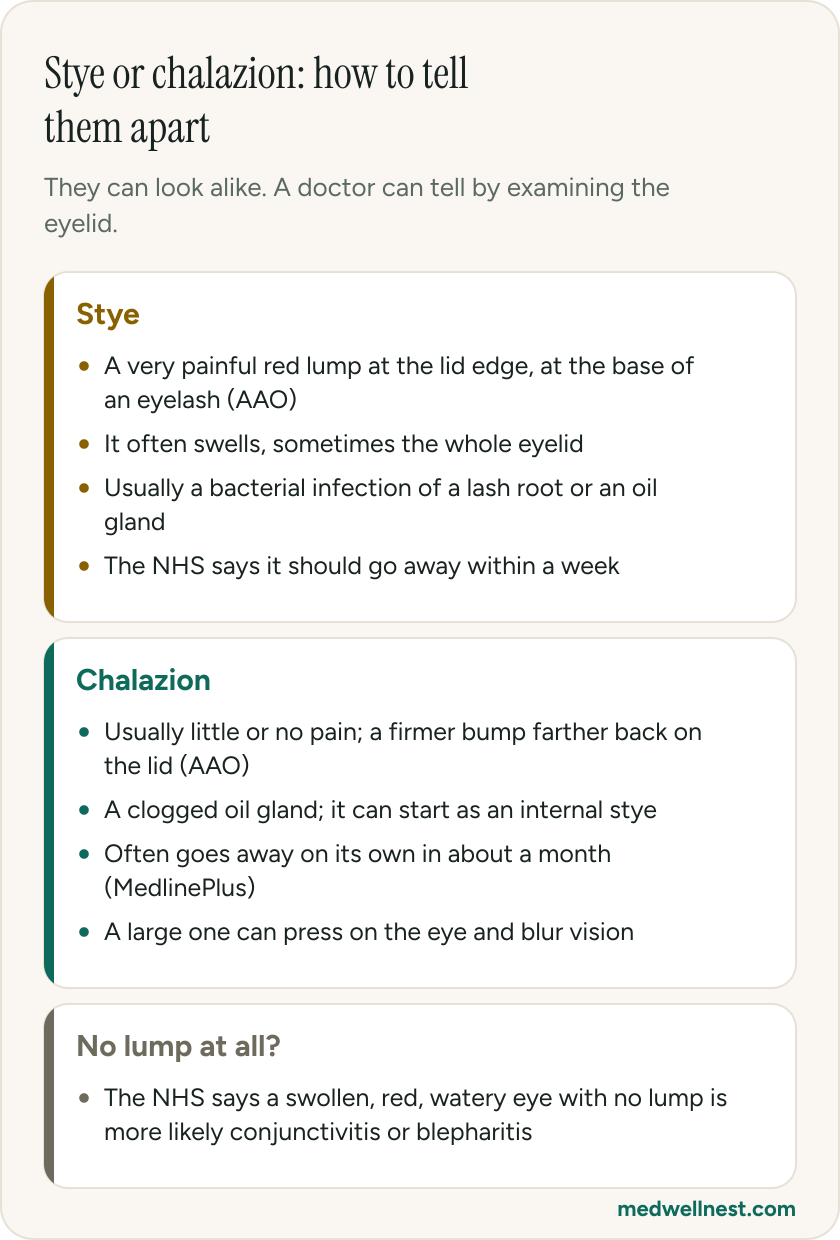
Both are lumps in or along the edge of the eyelid, and the AAO says it can be hard to tell them apart. A stye is a small painful lump that grows from the base of an eyelash or under the eyelid, and most are caused by a bacterial infection, in a hair follicle (external stye) or an oil gland (internal stye). A chalazion is a swollen bump that happens when an oil gland in the eyelid clogs up, and it may start as an internal stye.
The usual difference is pain and position. The AAO says a stye is very painful and often appears at the lid edge, while a chalazion is not usually painful and develops farther back on the lid, with little or no pain at first. The NHS says a hard lump that is not very painful is more likely a chalazion, and that if the eye or eyelid is swollen, red and watery with no lump, it is more likely to be conjunctivitis or blepharitis. Your vision should not be affected by a stye, but the AAO says a large chalazion can press on the eye and blur vision.
02
How long does a stye or chalazion last?
The NHS says a stye is common and should go away within a week, and that it may be painful until it heals. It says to see a doctor if a stye does not get better within a few weeks. MedlinePlus says a chalazion will often go away without treatment in a month or so, and that chalazia most often heal on their own, although they may return.
The two can be linked. MedlinePlus says a chalazion often develops after an internal stye: the redness and swelling go away, but the blocked gland does not drain, and a firm nodule that is not tender is left. It adds that you may lose some eyelashes or be left with a small notch in the lid edge, and rarely a small scar, more often if surgery was needed.
03
How do I treat a stye or chalazion at home? How long should I use a warm compress?
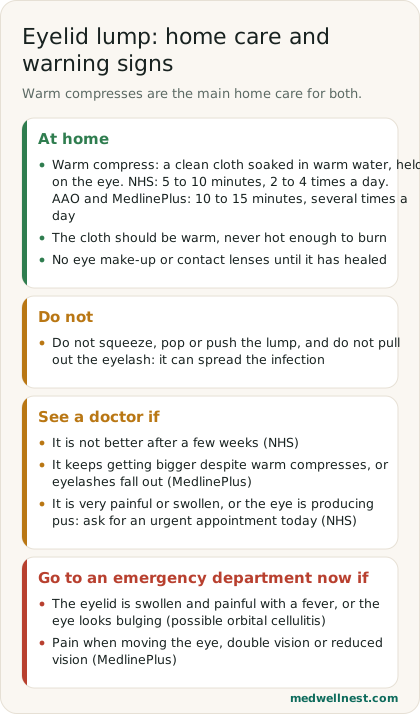
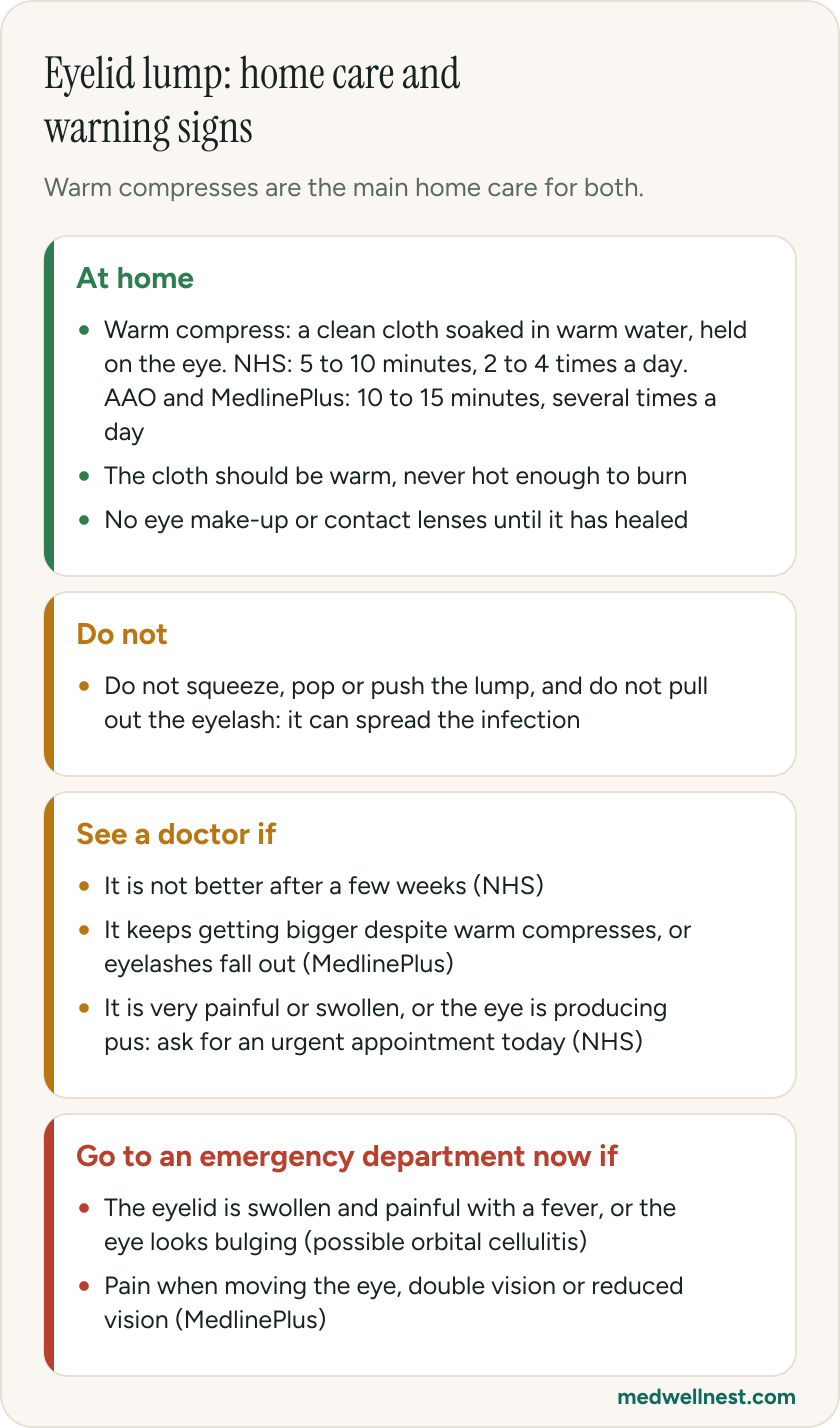
Warm compresses are the main home care for both, and the sources differ a little on how long. The NHS says to soak a clean flannel in warm water and hold it against the eye for 5 to 10 minutes, 2 to 4 times a day. The AAO says to soak a clean washcloth in hot water and hold it to the eyelid for 10 to 15 minutes at a time, 3 to 5 times a day, being careful not to burn the skin. MedlinePlus says to use lukewarm water, no hotter than you can leave your hand in comfortably, for 10 to 15 minutes at least four times a day. Aim for as warm as is comfortable, never hot enough to burn. The AAO says that for a chalazion the warmth helps the clogged gland open and drain, and that gently massaging around it with a clean finger can help.
Keep the eye clean and quiet in the meantime. The NHS and AAO say to avoid eye make-up and contact lenses until it has healed, and the NHS says painkillers such as paracetamol or ibuprofen can relieve the pain, and that aspirin should not be given to children under 16.
04
Can I squeeze or pop a stye? Should I pull out the eyelash?
No. The NHS says not to try to burst a stye or remove an eyelash yourself because this can spread the infection, and the AAO says not to squeeze or try to pop a stye or chalazion because doing so could spread the infection into the eyelid. MedlinePlus says not to push or squeeze a chalazion.
If home care does not work, a doctor has options. The NHS says a doctor may burst a stye with a thin sterilised needle, remove the eyelash closest to it, or refer you to an eye specialist. The AAO says an eye doctor may prescribe an antibiotic for an infected stye, give a steroid shot for a very swollen chalazion, or drain either one if it affects vision or does not go away.
05
When is an eyelid lump an emergency? What is orbital cellulitis?
Most styes are not serious, but a swollen eyelid can sometimes be an infection of the tissue around the eye. MedlinePlus describes orbital cellulitis as an infection of the fat and muscles around the eye that affects the eyelids, eyebrows and cheeks, and calls it a dangerous infection that can cause lasting problems. It is different from periorbital cellulitis, which is an infection of the eyelid or the skin around the eye. The NHS says cellulitis in the eye is very serious.
MedlinePlus lists the signs of orbital cellulitis as painful swelling of the upper and lower eyelid, possibly the eyebrow and cheek; bulging eyes; decreased vision; pain when moving the eye; fever, often 38.8 °C (102 °F) or higher; a general ill feeling; difficulty with eye movements; double vision; and a shiny, red or purple eyelid. It says the infection can get worse very quickly, that infections in children may lead to visual difficulties or blindness, that medical care is needed right away, and that in most cases a hospital stay is needed, with antibiotics given through a vein. The NHS says to ask for an urgent appointment if a stye is very painful or swollen, affects your vision, is producing pus, or the infection has spread to the eye or eyelid.
06
Why do styes keep coming back, and could it be something else?
The AAO says you are more likely to get a stye or chalazion if you have blepharitis (a problem at the edge of the eyelid), have had one before, have a skin condition such as rosacea or seborrheic dermatitis, or have diabetes or other medical problems. The NHS says you are also more likely to get a stye if you have long-term blepharitis or rosacea, and advises washing your face and removing eye make-up before bed, keeping lids and lashes clean, washing your hands before handling contact lenses, and not sharing towels or flannels with someone who has a stye.
Seek a doctor's view if a lump keeps coming back or keeps growing. The AAO says an eye doctor may take a tiny tissue sample if a stye or chalazion returns time after time, to check whether a more serious eye problem is behind it. MedlinePlus says that, rarely, skin cancer of the eyelid can look like a chalazion, and to contact your provider if a lump keeps getting bigger despite treatment or you lose eyelashes in that area.
When to act
Emergency — act now
Your eyelid, or your child's, is swollen and painful with a fever, your eye looks bulging, it hurts to move the eye, or you have double vision or reduced vision: go to an emergency department now. MedlinePlus lists these as signs of orbital cellulitis, which it calls a medical emergency that can get worse very quickly, especially in children, and that usually needs hospital treatment with antibiotics through a vein.
Same-day — call promptly
A stye is very painful or swollen, the eye is producing pus, or the redness and swelling are spreading across the eye or eyelid: ask for an urgent appointment today. The NHS lists these as reasons for urgent advice; if a fever, a bulging eye or any change in vision appears, go to an emergency department now instead.
Routine — see a doctor
A stye is not better after a few weeks, a chalazion keeps getting bigger despite warm compresses, you are losing eyelashes in that area, or lumps keep coming back: see your doctor or an eye doctor. The NHS and MedlinePlus give these as reasons to get it checked.
Sources
- Stye — NHSnhs.uk
- What are chalazia and styes? — AAOaao.org
- Chalazion — MedlinePlusmedlineplus.gov
- Orbital cellulitis — MedlinePlusmedlineplus.gov
- Cellulitis — NHSnhs.uk
Share this story
Curious where your own values stand?
Two minutes from upload to a full visual picture. Free to analyze.