In short
White or clear discharge is normal: a fluid that keeps the vagina clean and moist. It changes with your cycle, pregnancy and birth control. A strong or fishy smell, thick cottage-cheese texture with itching, green or yellow colour, pain or bleeding mean it is time to be tested.
Emergency if: You have unusual discharge and pelvic pain that is severe or getting worse, a sudden sharp intense pain in your lower tummy, pelvic pain with heavy bleeding, dizziness or fainting, a very high temperature or shivering, or you feel sick or very unwell: go to an emergency department now. The NHS lists these as emergency signs of pelvic inflammatory disease. If you are pregnant and have any vaginal bleeding, a trickle or gush of watery fluid, or your baby is moving less than usual, call your maternity unit or midwife now, at any hour; if you cannot reach them, go to the nearest emergency department now.
On this page
01
Is white discharge (safed pani) normal?
Yes, most of the time. The NHS says vaginal discharge is normal and most women and girls get it. It is a fluid or mucus that keeps the vagina clean and moist and protects it from infection. It is not usually anything to worry about if it does not have a strong or unpleasant smell and is clear or white, thick and sticky, or slippery and wet. You can get it at any age, and the NHS says you will always have some from puberty, reducing after menopause.
The amount varies from time to time. For care, the NHS says to wash the skin around the vagina gently with warm water and mild, non-perfumed soap, and not to use perfumed soaps or gels, deodorants or scented wipes, or to wash inside the vagina (douche). This page is about telling normal from not normal. For causes and treatment, see our vaginitis guide and our vaginal discharge symptom page.
02
Does discharge change through the month, in pregnancy and on birth control?
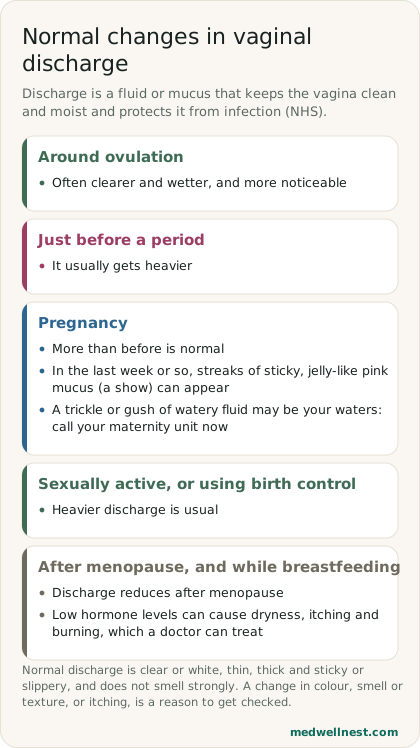
Yes. The NHS says discharge is often clearer and wetter and can be more noticeable when you ovulate between periods, and that it usually gets heavier just before your period. You usually get heavier discharge if you are sexually active or using birth control, and during pregnancy. It reduces after menopause. ACOG says changes in hormone levels during pregnancy, breastfeeding or menopause can change the balance of the vagina, and that low hormone levels, as in breastfeeding and after menopause, can cause dryness, itching and burning.
In pregnancy, the NHS says it is normal to have more discharge than before, and that this helps prevent infections travelling up from the vagina to the womb. Healthy discharge is usually thin, clear or milky white and should not smell unpleasant. In the last week or so of pregnancy it may contain streaks of sticky, jelly-like pink mucus, called a show. A trickle or gush of clear or pale watery fluid is different: it may be your waters breaking, and it can be hard to tell from urine. The NHS says to call your midwife or maternity unit urgently if your waters break, and to use a period pad, not a tampon. The NHS also says to call your midwife if discharge smells unpleasant or strange, is green or yellow, makes you itchy or sore, or comes with pain when you pee, and to contact your midwife or doctor immediately for any vaginal bleeding in pregnancy.
03
Does safed pani cause weakness (kamzori)?
A common belief is that white discharge drains the body's strength. The NHS and ACOG pages we read describe normal discharge as a protective fluid and do not list weakness or tiredness among its effects, and we found no source that links normal discharge to loss of strength. That is not the same as saying feeling weak is never worth checking. Tiredness has its own causes, and our haemoglobin levels guide is a place to start if you feel drained all the time.
What does matter is discharge that comes with other symptoms. The NHS lists unusual discharge among the symptoms of pelvic inflammatory disease, an infection of the womb, tubes and ovaries, along with pelvic or lower tummy pain, pain deep inside during sex, and bleeding between periods or after sex. It says to go to an emergency department for severe or worsening pelvic pain, sudden sharp intense lower tummy pain, pelvic pain with heavy bleeding, dizziness or fainting, a very high temperature or shivering, or feeling sick or very unwell.
04
What do the colour and smell of discharge mean?
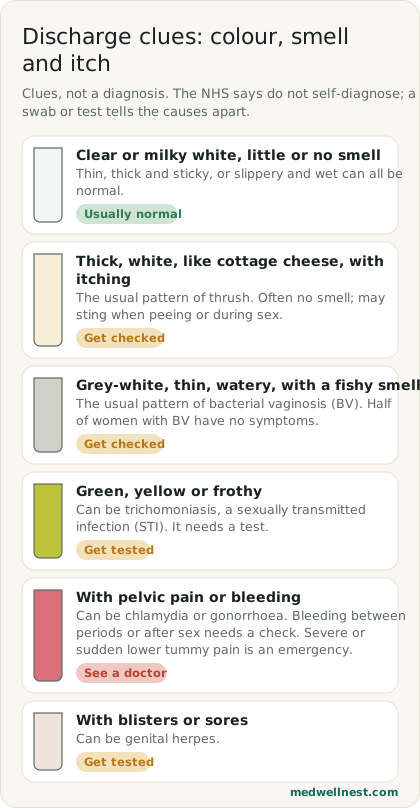
The NHS says a change in smell, colour or texture might be a sign of infection, but not to self-diagnose. Its table pairs a fishy smell with bacterial vaginosis (BV), thick white discharge like cottage cheese with thrush, green, yellow or frothy discharge with trichomoniasis, discharge with pelvic pain or bleeding with chlamydia or gonorrhoea, and discharge with blisters or sores with genital herpes. The NHS says BV is not classed as a sexually transmitted infection (STI), while ACOG says trichomoniasis is one; chlamydia, gonorrhoea and herpes are also spread by sex, and our STI guide covers them.
These are patterns, not proof. ACOG says a yeast infection may give white, lumpy discharge with no odour, and sometimes no change in discharge. BV usually gives thin, dull grey discharge, sometimes with a greenish tint, and itching is not common. Trichomoniasis may give yellow-grey or green discharge, sometimes with a fishy odour, burning or pain when peeing. The NHS says half of women with BV have no symptoms, and ACOG says a yeast infection may cause no change in discharge, so having no symptoms does not always mean no infection.
05
When should I get tested, and what happens at the visit?
The NHS says to get help if your discharge changes colour, smell or texture, if there is more than usual, if you feel itchy or sore, if you bleed between periods or after sex, if you have pain when peeing, or if you have pelvic pain. Sexual health clinics can help with abnormal discharge, and many see people without an appointment. In pregnancy, call your midwife. The NHS says it is important to seek treatment for BV in pregnancy because there is a small chance of complications, and to talk to a doctor, pharmacist or midwife about thrush because some thrush medicines should not be used in pregnancy.
ACOG says the doctor should take a sample of the discharge, that several tests may be done, and that some results come back right away while others take a few days from a lab. To keep the results accurate, do not use any vaginal medicines for at least 3 days before the visit, and do not douche, have sex or use spermicides beforehand. The NHS says for BV a cotton swab may be wiped over the discharge, and for pelvic inflammatory disease you may need a blood test, a pregnancy test or an ultrasound scan. Treatment depends on the cause, which is why testing comes first.
When to act
Emergency — act now
You have unusual discharge and pelvic pain that is severe or getting worse, a sudden sharp intense pain in your lower tummy, pelvic pain with heavy bleeding, dizziness or fainting, a very high temperature or shivering, or you feel sick or very unwell: go to an emergency department now. The NHS lists these as emergency signs of pelvic inflammatory disease. If you are pregnant and have any vaginal bleeding, a trickle or gush of watery fluid, or your baby is moving less than usual, call your maternity unit or midwife now, at any hour; if you cannot reach them, go to the nearest emergency department now.
Same-day — call promptly
You have pelvic pain that comes and goes, or think you may have pelvic inflammatory disease, especially if you are or might be pregnant: see a doctor today. The NHS says to get an urgent appointment.
Routine — see a doctor
Your discharge has changed in colour, smell or texture, there is more than usual, you feel itchy or sore, you bleed between periods or after sex, or you have pain when peeing: get tested at a doctor's clinic or a sexual health clinic. The NHS says not to self-diagnose. In pregnancy, call your midwife.
Sources
Share this story
Curious where your own values stand?
Two minutes from upload to a full visual picture. Free to analyze.