In short
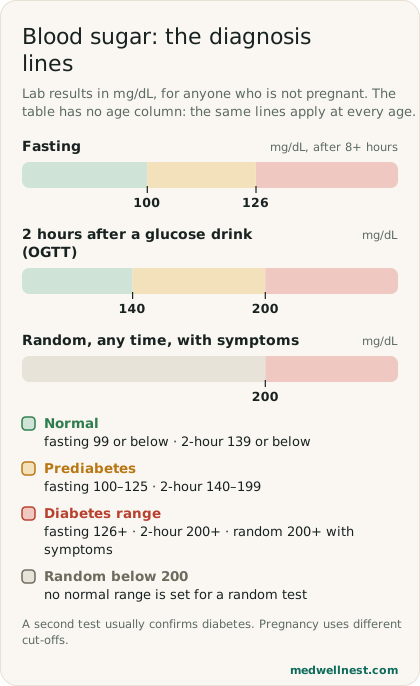
Fasting sugar is normal at 99 mg/dL or below, prediabetes at 100 to 125 and in the diabetes range at 126 or more. The lines do not change with age. Targets for people with diabetes are a separate question, and a reading below 70 is low.
Emergency if: A low that someone cannot treat themselves, with fainting, a seizure or confusion: give glucagon if you have it and call emergency services. High sugar with vomiting, stomach pain, deep breathing, fruity breath or confusion can be diabetic ketoacidosis: get emergency care now.
On your report
Fasting Glucose, Post-Prandial Glucose (PPBS), Random Blood Glucose, HbA1c +1 more
On this page
01
The diagnosis lines at a glance
The National Institute of Diabetes and Digestive and Kidney Diseases (NIDDK) uses the American Diabetes Association (ADA) cut-offs. A fasting glucose of 99 mg/dL or below is normal, 100 to 125 is prediabetes, and 126 or above is in the diabetes range. Fasting means at least 8 hours with nothing to eat or drink except sips of water.
The glucose tolerance test (OGTT) measures sugar 2 hours after a sweet glucose drink at the lab: 139 or below is normal, 140 to 199 is prediabetes, and 200 or above is in the diabetes range. A random glucose can be taken at any time of day and is used when someone already has symptoms of diabetes. A result of 200 or above then points to diabetes. There is no normal range for a random test.
One high result is usually not the end of it. NIDDK says a second test normally confirms diabetes. To choose between these tests and HbA1c, see Fasting, Post-Meal, HbA1c or OGTT: Which Sugar Test. To turn an HbA1c into an average sugar, see our HbA1c chart.
02
Why "normal sugar by age" charts are a myth
Charts that show normal sugar rising with each decade do not match the diagnostic table. The NIDDK table has columns for each test, not for age: the same fasting, 2-hour and random lines apply to a 25-year-old and a 75-year-old. Children and teenagers who are tested are judged by the same tests, and the table's only exception is pregnancy, which uses different cut-offs.
What does change with age is the target for someone who already has diabetes. The ADA says blood sugar targets are set individually, taking into account how long a person has had diabetes, their age and life expectancy, other conditions, heart disease or complications, and whether they can feel a low coming on. An older person with heart disease and a history of lows may be given a looser target than a younger person, but that is a treatment goal, not a new definition of normal.
03
After meals: which numbers apply
The 140 and 200 lines on the chart belong to the standard glucose drink used in the lab test, not to an ordinary meal, which varies in how much sugar it gives you. A reading taken 2 hours after lunch is useful to someone managing diabetes, but it is not the test used to diagnose it.
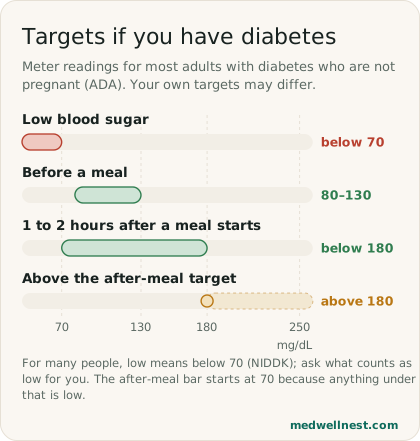
For people with diabetes, the ADA suggests a reading below 180 mg/dL 1 to 2 hours after the start of a meal, for most adults who are not pregnant.
04
Targets if you have diabetes
For most adults with diabetes who are not pregnant, the ADA suggests 80 to 130 mg/dL before meals, below 180 at 1 to 2 hours after starting a meal, and an HbA1c below 7%. It says that more or less strict goals may suit particular people, and that HbA1c targets differ with age and health.
Look for a pattern rather than reacting to one reading. The ADA suggests checking whether readings are too high or too low several days in a row at about the same time, and asking your doctor which readings you should phone about straight away.
Very high sugar can become an emergency. The NHS lists the signs of diabetic ketoacidosis as thirst, passing a lot of urine, stomach pain, feeling or being sick, deep breathing, fruity-smelling breath, feeling sleepy or confused, and blurred vision, usually developing over about 24 hours, though it can be faster. It can be life-threatening.
05
Targets in pregnancy
Pregnancy uses both different diagnosis lines and tighter targets. NIDDK says most women with gestational diabetes should aim for 95 mg/dL or less before meals, at bedtime and overnight, 140 or less 1 hour after eating, and 120 or less 2 hours after eating, and should ask their doctor which targets are right for them.
The NICE guideline, written in mmol/L, advises pregnant women with any form of diabetes to stay below 5.3 mmol/L fasting and below 7.8 mmol/L at 1 hour or 6.4 mmol/L at 2 hours after meals, where that can be done without problem lows. Those on insulin are advised to stay above 4 mmol/L. NIDDK says every pregnant woman without known diabetes should be tested for gestational diabetes between 24 and 28 weeks.
06
Low blood sugar: below 70
For many people with diabetes, NIDDK says low blood sugar, or hypoglycaemia, means a reading below 70 mg/dL, though your own number may be different. Lows are mainly a risk for people taking insulin or some other diabetes medicines. Symptoms tend to come on quickly: shakiness, hunger, tiredness, dizziness, confusion or irritability, a fast or irregular heartbeat, headache, and trouble seeing or speaking clearly.
Lows during sleep can show up as sweating enough to dampen the sheets, or waking tired, irritable or confused. If a reading is below 70 or below your target, NIDDK says to take 15 to 20 grams of glucose or other quick carbohydrate, such as glucose tablets or half a cup of fruit juice, then check again after 15 minutes and repeat if it is still low.
A severe low, when someone cannot treat it themselves, can cause loss of consciousness or a seizure and needs treating at once. NIDDK says glucagon is the best treatment for it, and that family or friends should call emergency services right away after giving it, or if no glucagon is at hand.
When to act
Routine — see a doctor
A fasting result of 100 to 125 mg/dL, or a first result in the diabetes range with no symptoms: book a repeat test and a visit to discuss it. One result is usually confirmed by a second test.
Same-day — call promptly
High sugar with strong thirst, passing a lot of urine or blurred vision, or diabetes readings that keep running high or low several days in a row: see a doctor today.
Emergency — act now
A low that someone cannot treat themselves, with fainting, a seizure or confusion: give glucagon if you have it and call emergency services. High sugar with vomiting, stomach pain, deep breathing, fruity breath or confusion can be diabetic ketoacidosis: get emergency care now.
Values mentioned in this story
Each one opens a visual guide with its normal range and what moves it — upload a report and we place your own numbers on the same scale.
Sources
- Diabetes Tests & Diagnosis — NIDDKniddk.nih.gov
- Checking your blood sugar — American Diabetes Associationdiabetes.org
- Low Blood Glucose (Hypoglycemia) — NIDDKniddk.nih.gov
- Managing & Treating Gestational Diabetes — NIDDKniddk.nih.gov
- Diabetes in pregnancy: management from preconception to the postnatal period (NG3) — NICEnice.org.uk
- Diabetic ketoacidosis — NHSnhs.uk
Share this story
Curious where your own values stand?
Two minutes from upload to a full visual picture. Free to analyze.