In short
Pneumococcal bacteria cause pneumonia, meningitis and bloodstream infections, and older adults are hit hardest. Here is who the current recommendations cover, including the age lowered to 50, how the conjugate and polysaccharide vaccines differ, the one- or two-dose schedule and what side effects to expect.
Emergency if: Hives, swelling of the face or throat, difficulty breathing, a fast heartbeat, dizziness or weakness soon after the vaccine: tell the vaccination staff at once, or get emergency care now if you have already left. This is very rare.
On this page
01
What pneumococcal disease is
Pneumococcal disease is any illness caused by pneumococcal bacteria. The CDC lists pneumonia, ear infections, sinus infections, meningitis (infection of the tissue covering the brain and spinal cord) and bacteremia (infection of the bloodstream). Most pneumococcal infections are mild, but some cause lasting harm such as brain damage or hearing loss, and meningitis, bacteremia and pneumonia can be fatal.
Anyone can get it, but young children, older adults and people with certain health conditions are at highest risk. The CDC notes that while the disease is common in young children, older adults are at greatest risk of serious illness and death. WHO's 2025 position paper describes the same pattern: before vaccines were widely used, the highest rates were in children under 2 and in adults aged 65 and over.
02
Who should get it
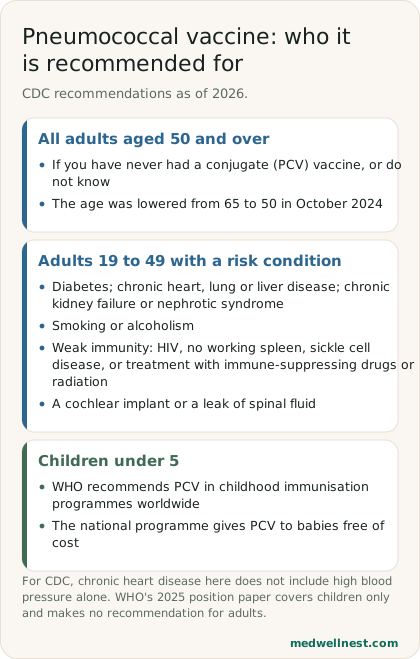
The CDC's recommendations, updated through 2026, now cover all adults aged 50 or over who have never had a pneumococcal conjugate vaccine, or who do not know whether they have. Until October 2024 the age for routine vaccination was 65; on 23 October 2024 the CDC's advisory committee on immunisation practices lowered it to 50, recommending a single dose of conjugate vaccine for all adults of that age who have not had one.
Younger adults, aged 19 to 49, are recommended the vaccine if they have a risk condition. The CDC lists diabetes; chronic heart disease such as heart failure (high blood pressure on its own does not count); chronic lung disease, including COPD and asthma; chronic liver disease; chronic kidney failure or nephrotic syndrome; smoking or alcoholism; a cochlear implant or a leak of spinal fluid; and weak immunity, including HIV, a missing or non-working spleen, sickle cell disease and treatment with immune-suppressing drugs or radiation.
03
Two kinds of vaccine: PCV and PPSV23
There are two types. Pneumococcal conjugate vaccines, PCVs, join pieces of the bacteria's sugar coat to a carrier protein; in adults the CDC recommends PCV15, PCV20 or PCV21. The pneumococcal polysaccharide vaccine, PPSV23, uses the sugar coat alone. The number in each name is how many types, or serotypes, of pneumococcus the vaccine covers.
More is not simply better, because the vaccines cover different sets of types. The CDC notes that PCV21 includes eight types that none of the others cover, but leaves out some that the others include, such as serotype 4. Which one you get usually depends on what is available where you live and on your doctor's advice; the aim is the same.
04
The adult schedule: one dose or two
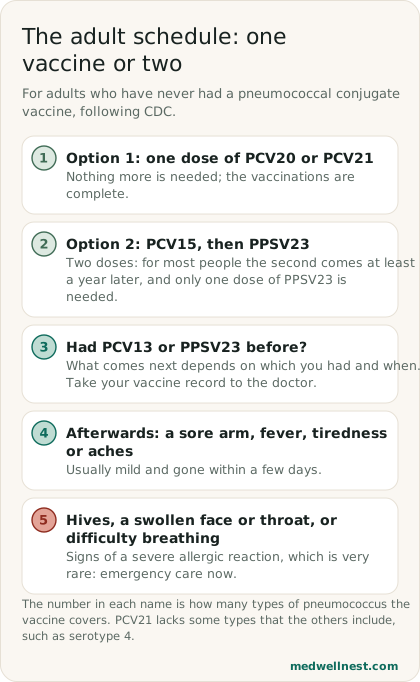
For an adult who has never had a conjugate vaccine, the CDC offers two routes. The first is one dose of PCV20 or PCV21, after which nothing more is needed. The second is two doses: PCV15 first, followed by one dose of PPSV23, for most people at least a year later. Only one dose of PPSV23 is needed, and if you have had it before, you do not need it again.
If you had older vaccines, such as PCV13 or PPSV23, years ago, the next step depends on which you had and when, so take your vaccination record to your doctor. The CDC also allows adults aged 65 or over who have had PCV13 and then PPSV23 at 65 or older to decide with their doctor whether to have one more dose of PCV20 or PCV21. A mild illness such as a cold is not a reason to delay; people who are moderately or severely ill should usually wait until they recover.
05
Babies, the national programme and adults
WHO's 2025 position paper recommends conjugate vaccines in childhood immunisation programmes worldwide, and the national immunisation programme has given PCV to babies free of cost across the country since its nationwide expansion in October 2021. WHO notes that when many children are vaccinated, some countries also see fewer infections in unvaccinated children and adults.
That protection is indirect and does not replace your own vaccine. WHO's paper covers only children under 5 and makes no recommendation for adults, so adult advice here follows the CDC. Adult pneumococcal vaccines are not part of the infant programme, so ask your doctor or a vaccination centre about availability and cost.
06
Side effects, and who should not have it
The CDC says most people have no serious problems. After a conjugate vaccine, redness, swelling, pain or tenderness where the shot was given, fever, chills, tiredness, headache, loss of appetite, and muscle or joint aches can happen; these are usually mild and settle within a few days. Some people faint after any injection, so tell the staff if you feel dizzy or your vision or hearing changes.
A severe allergic reaction is very rare. The CDC's signs are hives, swelling of the face and throat, difficulty breathing, a fast heartbeat, dizziness or weakness, which can start after you have left the clinic. You should not have a conjugate vaccine if you had a life-threatening allergic reaction to an earlier dose of any PCV or to a vaccine containing diphtheria toxoid, or if you have a severe allergy to any part of the vaccine.
When to act
Emergency — act now
Hives, swelling of the face or throat, difficulty breathing, a fast heartbeat, dizziness or weakness soon after the vaccine: tell the vaccination staff at once, or get emergency care now if you have already left. This is very rare.
Routine — see a doctor
You are 50 or over, or you are 19 to 49 and smoke, are dependent on alcohol, or have diabetes, a long-term heart, lung or liver disease, kidney failure or nephrotic syndrome, or weak immunity: ask your doctor about a pneumococcal vaccine and bring any old vaccination record.
A sore arm, fever or aches that are not settling after a few days, or any other reaction that worries you: call your doctor.
Sources
- Pneumococcal Vaccination — CDCcdc.gov
- Summary of Risk-based Pneumococcal Vaccination Recommendations — CDCcdc.gov
- Pneumococcal Conjugate Vaccine Information Statement — CDCcdc.gov
- Expanded Recommendations for Use of Pneumococcal Conjugate Vaccines Among Adults Aged 50 Years or Older — MMWR, CDCcdc.gov
- Pneumococcal conjugate vaccines in infants and children aged under 5 years: WHO position paper, September 2025 — WHOwho.int
- Nationwide expansion of Pneumococcal Conjugate Vaccine (PCV) under the Universal Immunization Programme — PIBpib.gov.in
Share this story
Curious where your own values stand?
Two minutes from upload to a full visual picture. Free to analyze.