In short
Swelling in both feet is often from standing, salt or a medicine, but heart, kidney and liver problems can also cause it. One swollen leg, or swelling with breathlessness or chest pain, is different and needs faster care.
Emergency if: Swelling comes with shortness of breath or struggling to breathe, a chest that feels tight, heavy or painful, coughing up blood, a noticeable heartbeat, or feeling lightheaded, faint, confused, sick or clammy: call emergency services now. This could be a blood clot in the lungs. Also call now for severe difficulty breathing or pale, blue or grey lips or skin. Do not drive yourself.
On your report
Creatinine, Albumin
On this page
01
Why do my feet and ankles swell (pair mein sujan kyun aati hai), and is it both legs or only one?
Swelling in the ankles, feet and legs is often caused by a build-up of fluid called oedema, according to the NHS. It can affect 1 or both legs. The skin may look puffy, shiny or stretched, the colour may change, the area may feel stiff, and pressing on it can leave dents. MedlinePlus adds that slight swelling of the lower legs is common in warm summer months, especially after standing or walking a lot, and that the extra fluid can show up as a quick rise in weight over days to weeks.
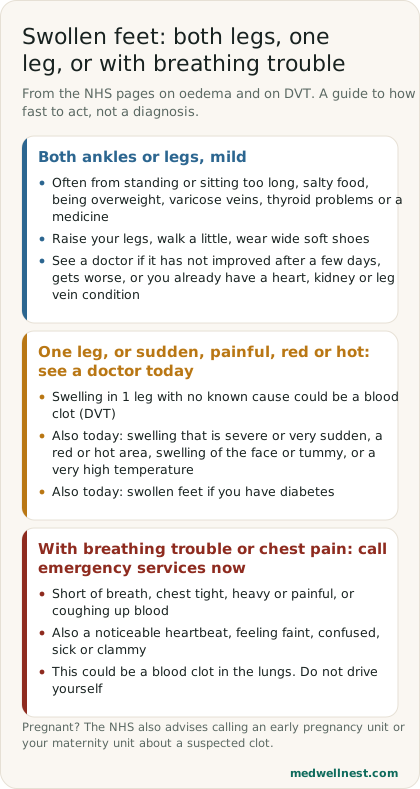
The first thing to sort out is whether the swelling is in both legs or only one. MedlinePlus describes swelling that is general, spread through the body, and swelling that is local, in one part. The NHS treats the two very differently: swelling in 1 ankle, foot or leg when you do not know the cause needs an urgent appointment, because a blood clot in a leg vein (DVT) usually causes swelling in 1 leg and only rarely in both.
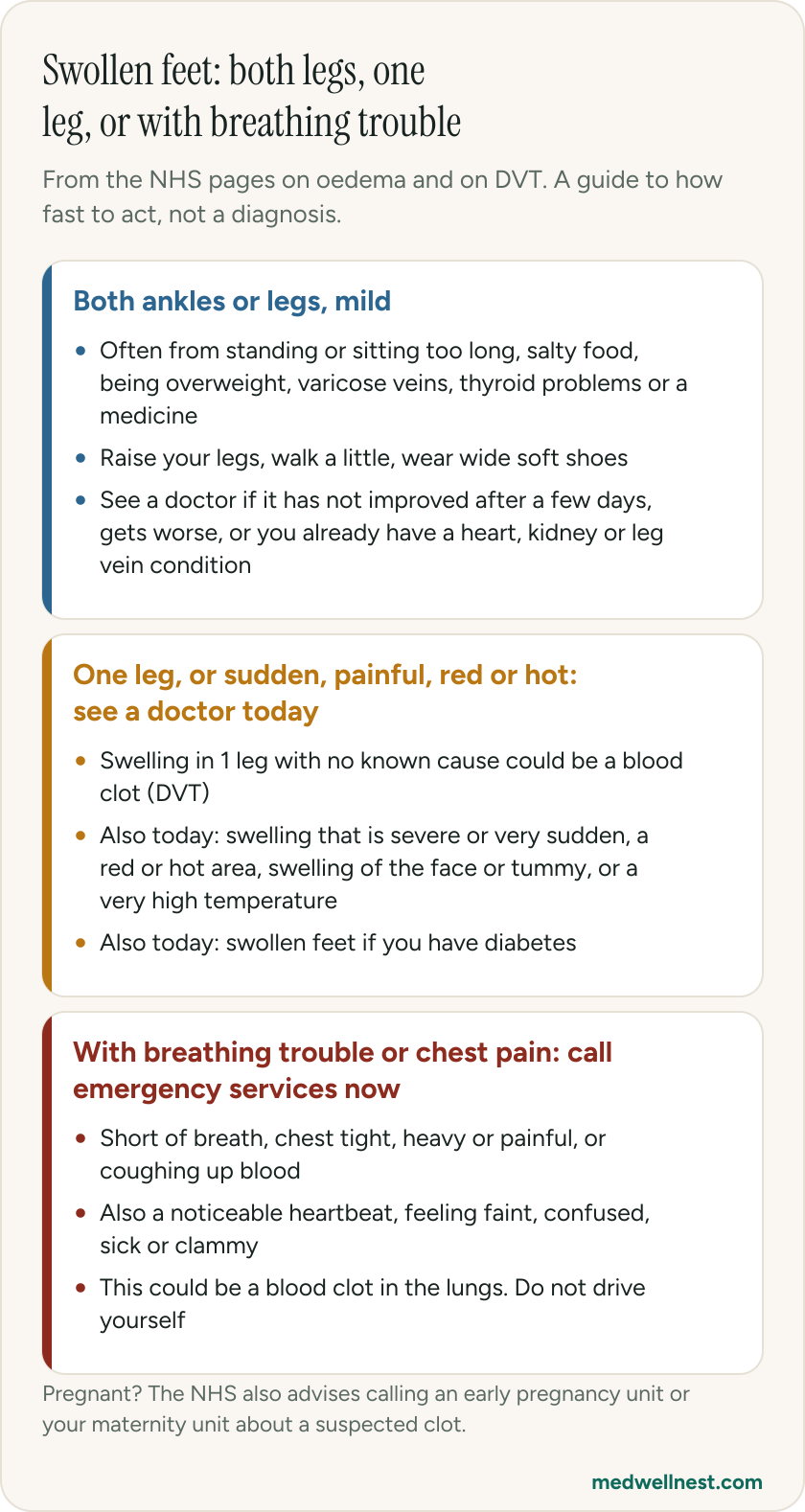
02
What are the common causes of swollen feet in both legs, and what can I do at home?
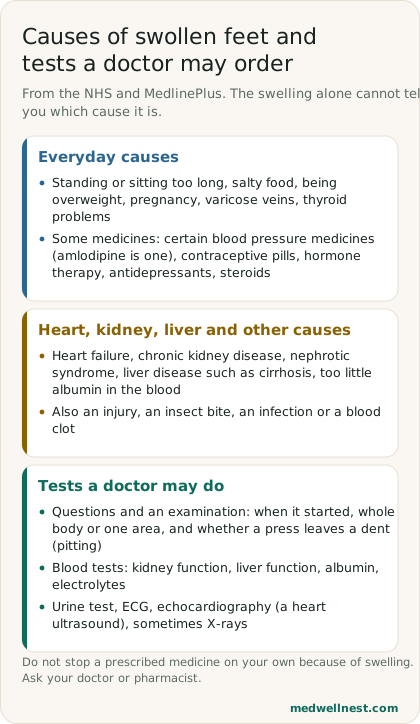
The NHS says oedema is usually caused by standing or sitting in the same position for too long, eating too much salty food, being overweight, being pregnant, taking certain medicines, varicose veins or thyroid problems. It can also be caused by an injury such as a strain or sprain, an insect bite or sting, problems with the kidneys, liver or heart, a blood clot or an infection. So a day spent on your feet and a failing heart both appear on the list, which is why the pattern around the swelling matters.
For mild swelling in both legs the NHS suggests raising the legs on a chair or pillows when you can, gentle exercise such as walking, wide comfortable shoes with a low heel and a soft sole, and washing, drying and moisturising the feet to avoid infections. It says not to stand or sit for long periods and not to wear clothes, socks or shoes that are too tight. MedlinePlus says to keep the legs above heart level when lying down so the fluid can drain, but not to do this if you get shortness of breath, and to see a doctor instead.
If both ankles or legs are swollen and it has not improved after treating it at home for a few days, or it gets worse, the NHS says to see a doctor. The same applies if you have already been diagnosed with a condition that affects your heart, kidneys or leg veins.
03
Can my blood pressure medicine, such as amlodipine, cause swollen ankles?
Yes, some can. The NHS lists certain blood pressure medicines, contraceptive pills, hormone therapy, antidepressants and steroids among the usual causes of oedema, and MedlinePlus names corticosteroids and some medicines used for heart disease, high blood pressure or diabetes. On its page for amlodipine, which it describes as a calcium-channel blocker used for high blood pressure and angina, the NHS lists swelling in the ankles, feet and legs among the common side effects.
Do not stop a prescribed medicine on your own because of swelling. The NHS says not to stop amlodipine unless a doctor tells you to, because stopping suddenly can be dangerous. If a side effect bothers you or does not go away, it says to speak to a pharmacist or doctor, who may be able to advise on reducing it, and to keep taking the medicine unless you are advised to stop. Because swelling can also come from the heart, kidneys or liver, it is for the doctor to decide whether the medicine is the reason, rather than assuming it. The NHS notes amlodipine may not be suitable for people with heart failure.
04
Is swelling in both feet a sign of kidney, heart or liver disease?
It can be. MedlinePlus lists chronic kidney disease, nephrotic syndrome and acute glomerulonephritis (kidney diseases), heart failure, and liver failure from cirrhosis or other liver disease among the causes of swelling. It also lists too little albumin in the blood, poor nutrition and thyroid disease. The NHS says oedema can be caused by problems with the kidneys, liver or heart. The swelling alone cannot tell you which of these, if any, is behind it, which is why a doctor looks at the whole picture and may order tests.
Heart failure is the cause people most often worry about. The NHS lists swelling in the feet, ankles, legs or tummy, or feeling bloated, as one of its symptoms, together with feeling out of breath during everyday activities or when lying down, sudden weight gain and coughing at night. Swelling plus any of those other signs is a reason to be seen sooner. The NHS also says swelling that spreads to other parts of the body, such as the face or tummy, needs an urgent appointment.
05
Which tests will a doctor do for swollen feet?
MedlinePlus says the doctor will take a medical history and examine you. Questions may include when the swelling started, whether it is all over the body or in one area, and what you have tried at home. The doctor will also check whether pressing leaves a dent: pitting oedema leaves a dent after you press with a finger for about 5 seconds, which slowly fills back in, while non-pitting oedema does not.
The tests MedlinePlus says may be done are an albumin blood test, blood electrolyte levels, echocardiography (an ultrasound of the heart), an electrocardiogram (ECG), kidney function tests, liver function tests, a urine test and X-rays. Which of these are used depends on what the history and examination suggest. The NHS says treatment depends on the cause. If a doctor thinks a leg swelling could be a DVT, the NHS says you should be referred to hospital within 24 hours for an ultrasound scan, which shows whether blood is flowing normally through the vein.
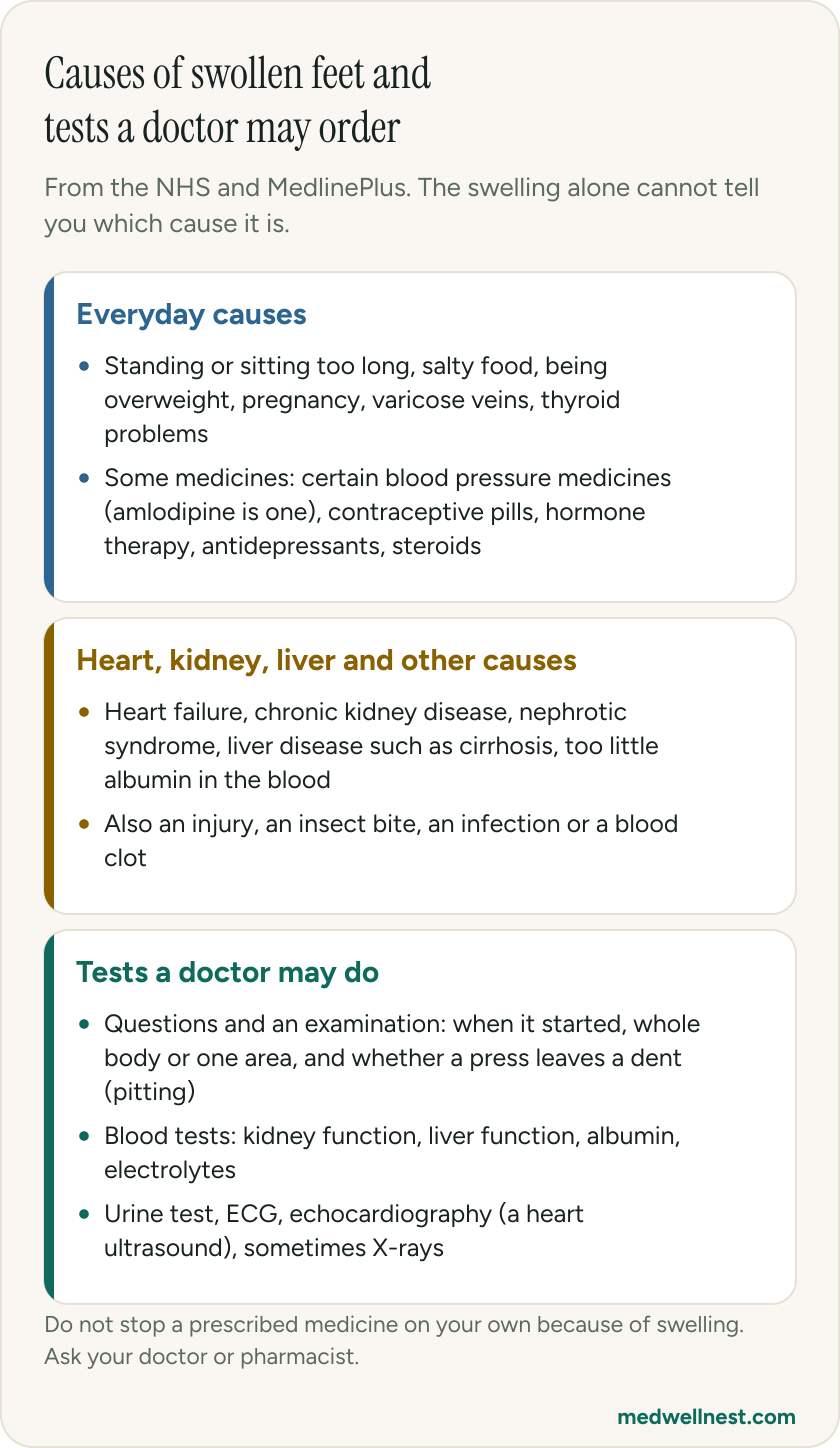
06
When are swollen feet urgent, and when are they an emergency?
The NHS says to ask for an urgent appointment or get urgent advice if you have swelling in 1 ankle, foot or leg and do not know the cause; a lot of swelling after an injury or swelling that is getting worse; swelling that is severe, painful or starts very suddenly; swelling in other areas such as the face or tummy; a swollen area that is red or hot to the touch; a very high temperature or feeling hot, cold or shivery; or swollen feet, ankles or legs when you have diabetes. For heart failure, the NHS adds feeling breathless when lying down or from everyday activity, and suddenly gaining weight. If you think you have a DVT, the NHS says to get an urgent appointment, and if you are pregnant to also call an early pregnancy unit (under 20 weeks) or your maternity unit.
Call emergency services now if swelling comes with shortness of breath or struggling to breathe, a chest that feels tight, heavy or painful, coughing up blood, a more noticeable heartbeat, or feeling lightheaded, faint, confused, sick or clammy. The NHS says you could have a blood clot in your lungs, which needs immediate treatment in hospital, and that DVT symptoms with breathlessness or chest pain are an emergency. Severe difficulty breathing, such as gasping or not being able to get words out, or pale, blue or grey lips or skin, are emergency signs in heart failure too. Do not drive yourself; the person on the emergency line will tell you what to do.
Swollen feet and ankles: how fast to act
Routine — see a doctor
Both ankles, feet or legs are swollen, it has not improved after a few days of raising the legs, walking and avoiding long standing, or it is getting worse, or you already have a heart, kidney or leg vein condition: see a doctor. Bring a list of your medicines, since some blood pressure medicines, steroids, hormone medicines and antidepressants can cause swelling, and do not stop any of them yourself.
Same-day — call promptly
You have swelling in 1 leg and do not know why, swelling that is severe, painful, very sudden or getting worse after an injury, a red or hot swollen area, swelling of the face or tummy, a very high temperature or feeling hot, cold or shivery, swollen feet with diabetes, breathlessness when lying down or doing everyday things, or sudden weight gain: get seen today. The NHS lists these as urgent, and says a suspected DVT needs an urgent appointment and a hospital scan within 24 hours. If you are pregnant, also call your maternity unit or early pregnancy unit.
Emergency — act now
Swelling comes with shortness of breath or struggling to breathe, a chest that feels tight, heavy or painful, coughing up blood, a noticeable heartbeat, or feeling lightheaded, faint, confused, sick or clammy: call emergency services now. This could be a blood clot in the lungs. Also call now for severe difficulty breathing or pale, blue or grey lips or skin. Do not drive yourself.
Values mentioned in this story
Each one opens a visual guide with its normal range and what moves it — upload a report and we place your own numbers on the same scale.
Sources
Share this story
Curious where your own values stand?
Two minutes from upload to a full visual picture. Free to analyze.