In short
A varicocele is a swelling of the veins above the testicle, most often on the left, and many need no treatment. Here is what grades 1 to 3 and ultrasound terms like vein diameter and reflux on Valsalva mean, how it relates to semen quality, when repair is considered, and which signs need a quicker check.
Emergency if: Sudden, severe pain in a testicle, pain with nausea, vomiting or tummy pain, or testicle pain that lasts more than an hour or continues at rest: go to an emergency department now. This can be testicular torsion, a twisted testicle, which can lead to loss of the testicle if it is not treated quickly. Do not wait for a scan result or for the pain to settle.
On your report
FSH (Follicle-Stimulating Hormone), LH (Luteinizing Hormone), Testosterone, Total
On this page
01
What is a varicocele?
A varicocele is a swelling of the veins inside the scrotum, along the cord that holds up the testicle (the spermatic cord). MedlinePlus explains that damaged valves inside these veins stop blood flowing properly, so blood backs up and the veins widen, much like varicose veins in the legs.
It usually develops slowly, is more common in men aged 15 to 25, and is most often on the left side. The American Urological Association (AUA) guideline puts it at about 15% of adult men, with about 85% of varicoceles on the left side only. A 2016 review suggests why: the left testicular vein joins the kidney vein at a right angle, while the right one joins the main vein of the abdomen at a slant.
Some men have no symptoms. Others notice enlarged, twisted veins, a dull ache or discomfort, a painless swelling, or a problem with fertility.
02
What do varicocele grades 1, 2 and 3 mean?
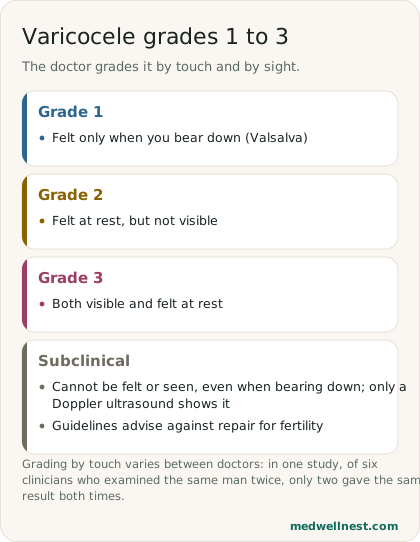
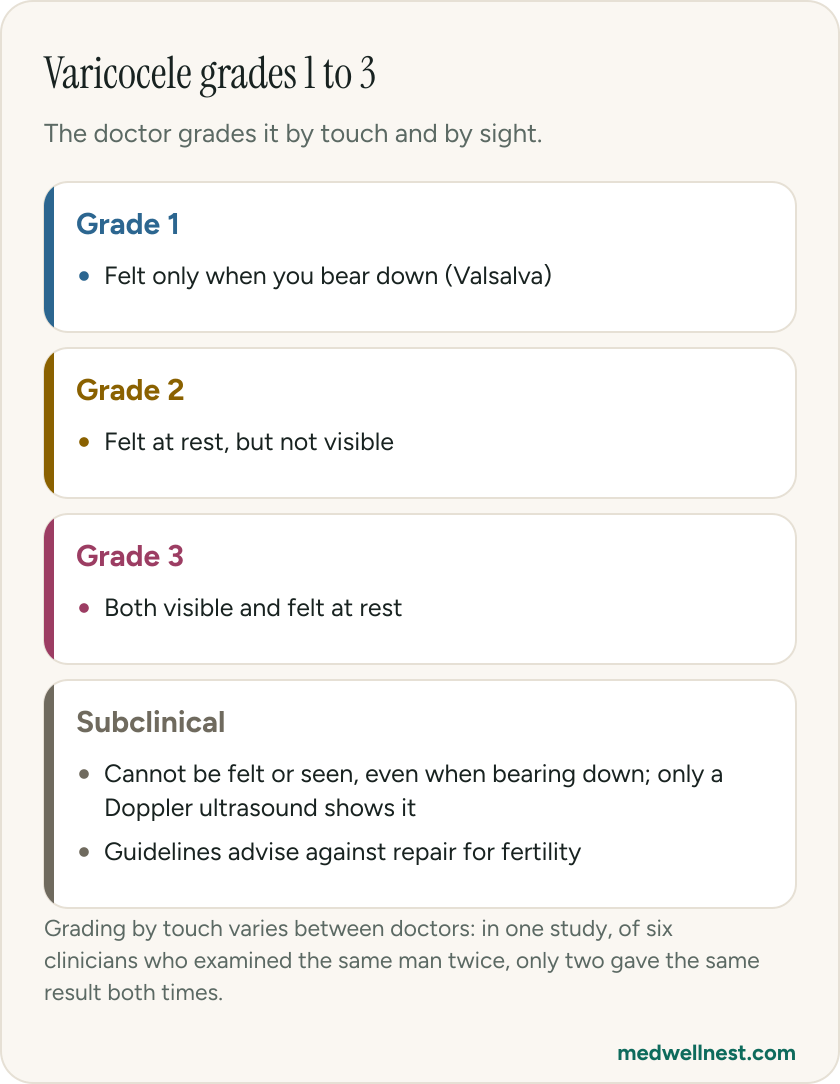
The clinical grade is decided by examination, using the system first described by Dubin and Amelar, which the European Association of Urology (EAU) lists. Grade 1: palpable (can be felt) only when you bear down, called the Valsalva manoeuvre. Grade 2: palpable at rest. Grade 3: visible and palpable at rest. A subclinical varicocele cannot be felt or seen even when bearing down and is shown only by Doppler ultrasound.
Grading by touch is subjective. In one study of six clinicians who examined the same man twice, only two gave the same result both times. The EAU notes that worsening semen results are associated with a higher grade and with age, but the grade alone does not decide whether treatment is needed.
Ultrasound has grading systems of its own, such as the Sarteschi classification suggested by the European Society of Urogenital Radiology (ESUR), so a grade on an ultrasound report may not match the grade your doctor gave on examination.
03
How do I read the ultrasound report: vein diameter and reflux on Valsalva?
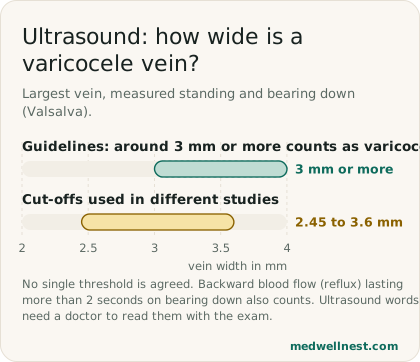
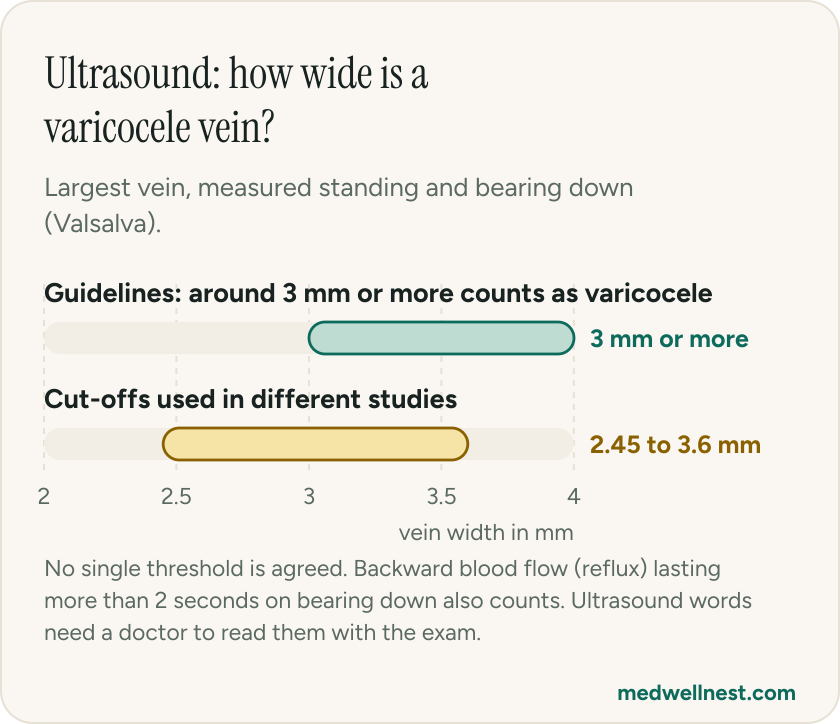
A colour Doppler scrotal ultrasound measures the width of the veins and shows reflux, which is blood flowing backwards, usually while you bear down (Valsalva). The AUA gives the standard definition as multiple large veins wider than 3 mm and reversal of blood flow on Valsalva. The ESUR radiology guidance measures the largest vein while standing and bearing down and calls 3 mm or more diagnostic. The EAU adds that reflux lasting more than 2 seconds goes with a clinically significant varicocele, and the radiology review notes that brief reflux is considered normal by several investigators.
The thresholds vary. Studies have used cut-offs from 2.45 mm to 3.6 mm, and the review stresses that the report should say the position (standing or lying), where the vein was measured and whether it was during Valsalva. The measured width also changes with the site: in one study the average was 2.62 mm in the spermatic cord and 2.33 mm in the veins beside the testicle.
Ultrasound is not needed for every man. The AUA says scrotal ultrasound should not be routine in the first evaluation of an infertile man, and discourages routine ultrasound for a presumed varicocele; the EAU says it is useful when the examination is inconclusive or when semen results stay poor after repair. The AUA adds that treating a varicocele found only on imaging is not associated with better semen results or fertility, and recommends against repair for it.
The report usually also gives the volume of each testicle. The ESUR guidance recommends measuring it in every man with a varicocele as an indirect measure of testicular function.
04
Does a varicocele cause infertility or affect semen quality?
A varicocele is more common in men with fertility problems, but it is common in men without them. The EAU reports it in almost 15% of the normal male population, in 25% of men with abnormal semen analysis and in 35% to 40% of men presenting with infertility. The AUA gives about 15% of all adult men and 40% of infertile men.
The exact link is not known. The EAU lists higher scrotal temperature, low oxygen and backflow of harmful substances as possible reasons the testicle works less well. In adolescents the EAU warns about overtreatment, because most boys with a varicocele have no problem fathering a child later.
The semen analysis is what shows whether sperm are affected. Our semen analysis guide explains each value. A varicocele with a normal semen analysis does not need treatment for fertility.
05
Does a varicocele need treatment, and when is repair considered?
MedlinePlus says a varicocele is often harmless and often does not need treatment, unless there is a change in the size of the testicle or a problem with fertility. Snug underwear or a jock strap may ease discomfort.
For fertility, the AUA and American Society for Reproductive Medicine guideline (2020, amended 2024) says clinicians should consider surgical repair for men trying to conceive who have a palpable varicocele, infertility and abnormal semen results, except men with no sperm in the semen (azoospermia). It recommends against repair for varicoceles detected only by imaging. The EAU is similar: treat infertile men with a clinical varicocele, abnormal semen and otherwise unexplained infertility when the female partner has good ovarian reserve, and do not treat men with normal semen or a subclinical varicocele.
In adolescents, the EAU recommends surgery only for a varicocele with a persistent small testicle, a size difference of more than 2 mL or 20% confirmed on two visits six months apart.
Repair is done by surgery, or by embolisation, in which a coil blocks the abnormal vein. Semen improvement can take up to two sperm-production cycles, and pregnancy tends to follow 6 to 12 months after repair. For pain, the EAU reports that it resolved in 48% to 90% of patients after repair. Risks include a shrunken testicle, a blood clot, infection and injury to nearby structures.
06
Which varicocele signs need a quicker check?
A varicocele that is on the right side only is uncommon. Because tumours deep in the abdomen have been feared as a cause, the guidelines differ on routine scans: the AUA recommends against routine abdominal imaging for an isolated small or moderate right varicocele, while the EAU says an isolated clinical right varicocele should be examined further, and the ESUR guidance says the scan can be extended to the abdomen. The AUA adds that abdominal imaging should be considered for a new-onset or non-reducible varicocele, one that does not shrink when you lie down, especially if it is large.
MedlinePlus adds that a varicocele that appears suddenly in an older man may be caused by a kidney tumour blocking the vein. This is rare: a 2016 review says only 2% to 3% of kidney tumours present as a symptomatic varicocele.
A change in the size of a testicle, a testicle that has become smaller than the other, or a new lump or swelling also needs an examination.
07
Is sudden testicle pain a varicocele?
Not usually. A varicocele more often causes a dull ache. The NHS says sudden, severe pain in a testicle can be caused by testicular torsion, a twisting of the testicle, which is a serious problem that can lead to the loss of the testicle if it is not treated quickly.
The NHS lists sudden severe pain, pain with feeling or being sick or tummy pain, and pain that lasts more than an hour or continues at rest as signs that need treatment in hospital as soon as possible. Infection of the epididymis, an injury and a hernia are other causes, and the NHS advises not to try to work out the cause yourself.
When to act
Emergency — act now
Sudden, severe pain in a testicle, pain with nausea, vomiting or tummy pain, or testicle pain that lasts more than an hour or continues at rest: go to an emergency department now. This can be testicular torsion, a twisted testicle, which can lead to loss of the testicle if it is not treated quickly. Do not wait for a scan result or for the pain to settle.
Same-day — call promptly
See a doctor today if you notice a new lump in a testicle, a swollen testicle, a change in the shape of a testicle, or a testicle that has become bigger than the other, or noticeably smaller or harder.
Routine — see a doctor
Book a visit soon, within a week or two, if a varicocele appears suddenly, especially in an older man, is on the right side only, or does not shrink when you lie down; the doctor will examine you and may arrange an abdominal ultrasound to look for other causes. If you have a known varicocele without these signs, book a visit with a urologist if you are trying to conceive and have not succeeded, your semen analysis is abnormal, or a dull ache bothers you. Bring any ultrasound and semen analysis reports.
Values mentioned in this story
Each one opens a visual guide with its normal range and what moves it — upload a report and we place your own numbers on the same scale.
Sources
- Male Infertility — EAU Guidelines on Sexual and Reproductive Healthuroweb.org
- Diagnosis and Treatment of Infertility in Men: AUA/ASRM Guideline, 2020, amended 2024auanet.org
- Ultrasound evaluation of varicoceles: systematic literature review and rationale of the ESUR-SPIWG guidelines — Journal of Ultrasound, 2020pmc.ncbi.nlm.nih.gov
- Diagnosis of clinical and subclinical varicocele: how has it evolved? — Asian Journal of Andrology, 2016pmc.ncbi.nlm.nih.gov
- Varicocele — MedlinePlus Medical Encyclopediamedlineplus.gov
- Testicle pain — NHSnhs.uk
Share this story
Curious where your own values stand?
Two minutes from upload to a full visual picture. Free to analyze.