In short
Seven shapes, from hard lumps to pure liquid. Types 3 and 4 are what healthy stool usually looks like. A lasting change from your own normal matters more than any single day, and so do blood, black stool and pale stool.
Emergency if: Bleeding from the bottom that will not stop, or a lot of blood such as red toilet water or large clots: have someone take you to an emergency department or call emergency services now.
On your report
Hemoglobin, Ferritin, Total Bilirubin, Direct Bilirubin +1 more
On this page
01
A chart for something nobody likes to describe
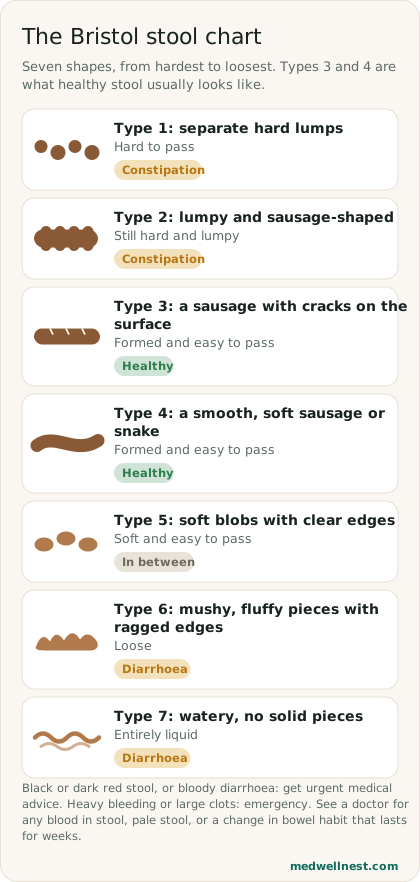
Most of us never describe our poo to anyone, which is exactly why doctors use a picture chart instead. The Bristol stool chart sorts stool into seven shapes, from separate hard lumps at one end to pure liquid at the other. Pointing at a number is quicker and clearer than hunting for polite words in a clinic.
NHS England shares a version with carers so they can spot constipation in the people they look after, and you can use it the same way on yourself. The chart describes shape and texture only. Colour, blood and how often you go are separate questions, and they are covered further down.
02
The seven types, one by one
Type 1 is separate hard lumps, like nuts, that are hard to pass. Type 2 is sausage-shaped but lumpy. Type 3 is like a sausage with cracks on the surface, and type 4 is like a sausage or snake, smooth and soft. Types 3 and 4 are the shapes the chart treats as healthy.
Type 5 is soft blobs with clear-cut edges. Type 6 is fluffy pieces with ragged edges, a mushy stool, and type 7 is watery with no solid pieces, entirely liquid. The Rome Foundation, which publishes the scale for doctors, groups types 1 and 2 as constipated stool and types 6 and 7 as diarrhoeal stool.
Type 5 sits in between. None of the sources we checked place it in the healthy group or the diarrhoea group, so treat it as a reason to notice what comes next rather than a verdict. Look for the shape that matches most of your stools over a week, not just one visit to the toilet.
03
What healthy usually looks like
NHS England's carer chart puts it plainly: if a poo does not look like type 3 or type 4, it could be constipation. Healthy stool is formed, holds together and comes out without straining or pain. The NHS lists the signs of constipation as poo that is unusually large or small and dry, hard or lumpy, straining or pain when you go, and a feeling that you have not fully emptied your bowels.
That line can seem odd for loose stool, but there is a reason it can apply: the NHS says long-term constipation can lead to faecal impaction, where poo builds up in the last part of the bowel, and the main symptom is diarrhoea that leaks around the blockage. The NHS also notes that constipation is easily missed in older people and in people with dementia, so runny stool in someone who has been bunged up is worth raising with a doctor.
04
How often is normal?
There is no single right number, and the sources we checked do not give one. What they do give is a lower line. The NHS says it is likely to be constipation if you have not had a poo at least three times during the last week, or if you are going less often than is usual for you.
The words that matter most are 'usual for you'. Your own steady pattern is your baseline. A change that sticks is what deserves attention, and the NHS asks you to see a doctor if your poo has been softer, thinner or longer than normal for three weeks, even if nothing hurts.
If you are going less often, the NHS suggests simple steps first: more fibre from fruit, vegetables and cereals, added gradually, plenty of water, fruits such as apples, apricots, grapes, raisins, raspberries and strawberries, and some wheat bran, oats or linseed. Keep a regular toilet time, do not delay when you feel the urge, rest your feet on a low stool so your knees sit above your hips, and try a daily walk. A pharmacist can suggest a laxative if this is not enough; most work within 3 days and are meant for short-term use.
05
Colour: what brown, red, black and pale can mean
Brown is the baseline. Bile salts from the liver give stool its usual brown colour, according to MedlinePlus. Stool that turns pale, clay-like or putty-coloured can point to a problem with how the liver makes or drains bile, and it often comes with yellow skin or dark urine. MedlinePlus advises contacting a doctor if your stool has not been its normal brown for several days.
Bright red blood on the toilet paper, red streaks on the outside of the stool or pink water in the pan has several possible causes. The NHS lists piles and small tears in the anus among common causes, often after constipation. Eating a lot of red or purple foods such as tomatoes and beetroot can make poo look as though it is mixed with blood, but the NHS says a doctor can check if you are not sure.
Very dark or black stool has harmless causes too: iron tablets and dark foods such as liquorice and blueberries can do it. But black or very dark poo can also be blood from bleeding in the stomach or gut, including from a stomach ulcer or as a side effect of blood thinners such as warfarin, apixaban or aspirin. That is why the NHS treats black or dark red poo as urgent.
06
When to see a doctor, and how quickly
If you are constipated and see blood in your poo, the NHS constipation page says to see a doctor. Its rectal-bleeding page adds that a small one-off bleed is often not serious. Book a routine appointment if you have had blood in your poo for three weeks, poo that has been softer, thinner or longer than normal for three weeks, a lot of pain around your bottom, a pain or lump in your tummy, more tiredness than usual, or weight loss you cannot explain. Do the same if a child has blood in their poo, or if constipation keeps coming back or is not improving with treatment. The NHS notes that bleeding from the bottom is sometimes a sign of bowel cancer, which is easier to treat when it is found early.
Ask for an urgent appointment the same day if your poo is black or dark red, or if you have bloody diarrhoea. Treat it as an emergency if bleeding from your bottom will not stop, or if there is a lot of blood, such as toilet water that turns red or large clots. Do not drive yourself; ask someone to take you, or call emergency services.
When to act
Routine — see a doctor
Hard, lumpy stools or fewer than three a week with no blood: more fibre, fluids and movement and a regular toilet time. See a doctor if you see blood in your poo, or if poo has been softer, thinner or longer than normal for three weeks.
Same-day — call promptly
Black or dark red poo, or bloody diarrhoea: ask for an urgent doctor's appointment the same day.
Emergency — act now
Bleeding from the bottom that will not stop, or a lot of blood such as red toilet water or large clots: have someone take you to an emergency department or call emergency services now.
Values mentioned in this story
Each one opens a visual guide with its normal range and what moves it — upload a report and we place your own numbers on the same scale.
Sources
- Bristol stool chart for carers — NHS Englandengland.nhs.uk
- Bristol Stool Form Scale card — Rome Foundationtheromefoundation.org
- Constipation — NHSnhs.uk
- Bleeding from the bottom (rectal bleeding) — NHSnhs.uk
- Stools - pale or clay-colored — MedlinePlusmedlineplus.gov
Share this story
Curious where your own values stand?
Two minutes from upload to a full visual picture. Free to analyze.