In short
Sources give ranges, not a fixed schedule: hospital for 1 to 4 days, bleeding for about 4 to 6 weeks, and driving, exercise, lifting and sex only when you feel able, which the NHS says may be 6 weeks or so. Heavy bleeding, chest pain or a painful swollen calf needs emergency care now.
Emergency if: You have heavy bleeding that soaks through 2 pads an hour for more than 1 to 2 hours, gushes or comes with large clots; you feel faint or dizzy, or your heart is racing; chest pain, trouble breathing, or coughing or gasping for air; a painful, swollen calf or leg; severe pain low in the tummy; a wound that opens up; fever with chills and feeling very unwell; a severe headache that does not get better with painkillers, or a headache with blurred vision or seeing spots, which can be pre-eclampsia after birth; a seizure; or thoughts of harming yourself or your baby: call emergency services now or go to an emergency department now. ACOG says to seek emergency help right away for chest pain, gasping for air, a seizure, severe lower tummy pain, leg pain and swelling, and thoughts of hurting yourself or your baby. The NHS and NICE flag heavy bleeding, cough or breathlessness and a painful swollen calf as signs of a blood clot or infection. Fever with chills and feeling very unwell can mean a serious infection, which the NHS says should be treated as soon as possible, and ACOG lists fever and chills among the reasons to call right away. The NHS and ACOG list a severe headache, or a headache with changes in vision, as a possible sign of pre-eclampsia after birth, which needs help straight away.
On this page
01
How long does it take to recover from a C-section?
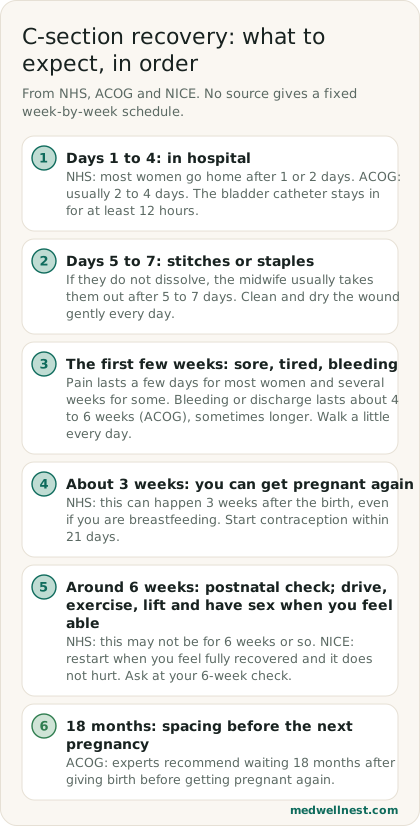
No source gives one number. The NHS says most women can leave hospital 1 or 2 days after a caesarean and may need to take things easy for several weeks. ACOG says a hospital stay is usually 2 to 4 days and that it takes a few weeks for the abdomen to heal. NICE says a woman who is recovering well, has no fever and has no complications can be offered discharge after 24 hours, with follow-up at home.
None of the sources gives a fixed week-by-week timetable, so this page follows the order they describe: hospital, the first days at home, the first weeks, and the point around 6 weeks. The NHS says pain can last several weeks for some women. For driving, exercise, lifting and sex, NICE says you can restart when you feel fully recovered, including from any pain or physical restriction, and the NHS says this may not be for 6 weeks or so. Ask your midwife if you are unsure.
02
What is normal after a C-section, week by week?
In hospital, the NHS says you are encouraged to get out of bed and move around as soon as possible, a catheter stays in your bladder for at least 12 hours, and the wound dressing stays on for at least 24 hours. NICE says standard dressings come off 6 to 24 hours after the birth. The NHS says most women have some discomfort for the first few days, and for some the pain lasts several weeks.
At home, the NHS says stitches or staples that do not dissolve are usually taken out by your midwife after 5 to 7 days. ACOG lists what to expect while you recover: mild cramping, especially if you breastfeed, bleeding or discharge for about 4 to 6 weeks, bleeding with clots and cramps, and pain or numbness in the incision. The NHS says the scar is usually a horizontal line about 10 to 20 cm long just below the bikini line, red and obvious at first and fading with time. On darker skin it may fade to a brown or white mark.
Two timing points matter even if you feel well. The NHS says you can get pregnant again just 3 weeks after the birth, even if you are breastfeeding and your periods have not started, and to start contraception within 21 days. Around 6 weeks is also when the postnatal check happens, and the NHS says you can ask there when it is safe to restart activities. Our postpartum hair fall story covers the hair shedding that can follow birth.
03
How do I look after a C-section wound, and are itching and numbness normal?
The NHS and NICE give the same basics: gently clean and dry the wound every day, wear loose, comfortable clothes and cotton underwear, and watch for signs of infection. NICE says the wound should be checked for signs of infection, such as increasing pain, redness or discharge, and for separation or opening, and says staff should also monitor for fever. If the wound is sore, the NHS says that for most women who are breastfeeding paracetamol or ibuprofen is better than aspirin, and that aspirin and codeine are not usually recommended while breastfeeding. Ask your doctor or pharmacist what suits you.
ACOG lists pain or numbness in the incision as something to expect while you recover. These sources do not discuss itching, so we cannot say how long it lasts. If itching comes with redness, heat, swelling or discharge, treat it as a possible infection and use the same-day signs below. NICE says infections of the womb lining, urinary tract and wound occur in about 8% of women after a caesarean, which is why wound checks and fever checks are routine.
04
How long does bleeding last after a C-section, and when is it too heavy?
ACOG says bleeding or discharge for about 4 to 6 weeks is expected after a caesarean, and the NHS says you may have some vaginal bleeding. Use period pads, not tampons or menstrual cups, until you have had your 6-week postnatal check: the NHS says using them before then could increase the chance of infection. ACOG says not to place anything in the vagina or have sex for a few weeks. Our lochia story explains how the bleeding usually changes from week to week, and notes that the NHS says bleeding after any birth usually stops by 6 to 8 weeks and can last longer.
ACOG defines heavy bleeding as soaking through two pads an hour for more than an hour or two. The NHS says sudden or very heavy blood loss, possibly with feeling faint and a fast heartbeat, can be a postpartum haemorrhage. NICE says that when bleeding after a caesarean is heavy or irregular, infection of the womb lining is considered, and the NHS lists fever, tummy pain and abnormal discharge as its signs.
05
When can I walk, lift, drive, exercise or have sex after a C-section?
Walking comes first. The NHS says to stay mobile and do gentle activities such as a daily walk to reduce the risk of blood clots, without overexerting yourself. It says you should be able to hold and carry your baby once you are home, and that you will need someone to give you a lift home because you will not be able to drive for a few weeks.
The NHS says you may not be able to drive, exercise, carry anything heavier than your baby or have sex straight away, and to start only when you feel able and it is not uncomfortable, which may not be for 6 weeks or so. NICE gives the same test: when you feel fully recovered, including any pain or physical restriction. ACOG says to allow time to heal before strenuous activity. The sources do not set a week for any one activity, so pain is the guide, and your midwife or doctor can advise.
06
How long should I wait before the next pregnancy, and can I have a normal delivery next time?
ACOG says experts recommend waiting 18 months after giving birth before getting pregnant again, which gives the best health outcomes for you and your next baby. The NHS says you can get pregnant much sooner, as early as 3 weeks after the birth, so contraception matters if you are not planning another pregnancy yet. ACOG also says more caesarean births raise the risk of problems with the placenta, rupture of the womb and hysterectomy in future pregnancies.
For the next birth, NICE says to weigh your preferences against the risks and benefits of a repeat planned caesarean and of a planned vaginal birth after caesarean. For women who have had up to 4 caesareans, the risk of fever, bladder injury and surgical injury does not vary with the planned mode of birth, but the risk of the womb scar rupturing is higher with a planned vaginal birth. NICE says women with a previous vaginal birth as well are more likely to have a vaginal birth again. Planned vaginal birth should happen where a caesarean and blood transfusion are immediately available.
07
When is a problem after a C-section an emergency?
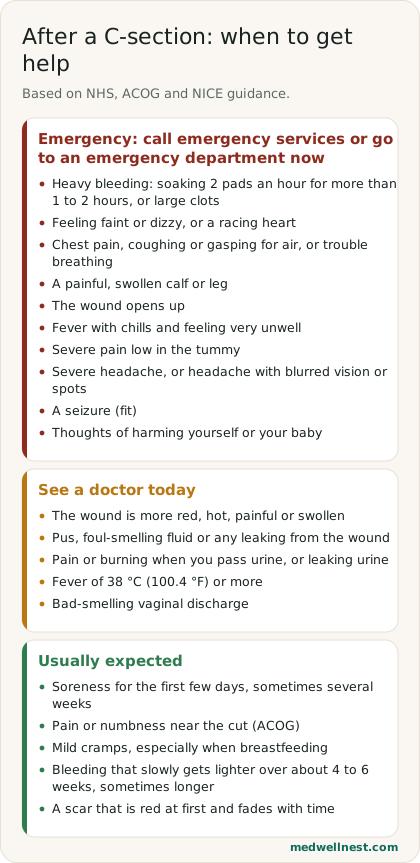
The sources use slightly different wording, so here is exactly what they say. ACOG says to call emergency services or seek emergency help right away for chest pain, coughing or gasping for air, seizures, thoughts of hurting yourself or your baby, severe pain in the lower tummy, and pain, swelling and tenderness in the legs. The NHS says to contact your midwife or doctor straight away for severe pain, heavy vaginal bleeding, a wound that becomes more red, painful and swollen, pus or foul-smelling fluid from the wound, a cough or shortness of breath, and swelling or pain in the lower leg. It says these can be signs of infection or a blood clot, which should be treated as soon as possible.
We put the signs that can mean a blood clot in the leg or lung, a very heavy bleed, a serious infection or a risk to your life in the emergency tier, because the NHS and NICE single out a painful swollen calf, cough and breathlessness as clot signs, and the cost of waiting a day is high. We also put a wound that opens up there, as a cautious choice: NICE says the wound should be checked for separation or opening, none of these sources says an open wound can wait, and an open wound cannot be judged at home. Fluid draining or leaking from the wound is a same-day sign: ACOG says to call your doctor right away for it. A red, hot or painful wound, pus or foul discharge, pain when passing urine, or a fever without feeling very unwell are same-day signs, and the ACOG and NHS lists cover them. The NHS also lists headache, changes in vision and vomiting after the birth as possible signs of pre-eclampsia, which needs help straight away; our lochia story covers this in more detail.
Mood matters too. NICE says a caesarean does not by itself raise the risk of depression, but the NHS says postnatal depression can begin soon after birth or up to a year later, and lists thoughts of suicide or of harming yourself or your baby as symptoms. ACOG says to call your doctor right away for feelings of hopelessness lasting more than 10 days after delivery. Our postnatal depression guide has more.
After a C-section: how fast to act
Emergency — act now
You have heavy bleeding that soaks through 2 pads an hour for more than 1 to 2 hours, gushes or comes with large clots; you feel faint or dizzy, or your heart is racing; chest pain, trouble breathing, or coughing or gasping for air; a painful, swollen calf or leg; severe pain low in the tummy; a wound that opens up; fever with chills and feeling very unwell; a severe headache that does not get better with painkillers, or a headache with blurred vision or seeing spots, which can be pre-eclampsia after birth; a seizure; or thoughts of harming yourself or your baby: call emergency services now or go to an emergency department now. ACOG says to seek emergency help right away for chest pain, gasping for air, a seizure, severe lower tummy pain, leg pain and swelling, and thoughts of hurting yourself or your baby. The NHS and NICE flag heavy bleeding, cough or breathlessness and a painful swollen calf as signs of a blood clot or infection. Fever with chills and feeling very unwell can mean a serious infection, which the NHS says should be treated as soon as possible, and ACOG lists fever and chills among the reasons to call right away. The NHS and ACOG list a severe headache, or a headache with changes in vision, as a possible sign of pre-eclampsia after birth, which needs help straight away.
Same-day — call promptly
Your wound is more red, hot, painful or swollen, has pus or foul-smelling fluid, or has any fluid draining or leaking from it; you have pain or burning when you pass urine or are leaking urine; your temperature is 38 °C (100.4 °F) or higher; your vaginal discharge smells bad; your pain is getting worse; or you have felt hopeless for more than 10 days: contact your midwife or doctor today, without waiting for a routine appointment. The NHS says to contact them straight away for these, and ACOG says to call right away. If you also feel very unwell, treat it as an emergency.
Routine — see a doctor
You are unsure when to drive, exercise, lift or have sex again, want to plan contraception or the timing of another pregnancy, or are worried about numbness or the look of the scar: ask your midwife or doctor, and raise it at your 6-week postnatal check. NICE says to restart activities when you feel fully recovered, and the NHS says that may not be for 6 weeks or so.
Sources
Share this story
Curious where your own values stand?
Two minutes from upload to a full visual picture. Free to analyze.