In short
NICE counts fewer than 3 complete stools a week, hard stools and overflow soiling as signs of constipation. Fluids, fibre and a calm toilet routine help. Blood, vomiting, a swollen belly or weight loss need a doctor today, and green vomit or a swollen belly with repeated vomiting in a baby needs emergency care now.
Emergency if: Your child is vomiting green or yellow-green fluid, is vomiting blood, has a sudden severe tummy ache, or is a baby with a swollen, tight belly who keeps vomiting; or a child with constipation since birth, or with a swollen belly, also has a temperature of 38 °C or higher or watery, foul-smelling or bloody diarrhoea; or your child is floppy, very drowsy or hard to wake: go to an emergency department now or call emergency services now. The NHS says green or yellow-green vomit in a child, vomiting blood and a sudden severe tummy ache need emergency care, and that a child with signs of a bowel blockage plus fever or foul-smelling diarrhoea may have a serious bowel infection.
On this page
01
What is normal pooping for a child, and when is it constipation?
There is no single right number. The American Academy of Pediatrics says different children poop different amounts and number of times each day: some once a day, others after every meal, which is 3 or so times a day. It says the most important thing is the softness of the poop, and the goal is a type 3 or type 4 on the Bristol scale. MedlinePlus adds that some children do not pass stool every day and some healthy children always have very soft stools.
Babies are different. MedlinePlus says infants tend to pass stool about once a day in the first month, and after that may go a few days or even a week between stools. Babies strain, cry and go red in the face when they pass stool because their tummy muscles are weak, and that does not mean they are constipated if the stool is soft. NICE says fewer than 3 complete stools a week is one sign of constipation, but this does not apply to exclusively breastfed babies after 6 weeks of age.
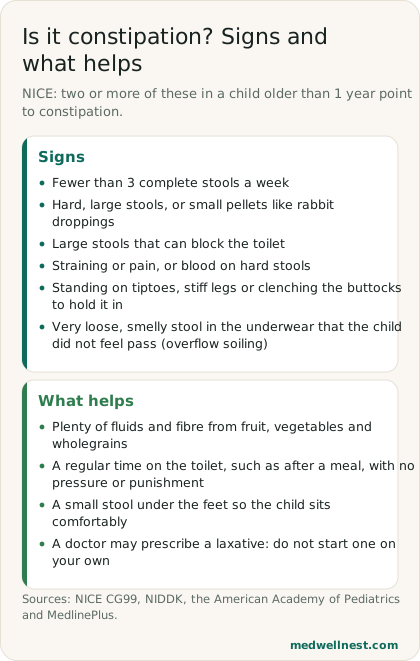
NICE says two or more findings from its list point to constipation. In a child older than 1 year the list includes fewer than 3 complete stools a week, small hard pellets like rabbit droppings, large infrequent stools that can block the toilet, overflow soiling, straining, anal pain, standing stiff-legged on tiptoes to hold stool in, and painful stools with bleeding. NIDDK also lists clenching the buttocks and says some constipated children wet themselves by day or night.
02
Why does my child hold back and refuse to poop?
Holding back is the most common cause. NIDDK says children most often become constipated from holding in stool to avoid or delay a bowel movement. When stool stays too long in the colon, the colon absorbs too much fluid and the stool becomes hard, dry and difficult to pass. NIDDK lists stress about potty training, embarrassment about a public toilet, not wanting to interrupt play, and fear of a painful bowel movement as reasons for holding on.
The American Academy of Pediatrics describes a withholding cycle: a hard stool hurts, so the child holds back, so the next stool is harder and larger. It says children aged 2 to 5 years may want to show they can decide things for themselves, so it is best not to push children into toilet training. A small tear around the anus, called an anal fissure, can come from a large hard stool and usually shows as a little blood on the toilet paper.
03
Why is my child's underwear soiled when he or she is not passing stool?
This can be the withholding cycle at its worst. The American Academy of Pediatrics says that when poop overflows like diarrhoea because of constipation, it is called encopresis. It can be alarming because it looks like diarrhoea from an infection, but it is the child's body trying to push out a large amount of backed-up stool. NICE describes overflow soiling as commonly very loose, very smelly, and passed without the child feeling it, and says it can also be thick and sticky or dry and flaky.
Because the child often does not feel it, scolding or punishing does not help. NICE advises negotiated, non-punitive behavioural support. It also tells doctors to inform families that treatment to clear the backed-up stool can at first increase soiling and tummy pain, so a worse few days at the start does not mean the treatment has failed.
04
What can I do at home for a child's constipation?
The American Academy of Pediatrics says there is no specific constipation diet shown to work, but more water and natural fibre from fruit and vegetables are healthy choices. NICE recommends adequate fluid and a balanced diet with fibre such as fruit, vegetables, wholegrain cereals and baked beans, but not unprocessed bran, which can cause bloating and wind. The American Academy of Pediatrics warns that fibre supplements taken without enough water can make constipation worse.
Routine helps. MedlinePlus says to teach older children to sit on the toilet right after a meal, and NICE lists scheduled toileting, a bowel diary and encouragement or rewards, never punishment. The American Academy of Pediatrics says a small stool under the feet can improve toilet posture. On toilet training the sources differ: MedlinePlus says to pause it while constipated and the American Academy of Pediatrics says to continue, so ask your doctor which fits your child. We found no fetched source for home remedies such as ghee or isabgol, so ask your doctor before giving them.
05
When should I take my child with constipation to a doctor?
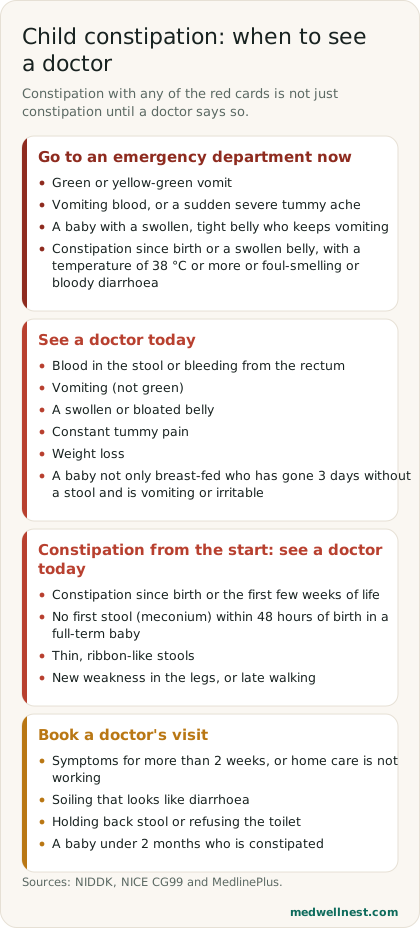
NIDDK says to see a doctor if symptoms last more than 2 weeks or do not go away with home treatment. It says to take your child to a doctor right away if constipation comes with bleeding from the rectum or blood in the stool, bloating, constant tummy pain, vomiting or weight loss. MedlinePlus says to contact the doctor right away if a baby who is not only breast-fed goes 3 days without a stool and is vomiting or irritable, and to contact the doctor if an infant under 2 months is constipated.
NICE lists red flags that mean it may not be ordinary constipation, and says such a child should be referred urgently instead of treated for constipation: constipation reported from birth or the first few weeks of life, no first stool (meconium) within 48 hours of birth in a full-term baby, a swollen belly with vomiting, new weakness in the legs or delayed walking, and thin ribbon-like stools.
06
Will my child need a laxative, and for how long?
Sometimes. NICE says diet changes alone should not be the first treatment for long-term constipation, so a doctor may prescribe a laxative at the first visit alongside advice on food, drink and toilet habits. The American Academy of Pediatrics says some children first need a clear-out of the backed-up stool and then daily maintenance treatment, and advises discussing any treatment, even over-the-counter ones, with your child's doctor before starting. MedlinePlus says not to give laxatives or enemas to children without first asking the doctor.
Expect it to take months, not days. NICE says treatment may take several months to resolve the problem, that maintenance medicine should continue for several weeks after a regular bowel habit is established, and that it should be reduced gradually rather than stopped suddenly. The American Academy of Pediatrics says maintenance treatment should last at least 2 months and then for at least 1 more month once symptoms have gone. Doses are for the doctor to set for your child's size and response.
When to act
Emergency — act now
Your child is vomiting green or yellow-green fluid, is vomiting blood, has a sudden severe tummy ache, or is a baby with a swollen, tight belly who keeps vomiting; or a child with constipation since birth, or with a swollen belly, also has a temperature of 38 °C or higher or watery, foul-smelling or bloody diarrhoea; or your child is floppy, very drowsy or hard to wake: go to an emergency department now or call emergency services now. The NHS says green or yellow-green vomit in a child, vomiting blood and a sudden severe tummy ache need emergency care, and that a child with signs of a bowel blockage plus fever or foul-smelling diarrhoea may have a serious bowel infection.
Same-day — call promptly
Your child has constipation with blood in the stool or bleeding from the bottom, vomiting that is not green, a bloated belly, constant tummy pain or weight loss: see a doctor today. Also see a doctor today if a baby who is not only breast-fed has gone 3 days without a stool and is vomiting or irritable; if a full-term newborn has not passed a first stool within 48 hours of birth; or if constipation started at birth or in the first few weeks of life, or comes with new weakness in the legs, late walking or thin ribbon-like stools. NIDDK says to see a doctor right away for blood, bloating, constant pain, vomiting or weight loss, and NICE says the birth, meconium, leg and ribbon-stool signs need urgent referral, not routine constipation treatment.
Routine — see a doctor
Symptoms have lasted more than 2 weeks or home care is not working; your child has soiling that looks like diarrhoea, holds back stool or refuses the toilet; or an infant under 2 months is constipated: book a doctor's visit. Do not start a laxative without asking the doctor, and bring a note of how often your child passes stool and what it looks like.
Sources
- Constipation in children and young people: diagnosis and management (CG99) — NICEnice.org.uk
- Hirschsprung's disease — NHSnhs.uk
- Symptoms and causes of constipation in children — NIDDKniddk.nih.gov
- Constipation in Children — American Academy of Pediatrics (HealthyChildren.org)healthychildren.org
- Constipation in infants and children — MedlinePlus Medical Encyclopediamedlineplus.gov
- Diarrhoea and vomiting — NHSnhs.uk
Share this story
Curious where your own values stand?
Two minutes from upload to a full visual picture. Free to analyze.