In short
Itching is common in pregnancy, but itchy palms or soles, very itchy skin or itching worse at night can be intrahepatic cholestasis of pregnancy (ICP), a liver condition. The NHS calls this urgent: contact your maternity unit today. A bile acid blood test confirms it and guides monitoring and birth timing.
Emergency if: Your baby is moving less than usual, you cannot feel it move, or the usual pattern of movements has changed: contact your maternity unit now, even in the middle of the night, and do not wait until the next day. If you cannot reach your maternity unit, go to an emergency department now.
On your report
SGPT (ALT), SGOT (AST), ALP, GGT
On this page
01
Is itching in pregnancy normal, and when should I call the maternity unit?
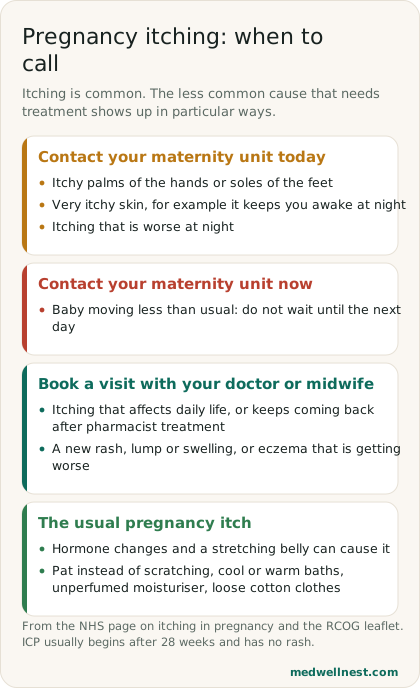
Itching is common. The NHS says hormone changes and a stretching belly can cause it, and that it usually stops after the baby is born. The RCOG says itching affects about 25 in 100 pregnant women and that most of them do not have ICP. But itching can be the first sign of ICP, so the RCOG asks you to tell your healthcare professional about it.
If you are pregnant and have very itchy skin, for example skin that keeps you awake at night, itchy palms of your hands or soles of your feet, or itching that is worse at night, the NHS lists this under urgent advice. It says these could be signs of ICP that needs urgent treatment, and to call your maternity unit if you have the number. You cannot tell the cause from the itch alone, so contact your maternity unit today, as soon as you notice it, and do not wait for your next check-up.
02
What is obstetric cholestasis (ICP) and why does it itch?
Intrahepatic cholestasis of pregnancy (ICP), previously called obstetric cholestasis, is a condition that affects how your liver works in pregnancy. The RCOG says it causes a build-up of bile acids in the body. Bile acids are made in the liver and help you digest fat and fat-soluble vitamins. The main symptom is itching of the skin without any rash. ICP usually starts in the third trimester, but the RCOG says itching can begin at any time, usually after 28 weeks, and it can range from mild to intense and very distressing.
The itch may include the palms of the hands or soles of the feet and tends to be worse at night, which can disturb sleep. There is no rash with ICP. The RCOG says it is often not clear why it develops in one pregnancy and not another, that it should get better after the baby is born, and that it causes you no long-term health problems. Rarely, ICP causes jaundice, yellow skin and eyes, which also gets better after birth.
03
How is ICP diagnosed? What is the bile acid test?
The RCOG says your skin will be checked for a skin condition such as eczema, and you will be offered blood tests: liver function tests (LFTs), and a bile acid test. Some LFTs can be raised in ICP. Bile acids are raised in ICP, and the RCOG says your bile acid level can be abnormal even when your liver function tests are normal, and that bile acids can be raised in other conditions too. Our liver function test story explains the usual liver numbers.
A normal first result does not always end the matter. The RCOG says some women itch for days or weeks before their blood tests become abnormal, and that if your itching persists and no other cause is found, the liver function tests and bile acids should be repeated. If your symptoms are unusual, start very early, or do not get better after the birth, further tests, a liver scan or a liver specialist may be offered. Tell your team if the itching continues.
04
What do the bile acid numbers 19, 40 and 100 mean?
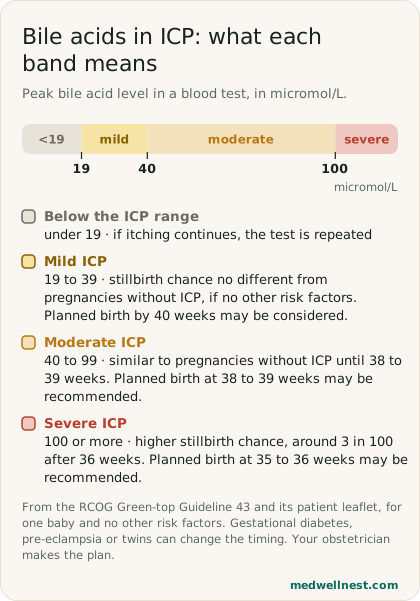
RCOG Green-top Guideline 43 divides ICP by the peak bile acid level: mild is 19 to 39 micromol/L, moderate is 40 to 99 micromol/L and severe is 100 micromol/L or more. The level matters because it guides how closely you are monitored and when birth is planned, and the guideline's patient leaflet links it to the chance of stillbirth, covered in the next section.
Bile acid results should be read by your obstetrician with the rest of your pregnancy. The RCOG says that after a diagnosis of ICP you should be under the care of an obstetrician, that blood tests will usually be repeated after one week, and that a plan will be made for you. In some women the level may return to normal without treatment, and the team may check again whether ICP is really present.
05
Why does ICP matter? What is the risk to the baby?
The RCOG leaflet says the chance of stillbirth depends on the bile acid level and on any other pregnancy complications. With bile acids of 19 to 39 micromol/L and no other risk factors, the chance is no different from someone without ICP. With 40 to 99 micromol/L it is similar to someone without ICP until you are 38 to 39 weeks pregnant. With 100 micromol/L or more it is higher, and around 3 in 100 women with severe ICP have a stillbirth after 36 weeks. The NHS says the risk of stillbirth is small and applies if ICP is severe, and that most people make a full recovery and have a healthy birth.
ICP also raises the chance of an early birth, either in natural labour or because the team advises it, and of the baby passing meconium before birth, which can make the waters green or brown. The RCOG says there is a small increased chance the baby needs the neonatal unit, especially if born early, and no known long-term health risks to the baby. Gestational diabetes, pre-eclampsia or twins may raise the chance of stillbirth and change when birth is advised.
06
When will my baby be born if I have ICP?
For one baby with no other complications, the RCOG leaflet says planned birth by your due date, 40 weeks, may be considered if bile acids are 19 to 39 micromol/L, and that you may also choose to wait for labour. For 40 to 99 micromol/L it says planned birth at 38 to 39 weeks may be recommended, and for 100 micromol/L or more, planned birth at 35 to 36 weeks may be recommended. These are options your obstetrician discusses with you, not fixed dates.
Your choices are induction of labour, a planned caesarean birth, or waiting for natural labour, and the RCOG says you do not need a caesarean just because you have ICP. The RCOG advises continuous monitoring of the baby's heartbeat in labour if your peak bile acids are 100 micromol/L or more (severe ICP) or you have other risk factors. The RCOG says you do not need extra scans because of ICP, but you should keep a close eye on your baby's movements and, if you are worried, go to your maternity unit straight away.
07
Is there a treatment for ICP? What about ursodeoxycholic acid?
The RCOG says treatments for the itch are of limited benefit. They may include skin creams such as aqueous cream, with or without menthol, antihistamines that may help you sleep, cool baths and loose cotton clothing. It says ursodeoxycholic acid, a medicine used in ICP, may slightly reduce itching in a small number of women. It also says no treatment makes your bile acid levels better or helps your baby directly, that ursodeoxycholic acid may reduce the chance of a premature birth, and that it does not prevent stillbirth. The NHS says ICP needs to be treated with medicine, and your obstetrician will explain what is offered.
Whether to use it, and how, is for your obstetrician to decide, so do not start or stop any medicine on your own. The RCOG adds that a daily vitamin K may be recommended for a small number of women because ICP can rarely affect blood clotting. After the birth the itch gets better soon, but blood tests can take several weeks to return to normal, and the RCOG advises a check at your 6-week postnatal visit. ICP is more likely to return in a later pregnancy, so tell your team early next time.
When to act
Emergency — act now
Your baby is moving less than usual, you cannot feel it move, or the usual pattern of movements has changed: contact your maternity unit now, even in the middle of the night, and do not wait until the next day. If you cannot reach your maternity unit, go to an emergency department now.
Same-day — call promptly
You are pregnant and your palms or soles itch, your skin is very itchy (for example it keeps you awake at night) or the itching is worse at night: contact your maternity unit today, as soon as you notice it, and do not wait for your next check-up. The NHS calls these urgent signs that could be ICP needing treatment. If you cannot reach the unit, see a doctor today. Also speak to your maternity team or doctor today if your skin or the whites of your eyes look yellow, or if you have had ICP, take an oestrogen-containing contraceptive such as the combined pill and itching starts; the RCOG lists jaundice as a rare feature of ICP, and says that if you take an oestrogen-containing contraceptive and develop itching you should see your healthcare professional immediately.
Routine — see a doctor
Itching affects your daily life, keeps coming back after treatment from a pharmacist, you have eczema that is getting worse or you notice a new rash, lump or swelling: see a doctor or midwife. Ask for your bile acids and liver function tests to be repeated if itching continues, and after birth go to your 6-week check to confirm the tests are back to normal.
Values mentioned in this story
Each one opens a visual guide with its normal range and what moves it — upload a report and we place your own numbers on the same scale.
Sources
Share this story
Curious where your own values stand?
Two minutes from upload to a full visual picture. Free to analyze.