In short
Back to sleep, on a firm flat surface, in your room for at least 6 months, with nothing soft around. Bed-sharing is riskiest after smoking, alcohol, sleepy medicines, on a sofa, or with a premature or small baby. A baby not breathing needs emergency services now.
Emergency if: Your baby stops breathing, will not wake up, is struggling for breath, is stiff, shaking or jerking, has lips, tongue, face or skin that suddenly turn pale, blue or grey, or is limp, floppy or not responding as normal: call emergency services now. Do not drive yourself to an emergency department; the person who answers will tell you what to do. The NHS lists each of these as needing immediate action.
On this page
01
What is SIDS, and can it be prevented?
The NHS defines sudden infant death syndrome (SIDS) as the sudden and unexplained death of an apparently healthy baby aged up to 12 months, and says it is rare, but it does still happen. It is not known what causes it. NICHD says there is no known way to prevent SIDS, but there are ways to reduce the risk, and that many risk factors can be changed.
The NHS says SIDS is more likely in the first 6 months of life but can affect babies up to 12 months, and it can happen any time a baby is asleep, day or night. Babies born before 37 weeks or weighing less than 2.5 kg at birth are more at risk, so are twins and multiples, and a premature baby should follow the safer sleep advice for a year from the due date, not the birth date. Cigarette smoke and sleeping with a baby on a sofa or chair also raise the risk.
02
Should I put my baby to sleep on the back, the side or the tummy?
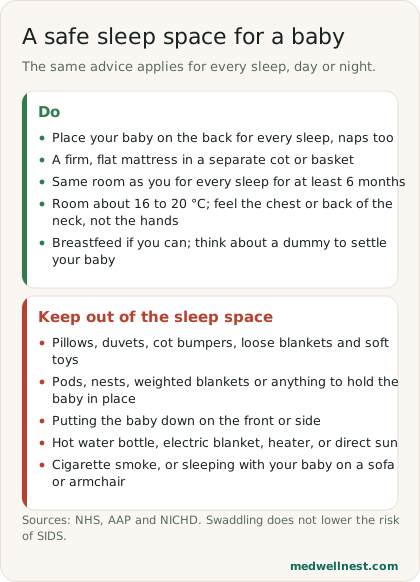
On the back, for every sleep including naps. NICHD says back sleeping carries the lowest risk and stomach sleeping carries a higher risk. It adds that the side-lying position also increases the risk because it is unstable and babies can easily roll to their stomach. The AAP says the side position is just as dangerous as the stomach position, and that babies will not choke on their backs because their airway anatomy and gag reflex prevent it. This includes babies with reflux.
The NHS adds two practical points: place your baby with their feet at the bottom of the cot, and if your baby rolls, move them back onto their back until they can roll onto their front and back again by themselves. The AAP says that once a baby rolls both ways comfortably you do not need to keep turning them, as long as there are no blankets, pillows, stuffed toys or bumpers in the bed. Its advice applies to babies up to 1 year of age, and neither source gives an age at which a pillow becomes safe, so ask your child's doctor before adding one.
03
What should my baby's bed and room be like?
The NHS says to use a firm, flat mattress and to keep the cot clear of anything that could cover your baby's face and head: no pillows, duvets, cot bumpers, loose blankets, soft toys, or pods and nests to hold the baby in place. The AAP adds that a firm surface should not dent when your baby lies on it, that any surface tilted more than 10 degrees is not safe for sleep, and that only a fitted sheet should be in the cot. The AAP also says not to use weighted blankets, sleepers, swaddles or other weighted objects on or near your baby.
Keep your baby in a separate cot or Moses basket in the same room as you for every sleep for at least the first 6 months, says the NHS. The AAP says sharing a room, without sharing a bed, can lower the risk of SIDS by as much as 50% and makes feeding and watching your baby easier. A baby may doze in a car seat, sling or swing, but the NHS says to take your baby out of the car seat as soon as you arrive, and the AAP says to move a baby who falls asleep in any of these onto a firm flat surface as soon as possible.
04
How do I stop my baby getting too hot or too cold?
The NHS says overheating can raise the risk of SIDS, from too much bedding or clothing or a hot room. Keep the room at about 16 to 20 °C with a room thermometer, and check your baby by feeling the chest or the back of the neck; cool hands and feet are normal. If the skin is hot or sweating, remove a layer. Use lightweight blankets, sheets or a baby sleeping bag, and take hats off indoors. The AAP says a baby needs only one more layer than you would wear.
A hot water bottle, an electric blanket, a spot next to a radiator, heater or fire, and direct sunlight are all unsafe for a sleeping baby, according to the NHS. If you are worried about your baby being cold, the AAP says to dress them in layers or use a wearable blanket rather than adding loose bedding. Our winter baby-care story has a checklist for keeping a newborn warm without overheating.
05
Is it safe to sleep with my baby in my bed?
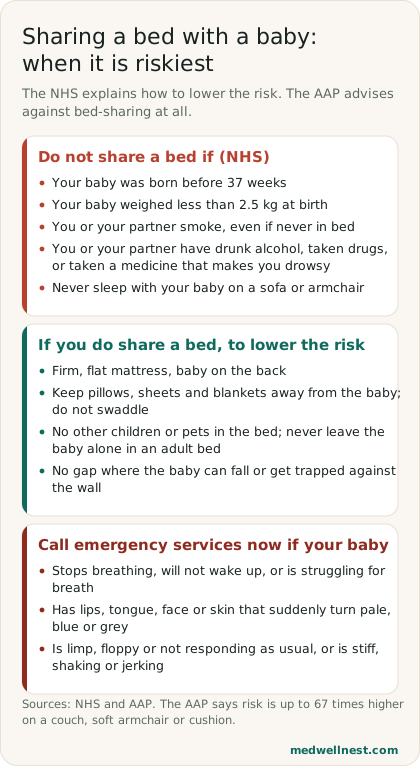
Many families share a bed, and the sources do not blame them; they explain how risk changes. The NHS says the safest place for a baby is a separate cot or Moses basket, and then explains how to share a bed more safely: a firm, flat mattress with the baby on their back, pillows, sheets and blankets kept away, no swaddling, no other children or pets in the bed, the baby never left alone in an adult bed, and no gap where the baby could fall or become trapped against the wall. The AAP goes further and advises avoiding bed-sharing under any circumstances. If you bring your baby into your bed to feed or comfort them, the AAP says to put them back in their own sleep space before you sleep.
Some situations are especially risky. The NHS says not to share a bed if your baby was born before 37 weeks or weighed less than 2.5 kg, or if you or your partner smoke (even if you never smoke in bed), have had 2 or more units of alcohol, have taken recreational drugs, or have taken a medicine that makes you drowsy. The AAP says the risk is up to 67 times higher on a couch, soft armchair or cushion, more than 10 times higher when the adult has used alcohol or sedating substances or is very tired, 5 to 10 times higher for a baby under 4 months, and 2 to 5 times higher for a baby born preterm or with low birth weight. The AAP also says that if there is any possibility you might fall asleep with your baby in your bed, you should remove pillows, blankets, sheets and other items that could cover the baby's face or head or cause overheating, and move your baby back to their own sleep space as soon as you wake. It advises avoiding falling asleep with your baby on a sofa or other soft seat.
06
What else lowers the risk: breastfeeding, a dummy, a smoke-free home, vaccines?
The NHS recommends breastfeeding if you can, and the AAP says evidence shows breast milk reduces the risk of SIDS. The NHS says to think about using a dummy to settle your baby to sleep because some research suggests it lowers the risk; the AAP says dummies reduce the risk even if the dummy falls out after the baby is asleep, advises waiting until breastfeeding is established, and says not to hang a dummy around your baby's neck. Keep routine vaccinations up to date, because the NHS says they protect against illnesses that may raise the risk of SIDS.
Do not smoke in pregnancy or around your baby, and do not let anyone smoke in the same room, says the NHS; the AAP adds that this includes vaping and smoking outside near the baby. Some popular steps do not lower the risk. The AAP says swaddling does not reduce the risk of SIDS and should stop when your baby starts trying to roll, which usually happens around 3 to 4 months but can be earlier. It also says home heart or oxygen monitors and products that claim to prevent SIDS have no evidence behind them and should not replace safe sleep steps.
07
What should I do if my baby is not breathing, blue or floppy?
Call emergency services now. The NHS says to call at once if your baby stops breathing, will not wake up, is struggling for breath, is stiff, shaking or jerking, has lips, tongue, face or skin that suddenly turn pale, blue or grey (on black or brown skin this may be easier to see on the palms or soles), or is limp, floppy or not responding as they normally do. The NHS says not to drive yourself to an emergency department: the person you speak to will tell you what to do while help comes.
If you are simply worried or think your baby might be ill, the NHS says to see a doctor the same day. If a baby has died, grief support exists; ask a doctor or a local counselling service where to find it.
When to act
Emergency — act now
Your baby stops breathing, will not wake up, is struggling for breath, is stiff, shaking or jerking, has lips, tongue, face or skin that suddenly turn pale, blue or grey, or is limp, floppy or not responding as normal: call emergency services now. Do not drive yourself to an emergency department; the person who answers will tell you what to do. The NHS lists each of these as needing immediate action.
Same-day — call promptly
You are worried about your baby or think they might be ill: see a doctor today. The NHS says to get urgent medical advice when you are worried about your baby.
Routine — see a doctor
You want help setting up a safe sleep space, your baby was born early or small, you are very tired and worried about falling asleep with your baby, or you want help to stop smoking: book a doctor's visit. The AAP says not to hesitate to talk with your baby's doctor about any concern over their sleep environment.
Sources
Share this story
Curious where your own values stand?
Two minutes from upload to a full visual picture. Free to analyze.