In short
A TORCH panel checks antibodies to infections that can harm a baby. A positive IgG usually means an old infection, and a positive IgM is often a false alarm. Here is how to read each line, and why routine panels are not recommended.
On this page
01
What a TORCH panel covers
TORCH is a shorthand for a group of infections that can harm a baby if the mother catches them in pregnancy: toxoplasmosis, other infections, rubella, cytomegalovirus (CMV) and herpes simplex. The "other" group is often taken to include syphilis, chickenpox and parvovirus B19. A typical TORCH panel reports two antibody results, IgG and IgM, for several of these at once.
Each line on the report needs reading separately, and none of them is a diagnosis on its own. The results are also less straightforward than they look, which is the main reason obstetric guidelines advise against running these panels routinely.
02
IgG and IgM: what each result means
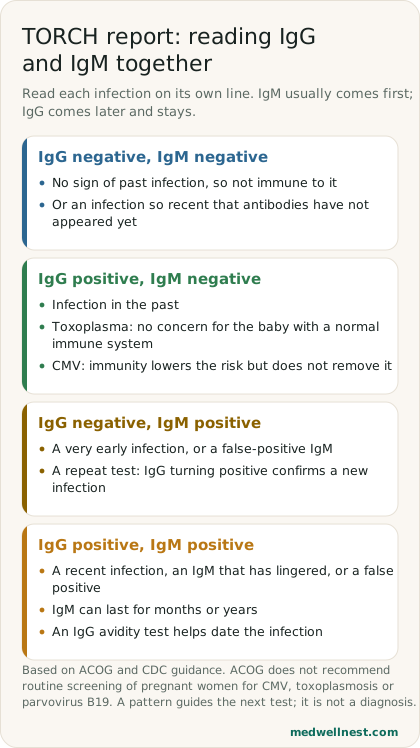
IgM is usually the first antibody the body makes after an infection, and IgG comes later and tends to stay for years. So, broadly, a positive IgG with a negative IgM points to an infection in the past. ACOG says that for toxoplasmosis this combination poses no concern for the baby in a woman with a normal immune system. For CMV it is less clear-cut. ACOG notes that immunity does not rule out infection in the baby, although the CDC puts the chance of passing on a repeat infection at about 3%, far lower than the 30 to 40% for a first infection in the first and second trimesters.
A negative IgG and negative IgM means no sign of past infection, so you are not immune to that infection, or, occasionally, an infection so recent that antibodies have not appeared yet. When both are positive, ACOG says it means either a recent infection or a false-positive result, and a repeat test a few weeks later (2 to 3 weeks for toxoplasma, 3 to 4 weeks for CMV) can show whether IgG is rising. The CDC calls a change from a negative to a positive IgG between two samples clear evidence of a recent first infection.
03
Why a positive IgM is often a false alarm
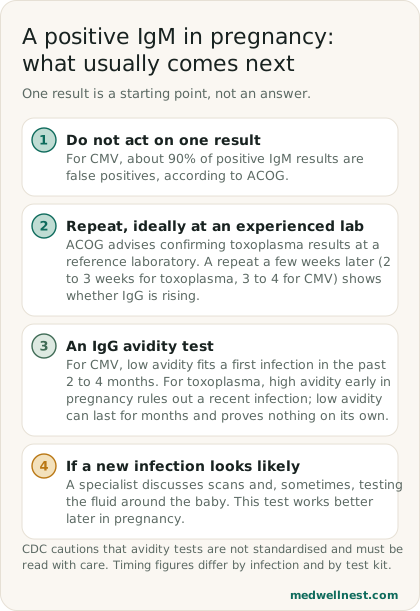
IgM is the result that worries people, and it is the least reliable. ACOG's guidance on CMV says about 90% of positive IgM results are false positives, probably from cross-reacting antibodies, and that only 10 to 30% of women with a detectable CMV IgM actually have a first infection. CMV IgM can also persist for months after an infection, or appear again when an old infection reactivates or a new strain is caught.
Toxoplasma tests have similar problems. ACOG says they are not well standardised, have high rates of false-positive and false-negative results, and that IgM can persist for many months or years after an infection. It advises confirming a suspected infection at a reference laboratory with specialist tests.
So a positive IgM is a reason for careful follow-up, not for a decision. Nothing about continuing the pregnancy should rest on a single IgM result.
04
Avidity: dating the infection
When IgG and IgM are both positive, an IgG avidity test can help tell a recent infection from an old one. Avidity is how tightly the IgG antibodies bind, and it strengthens as the immune response matures. For CMV, ACOG and the CDC say IgG stays low-avidity for the first 2 to 4 months and then matures, so a positive IgM with low avidity fits a first infection in that window. For toxoplasmosis, ACOG says low avidity indicates a first infection within the past 5 months, but the CDC cautions that low avidity can persist for many months and should not on its own be read as a recent infection; a high avidity result in the first 12 to 16 weeks essentially rules out an infection caught during the pregnancy.
High avidity points to an older infection, which is usually reassuring when the test is done early in pregnancy. The CDC cautions that avidity tests are not standardised and need to be interpreted with care, and results depend on the kit used.
05
Why routine TORCH panels are not recommended
ACOG, in guidance reaffirmed in 2024, does not recommend routine blood screening of pregnant women for CMV, toxoplasmosis or parvovirus B19. The CDC likewise says routine screening for a first CMV infection in pregnancy is not recommended. The reasons are the ones above: results are hard to interpret, false positives are common, IgM results are hard to use when counselling about the risk to the baby, and ACOG notes there is no vaccine or proven treatment to prevent CMV passing to the baby.
This is different from the tests offered to every pregnant woman, such as those for syphilis, HIV and hepatitis B, and from checking chickenpox immunity, which ACOG advises documenting early in pregnancy. Testing for a TORCH infection still makes sense when there is a reason: symptoms of an infection, a known exposure, or findings on a scan that suggest infection.
06
Lowering the risk during pregnancy
For CMV, the NHS advises washing hands with soap and water, especially after changing nappies, feeding young children or wiping their noses, not sharing food, cutlery or glasses with young children, and not kissing them on the mouth. There is currently no vaccine and no treatment for CMV in pregnancy.
For toxoplasmosis, ACOG lists handling cat faeces, eating contaminated undercooked meat, dairy or produce, drinking contaminated water and gardening without gloves as the main routes. If you are not immune to chickenpox and are exposed to someone with it, contact your doctor the same day: ACOG advises a protective antibody injection as soon as possible, ideally within 96 hours of exposure, and it can still be given up to 10 days after exposure.
When to act
Routine — see a doctor
A positive IgG with a negative IgM: this usually means an infection in the past. Keep the report and show it at your next antenatal visit.
Same-day — call promptly
A positive IgM on any line, or contact with chickenpox when you are not immune: speak to your doctor today. A positive IgM needs confirming before any decision, and chickenpox protection works best within 96 hours of exposure and can still be given up to 10 days after it.
Sources
- Cytomegalovirus, Parvovirus B19, Varicella Zoster, and Toxoplasmosis in Pregnancy (Practice Bulletin 151, reaffirmed 2024) — ACOGacog.org
- Cytomegalovirus (CMV) in Pregnancy: Physician FAQs — ACOGacog.org
- Clinical Overview of CMV and Congenital CMV — CDCcdc.gov
- Laboratory Testing for CMV and Congenital CMV — CDCcdc.gov
- Cytomegalovirus (CMV) — NHSnhs.uk
Share this story
Curious where your own values stand?
Two minutes from upload to a full visual picture. Free to analyze.