In short
The target depends on your weight before pregnancy: 11.5 to 16 kg for a healthy BMI, less if you started heavier, more if you started lighter. You do not need to eat for two, and the first trimester usually needs no extra calories at all.
Emergency if: Sudden swelling of the face, hands or feet, a severe headache that painkillers do not ease, blurred vision or flashing lights, pain below the ribs, heartburn that antacids do not ease, vomiting, or feeling very unwell — during pregnancy or in the weeks after birth: get urgent medical help now through your maternity unit or emergency services.
On your report
Fasting Glucose, Post-Prandial Glucose (PPBS), HbA1c, Hemoglobin
On this page
01
Why there is no single right number
Weight gain in pregnancy varies a great deal from one woman to the next. The NHS says most pregnant women gain between 10 and 12.5 kg, putting on most of it after week 20. But the range that is right for you depends mainly on one thing: your body mass index (BMI) before you became pregnant.
Gaining too much or too little can both cause problems. The NHS says too much can raise your blood pressure and increase the risk of gestational diabetes and pre-eclampsia. Too little can lead to premature birth and a baby with a low birth weight, under 2.5 kg, and can mean your body is not storing enough fat. Low gain is often linked to your diet and your weight before pregnancy. Some naturally slim women stay slim through pregnancy and still have healthy babies, which is why the number is a guide to discuss with your doctor rather than a test to pass.
02
How much to gain, by BMI
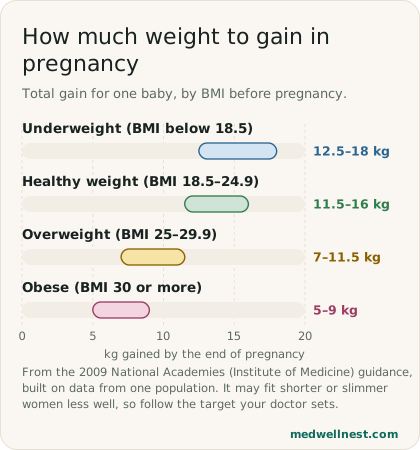
The most widely used targets come from a 2009 report by the National Academies (then the Institute of Medicine). For one baby, the recommended total gain is: underweight (BMI below 18.5), 12.5 to 18 kg; healthy weight (BMI 18.5 to 24.9), 11.5 to 16 kg; overweight (BMI 25 to 29.9), 7 to 11.5 kg; obese (BMI 30 or more), 5 to 9 kg.
The pattern is simple: the higher your starting BMI, the lower the target. The obese range is a single band for everyone with a BMI of 30 or more, so your doctor may fine-tune it for you.
Twins change the numbers. The same report gives provisional targets of 17 to 25 kg for a healthy weight, 14 to 23 kg if overweight and 11 to 19 kg if obese. It found too little evidence to set even a provisional target for underweight women carrying twins. The CDC does list a figure for that group, but it comes from a separate study rather than the report, so it is one to agree with your doctor.
03
A caution about these targets
These figures were built from data on one population. The report itself says they are not intended for places where women are substantially shorter or thinner than the women it was written for. They are still the numbers most doctors start from, but treat them as a starting point, not a verdict, and follow the target your own doctor sets. If your BMI sits close to one of the lines between bands, ask which range your doctor wants you to aim for.
04
When the weight comes, and where it goes
Most of the gain happens later. The National Academies figures assume a gain of only 0.5 to 2 kg in the whole first trimester. After that, the suggested average for a healthy-weight woman is about 0.42 kg a week, within a range of 0.35 to 0.50 kg. It is about 0.51 kg a week if you started underweight, 0.28 kg if overweight and 0.22 kg if obese.
Where does it go? The NHS says much of the extra weight is your baby growing, and your body also stores fat ready to make breast milk after the birth. Detailed kilogram-by-kilogram breakdowns circulate online, but we could not match one to a source we could check, so we have left them out.
05
You do not need to eat for two
You will probably feel hungrier than usual, but the NHS is clear that there is no need to eat for two, even if you are expecting twins or triplets. The extra energy you need is modest and comes later in pregnancy.
The CDC says the first trimester generally needs no extra calories. In the second trimester it suggests about 340 extra calories a day, and in the third about 450. Rather than bigger portions of everything, the NHS suggests a varied diet across the food groups, a healthy breakfast, and snacks such as fruit, yoghurt, vegetable or bean soups or a small sandwich instead of foods high in fat and sugar.
Pregnancy is not the time to go on a diet, the NHS warns, because it may harm the baby's health. If you are gaining faster than your target, talk to your doctor or midwife about food choices and staying active rather than cutting back hard on your own.
Staying active helps in its own right. The NHS says it prepares your body for labour and birth, and suggests keeping up your normal daily activity or exercise unless your midwife or doctor has advised you not to.
06
When to talk to your doctor
Ask about your personal target at your first antenatal visit. The NHS says your midwife or doctor may have special advice if your BMI is over 30 or below 18.5. Raise it again if you are gaining much faster or much slower than the range you have been given, or if anything about your weight worries you.
The earliest signs of pre-eclampsia are high blood pressure and protein in your urine. You are unlikely to notice either yourself, the NHS says, which is why your blood pressure and urine are checked at routine antenatal appointments. Keep going to those checks even when you feel well.
Sudden swelling is different from steady weight gain. Sudden swelling of the face, hands or feet can be a sign of pre-eclampsia, especially with a severe headache that simple painkillers do not ease, blurred vision or flashing lights, pain below the ribs, heartburn that medicines do not help, vomiting or feeling very unwell. The NHS says any of these need to be checked immediately. Pre-eclampsia is most likely from 20 weeks onwards but can happen at any point, and even in the weeks after birth.
When to act
Routine — see a doctor
Ask for your personal weight-gain range at your first antenatal visit, and raise it again if you are gaining much faster or slower than that range.
Emergency — act now
Sudden swelling of the face, hands or feet, a severe headache that painkillers do not ease, blurred vision or flashing lights, pain below the ribs, heartburn that antacids do not ease, vomiting, or feeling very unwell — during pregnancy or in the weeks after birth: get urgent medical help now through your maternity unit or emergency services.
Values mentioned in this story
Each one opens a visual guide with its normal range and what moves it — upload a report and we place your own numbers on the same scale.
Sources
Share this story
Curious where your own values stand?
Two minutes from upload to a full visual picture. Free to analyze.