In short
The differential count (DLC) splits your white cells into five types. Neutrophils usually make up 40–60% and lymphocytes 20–40%, but the absolute count matters more than the percentage. Here is how to read each line, what common patterns suggest, and why fever with very low neutrophils is an emergency.
Emergency if: Fever, chills or feeling very unwell when your neutrophil count is below 500 per µL, or when you are on chemotherapy or have been told your neutrophils are low: go to emergency now. Infection can become serious fast when neutrophils are this low.
On your report
WBC / Total Leukocyte Count, Absolute Neutrophil Count, Absolute Lymphocyte Count, Absolute Eosinophil Count +2 more
On this page
01
What the DLC section of a CBC shows
A complete blood count gives your total white blood cell count, often printed as WBC or TLC. The differential, or DLC, then splits that total into the five types that normally circulate: neutrophils, lymphocytes, monocytes, eosinophils and basophils. MedlinePlus explains that a machine counts each type, and a stained smear on a slide can also show whether any cells look abnormal or immature.
Most reports print each type twice: as a percentage of all white cells, and as an absolute count, the number of cells in each microlitre (µL) of blood, sometimes written as × 10³/µL or × 10⁹/L. No preparation or fasting is needed for the test.
The total tells you how many white cells there are; the DLC tells you which ones. MedlinePlus says the test is used to look for infection, anaemia or leukaemia, and to see whether treatment for one of them is working.
02
The five cell types and their usual ranges
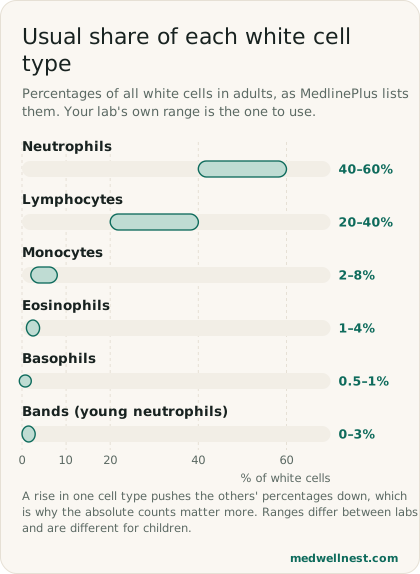
Neutrophils are the most common white cell, and MedlinePlus calls them the body's main defence against infection. MedlinePlus gives 40% to 60% of white cells as usual. For the absolute count, the Merck Manual puts the typical lower limit at about 1,500 per µL, below which the risk of infection starts to rise.
Lymphocytes, the B and T cells, fight off viruses, bacteria and toxins, and some destroy infected cells. MedlinePlus lists 20% to 40%. Cleveland Clinic gives an adult absolute range of 1,000 to 4,800 per µL, and notes that children normally run much higher, 3,000 to 9,500.
Monocytes, which clear germs and dead cells, are usually 2% to 8%. Eosinophils, involved in allergy and in fighting parasites, are 1% to 4%, and MedlinePlus puts a normal absolute eosinophil count at under 500 per µL. Basophils, which release enzymes during allergic reactions and asthma attacks, are 0.5% to 1%. Some reports also list bands, young neutrophils, usually 0% to 3%.
These are common adult ranges. Every lab sets its own, sources differ at the edges, and children's ranges are different, so always compare your result with the range printed on your own report.
03
Why the absolute count matters more than the percentage
Percentages have to add up to 100, so they move together. MedlinePlus points out that a rise in one type of white cell can push down the percentages of the others, even if their actual numbers have not changed. A high lymphocyte percentage, for example, can make the neutrophil percentage look low when the neutrophil count is fine.
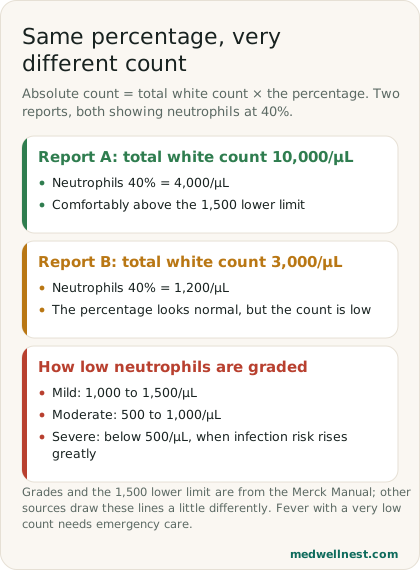
The absolute count removes that trap. It is worked out by multiplying the total white count by the percentage for that cell. Two people can both have neutrophils at 40%, well inside the usual range, but if one has a total white count of 10,000 per µL and the other 3,000, their absolute neutrophil counts are 4,000 and 1,200: one comfortable, one low.
So read the absolute column first. If your report gives only percentages, you can do the multiplication yourself, or ask the lab or your doctor for the absolute counts.
04
Common patterns: infection, viruses and dengue
High neutrophils, called neutrophilia, are most often a sign of acute infection, but MedlinePlus also lists inflammation, acute stress, injury, gout, rheumatoid arthritis, thyroiditis, cigarette smoking and, less often, blood disorders such as leukaemia.
High lymphocytes, lymphocytosis, fit many viral infections, including glandular fever (infectious mononucleosis), mumps and measles, and also tuberculosis and some chronic infections. Low neutrophils can also come with viruses: MedlinePlus lists flu and other viral infections among the causes, along with chemotherapy, radiation and severe bacterial infection (sepsis).
Dengue is a common example of a viral fever that lowers counts. The national dengue treatment guidelines describe a progressive fall in the total white cell count and the platelet count during the fever, and say even mild dengue may show a low white count (leucopenia) while platelets are still normal. If you have a fever and your white count is falling, ask your doctor whether you need a dengue test and a repeat CBC.
05
Eosinophils, monocytes and basophils
Eosinophils rise with allergy. MedlinePlus lists hay fever and other allergies, asthma and eczema, as well as parasitic infections such as intestinal worms, and less often autoimmune disease, adrenal problems and some cancers.
Monocytes can rise with chronic inflammation, tuberculosis, some viral infections, parasites and, less often, leukaemia. Like every line on the DLC, a monocyte result is read together with the rest of the report, your symptoms and your history.
Basophils are the rarest white cell. MedlinePlus lists allergic reactions, chickenpox, removal of the spleen and some bone marrow diseases as causes of a rise.
06
Red flags, and when a small change does not matter
The most important red flag on a DLC is a very low neutrophil count. The Merck Manual grades neutropenia as mild at 1,000 to 1,500 per µL, moderate at 500 to 1,000, and severe below 500, when the risk of infection rises greatly and even the bacteria that normally live in the mouth and gut can cause infections. It says that in someone with neutropenia, fever is presumed to be an infection and needs immediate medical attention, because it can turn serious quickly.
A report that mentions abnormal or immature white cells, such as blasts, also needs prompt attention. MedlinePlus notes these can be a sign of leukaemia or of the bone marrow being affected by cancer or infection, and further tests are needed to find out which.
On the other hand, MedlinePlus says abnormal results do not always mean a condition that needs treatment. Stress, injury, smoking and alcohol can shift the numbers, and a value just outside the range in someone who feels well is often simply rechecked. Your doctor will read the DLC alongside your symptoms, your history and your other tests.
When to act
Emergency — act now
Fever, chills or feeling very unwell when your neutrophil count is below 500 per µL, or when you are on chemotherapy or have been told your neutrophils are low: go to emergency now. Infection can become serious fast when neutrophils are this low.
Same-day — call promptly
Your report mentions blasts or other abnormal or immature white cells, or your neutrophils are below 1,000 per µL even without fever: speak to a doctor today rather than waiting for a routine visit.
A falling white count or platelet count during a fever, especially in the dengue season: see a doctor the same day to check for dengue and plan repeat tests.
Routine — see a doctor
One value slightly outside the range, with normal absolute counts and no symptoms: discuss it at your next visit; a repeat test is often all that is needed.
Values mentioned in this story
Each one opens a visual guide with its normal range and what moves it — upload a report and we place your own numbers on the same scale.
Sources
- Blood differential test — MedlinePlus Medical Encyclopediamedlineplus.gov
- Blood differential — MedlinePlus Medical Testsmedlineplus.gov
- Eosinophil count - absolute — MedlinePlus Medical Encyclopediamedlineplus.gov
- Neutropenia — Merck Manual Consumer Versionmerckmanuals.com
- Lymphocytes — Cleveland Clinicmy.clevelandclinic.org
- National Guidelines for Clinical Management of Dengue Fever, 2023 — NCVBDCncvbdc.mohfw.gov.in
Share this story
Curious where your own values stand?
Two minutes from upload to a full visual picture. Free to analyze.