In short
H1N1 is now one of the ordinary seasonal flu viruses. The Health Ministry's guideline sorts patients into Category A, B or C, which decides who needs oseltamivir, who needs a test and who needs hospital. The medicine works best when started early.
Emergency if: Breathlessness, chest or belly pain or pressure, coughing blood, confusion, severe drowsiness, seizures, bluish lips, very little urine, or symptoms that have not improved, or are getting worse, after 72 hours: go to hospital now. In a child, also fast or difficult breathing, refusing feeds or drinks, or a high fever with a rash or cold hands and feet.
On your report
WBC / Total Leukocyte Count, Absolute Neutrophil Count, Absolute Lymphocyte Count, CRP
On this page
01
Swine flu is seasonal flu now
The H1N1 virus caused the 2009 "swine flu" pandemic. Since then it has settled into the pool of seasonal flu viruses, and today's flu vaccines are built around three strains: an H1N1, an H3N2 and an influenza B. So a diagnosis of swine flu today is a diagnosis of seasonal influenza A, not of a new or exotic infection.
That changes how it is handled. Most people recover within a week without needing medical care, according to the WHO. The national guideline does not test or treat everyone with flu symptoms. It sorts people by how ill they are and how vulnerable they are, and it reserves antiviral medicine for those who need it.
The WHO notes that in tropical regions flu can circulate all year, with outbreaks that are less regular than the winter seasons of cooler climates. Our separate guide on flu versus a cold covers how to tell the two apart.
02
Symptoms, and how long they last
The WHO describes a sudden fever, a cough that is usually dry, headache, muscle and joint pain, feeling very unwell, sore throat and a runny nose. The national guideline defines flu-like illness as a sudden cough and sore throat with a measured fever of 100.4°F or more, and notes that vomiting and diarrhoea are more common in children than in adults.
Symptoms usually start about 2 days after infection, with a range of 1 to 4 days, the WHO says. The Health Ministry's clinical protocol says fever and body symptoms usually last 3 days, occasionally 5 to 8, but the cough and tiredness can go on for more than 2 weeks, and full recovery can take 1 to 2 weeks or longer, especially in older people.
03
Category A, B or C: how the national guideline sorts patients
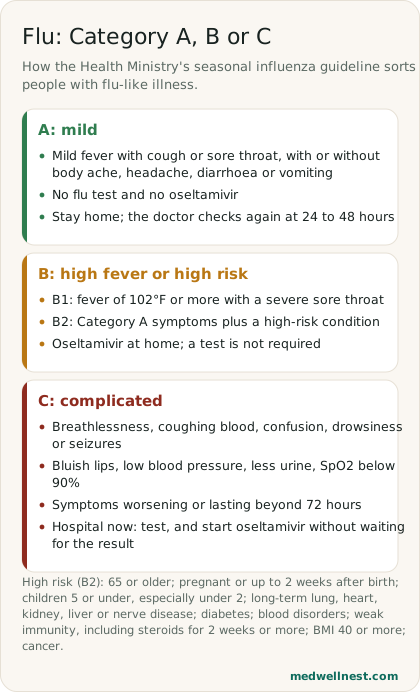
Under the Health Ministry's seasonal influenza guideline, everyone who sees a doctor with flu-like symptoms is placed in one of three categories. Category A is mild: fever with cough or sore throat, with or without body ache, headache, diarrhoea or vomiting. These patients need neither a flu test nor oseltamivir. They are treated for symptoms, stay home, and should be reassessed by the doctor at 24 to 48 hours.
Category B has two parts. B1 is a high fever of 102°F or more with a severe sore throat. B2 is anyone with Category A symptoms who also has a high-risk condition. Category B patients should receive oseltamivir along with treatment for their symptoms and stay home, and the guideline says a test is not required.
Category C is complicated flu: breathlessness, coughing up blood, confusion, drowsiness or poor feeding in children, seizures, passing less urine, symptoms that persist or worsen beyond 72 hours, or a long-term illness getting worse. Signs include fast breathing, oxygen saturation below 90%, low blood pressure and bluish skin. These patients need immediate hospital admission, a flu test, and oseltamivir started without waiting for the result.
04
Who counts as high risk
The guideline's high-risk list, which moves a person with mild symptoms into Category B, is: age 65 or over; pregnancy, including up to two weeks after giving birth; children aged 5 or under, especially under 2; long-term lung, heart, kidney, liver or neurological disease; diabetes; blood disorders, including haemoglobin disorders; weakened immunity, including HIV and steroids taken for 2 weeks or more, and transplant recipients; extreme obesity with a BMI of 40 or more; and cancer.
The WHO's list is very similar: pregnant women, children under 5, older people, people with long-term heart, lung, kidney, metabolic, liver or blood conditions, and people with weakened immunity. The Ministry's home-care guideline asks families to watch people with diabetes, lung disease, obesity or weak immunity especially closely for worsening, and notes that most bad outcomes follow late arrival at hospital.
06
Care at home, and the flu vaccine
For Category A and B, the Ministry's home-care guideline says to stay home for seven days, preferably in a well-ventilated room away from others, wear a mask, avoid visitors, wash hands often and drink plenty of fluids. Paracetamol is used for fever and aches in the supportive care the protocol describes.
The WHO calls vaccination the best way to prevent flu, and recommends it every year because protection fades. It advises yearly vaccination for pregnant women, children aged 6 months to 5 years, people over 65, people with long-term conditions and health workers. The vaccine may work less well in older people, but it makes illness less severe and lowers the chance of complications and death.
There is no separate swine flu vaccine. The seasonal vaccine covers it: every current WHO-recommended vaccine composition listed in the national 2026 advice includes an H1N1 strain. That advice says the Northern Hemisphere vaccine matches the circulating strains best, but that the Southern Hemisphere vaccine may be used if the Northern one is not available.
When to act
Routine — see a doctor
Mild fever with cough or sore throat and no high-risk condition (Category A): stay home, rest and drink fluids. The guideline asks for a doctor's review at 24 to 48 hours; go back sooner if you get worse.
Same-day — call promptly
Flu symptoms with a fever of 102°F or more and a severe sore throat, or any flu symptoms if you are 65 or over, pregnant, a young child, or have diabetes, lung, heart, kidney or liver disease or weak immunity: see a doctor today. Oseltamivir works best within the first 48 hours.
Emergency — act now
Breathlessness, chest or belly pain or pressure, coughing blood, confusion, severe drowsiness, seizures, bluish lips, very little urine, or symptoms that have not improved, or are getting worse, after 72 hours: go to hospital now. In a child, also fast or difficult breathing, refusing feeds or drinks, or a high fever with a rash or cold hands and feet.
Values mentioned in this story
Each one opens a visual guide with its normal range and what moves it — upload a report and we place your own numbers on the same scale.
Sources
- Guidelines on categorization of seasonal influenza cases during screening (25.02.2019) — Health Ministry / NCDCncdc.mohfw.gov.in
- Clinical Management Protocol for Seasonal Influenza (revised 25.02.2019) — Health Ministry / NCDCncdc.mohfw.gov.in
- Guidelines for Providing Home Care, seasonal influenza (revised 25.02.2019) — Health Ministry / NCDCncdc.mohfw.gov.in
- Composition of the influenza vaccine for the 2026 season — NCDCncdc.mohfw.gov.in
- Influenza (seasonal) — WHO fact sheetwho.int
- Treating flu with antiviral drugs — CDCcdc.gov
Share this story
Curious where your own values stand?
Two minutes from upload to a full visual picture. Free to analyze.