In short
After 28 weeks the NHS advises going to sleep on your side, left or right, for every sleep including naps. Studies link going to sleep on the back with a higher chance of stillbirth, but waking on your back is not a danger: turn over and carry on. A baby moving less is a reason to call.
Emergency if: Your baby is moving less than usual, you cannot feel your baby moving, or the usual pattern has changed: call your midwife or maternity unit now, at any hour, even in the middle of the night. If you cannot reach them, go to an emergency department now. The NHS says not to wait until the next day.
On this page
01
Which side should I sleep on in pregnancy: left or right?
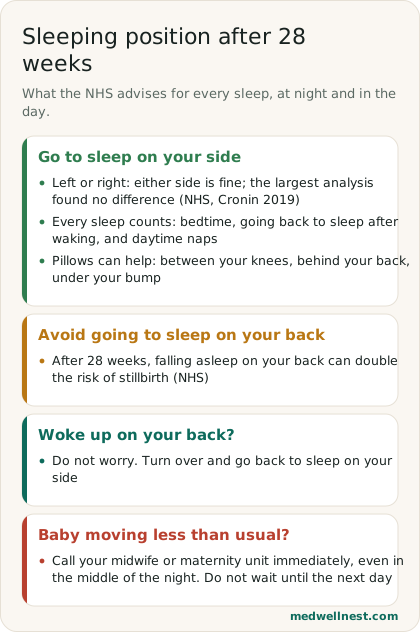
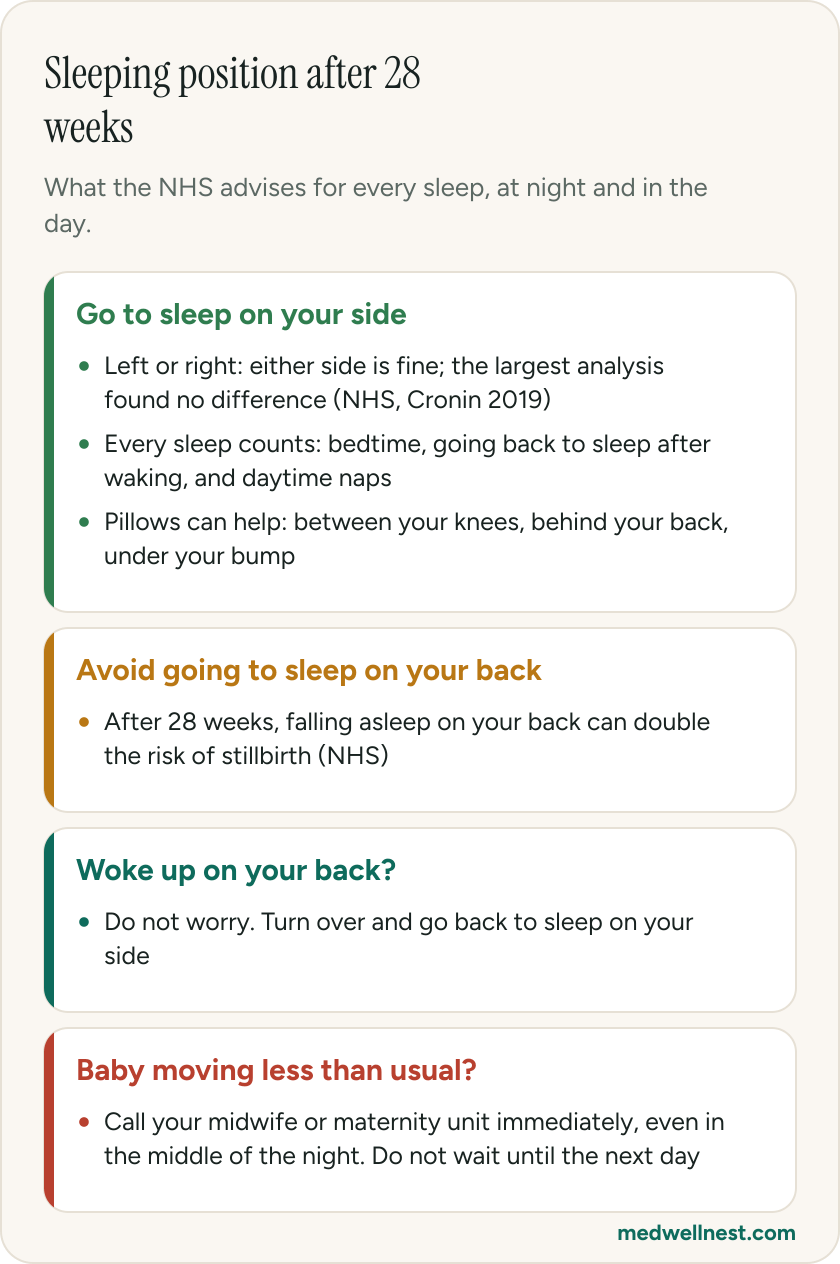
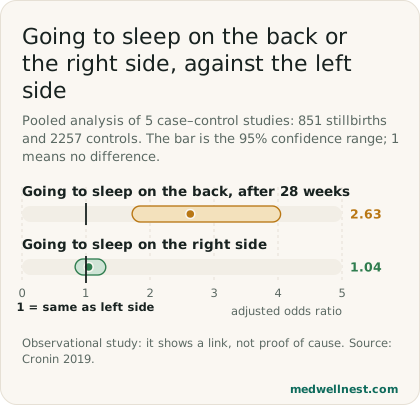
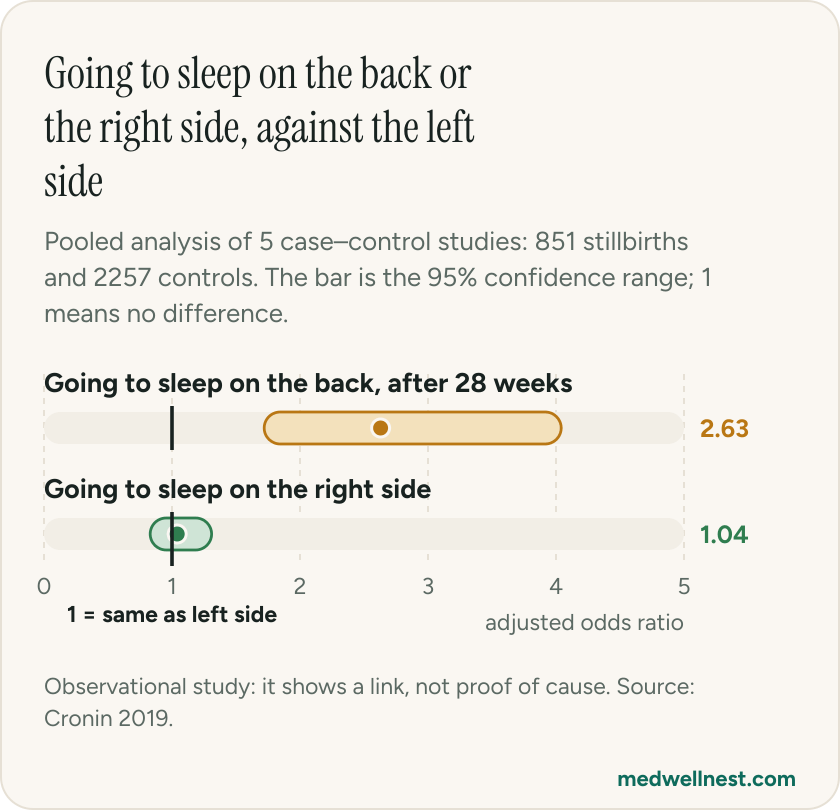
Either side. The NHS says the safest position to go to sleep is on your side, either left or right. The research agrees: the pooled analysis by Cronin and colleagues (2019) found that going to sleep on the right side had similar odds to the left side, and the MiNESS study did not find a difference in risk between the right and the left. One earlier study had shown more risk on the right, but as the other three studies did not, the Sleep On Side campaign launched with MiNESS recommends that women can go to sleep on either side.
So the idea that only the left side is acceptable is not what these sources say. Pick the side that is comfortable, and use pillows to stay there: the NHS suggests supporting your bump with pillows and putting a pillow between your knees, and the MiNESS tips add a pillow or pillows behind your back to encourage side-sleeping.
02
Is it safe to sleep on my back after 28 weeks of pregnancy?
It is safest not to go to sleep on your back after 28 weeks. The NHS says that after 28 weeks, falling asleep on your back can double the risk of stillbirth, which may be to do with the flow of blood and oxygen to the baby. The MiNESS study found that women who went to sleep on their back had a 2.3-fold increased risk of late stillbirth (after 28 weeks) compared with women who went to sleep on their side. It compared 291 pregnancies that ended in stillbirth with 735 women who had a live birth.
The Cronin pooled analysis combined five case–control studies, one of them MiNESS, with 851 stillbirths and 2257 comparison pregnancies. Its figure below is therefore not a separate result that disagrees with the 2.3-fold above: it pools MiNESS with four other studies and compares back sleeping with the left side only, and MiNESS's 2.3 falls inside its range. Compared with going to sleep on the left side, going to sleep on the back had an adjusted odds ratio of 2.63 (95% confidence range 1.72 to 4.04). Going to sleep on the back was reported by 7.9% of women whose baby was stillborn and 3.2% of the comparison women. The authors estimated that late stillbirth could fall by 5.8% if every pregnant woman from 28 weeks settled to sleep on her side, and MiNESS estimated 3.7%; that is, roughly 4 to 6 of every 100 late stillbirths might be avoided.
Both the research and the advice are about the position in which you go to sleep. The MiNESS researchers say they cannot say for certain why the risk is increased; one theory is that the weight of the baby and womb presses on the main blood vessels that supply the womb and may restrict blood flow, and others include disturbed breathing during sleep. These sources do not address lying on your back for a short time while awake.
03
I woke up on my back. Is my baby in danger?
No. The NHS says not to worry if you wake up on your back, and that you can turn over and go to sleep again on your side. The MiNESS summary explains why: the going-to-sleep position is the one held longest during the night, so women should not be concerned about waking on their back and should simply roll back onto their side.
The advice applies to every sleep in the third trimester, not only the first one at night. MiNESS lists going to sleep at night, returning to sleep after night wakenings, and daytime naps, and says to pay the same attention to position by day as by night. If you wake in the night, check your position and settle on your side again.
04
How big is the risk, and what do the studies not show?
These are observational studies: they compare women whose baby was stillborn with women whose baby was not, and they show a link, not proof of cause. The Cronin authors describe back sleeping as independently associated with late stillbirth and found no significant difference in the link by baby size, mother's weight or smoking, so they say it can be considered a contributing factor in all pregnancies. It is one factor among many: the researchers estimated that if every woman went to sleep on her side from 28 weeks, late stillbirth would fall by about 4% (MiNESS's 3.7%) to 6% (Cronin's 5.8%), the two estimates given above.
That is the reason the advice is a simple habit rather than a reason for alarm. Going to sleep on your side costs nothing, and the sources suggest it may lower the chance of a rare event. It also means a night spent partly on your back is not something to be frightened about.
05
What should I do if my baby moves less than usual?
Call your midwife or maternity unit immediately. The NHS says to call if your baby is moving less than usual, if you cannot feel your baby moving, or if the usual pattern changes, and not to wait until the next day, even in the middle of the night. It adds that there is no set number of movements you should feel and that you do not need to count kicks; the aim is to get to know your baby's usual pattern. It says not to use a home heartbeat listening device, because even if you hear a heartbeat it does not mean your baby is well. Our guide to baby movements sets this out in more detail.
When to act
Emergency — act now
Your baby is moving less than usual, you cannot feel your baby moving, or the usual pattern has changed: call your midwife or maternity unit now, at any hour, even in the middle of the night. If you cannot reach them, go to an emergency department now. The NHS says not to wait until the next day.
Same-day — call promptly
You are 24 weeks pregnant and have never felt your baby move: tell your midwife today. The NHS says they will check your baby's heartbeat and movements.
Routine — see a doctor
You cannot get comfortable on your side, you keep waking on your back, or poor sleep is bothering you: talk to your midwife or doctor at your next visit. The NHS says sleeplessness with feelings of hopelessness or loss of interest can be a sign of depression, and treatment can help.
Sources
- Tiredness and sleep problems in pregnancy — NHSnhs.uk
- Your baby's movements — NHSnhs.uk
- New research confirms the risk of stillbirth is doubled if women go to sleep on their backs in the third trimester (MiNESS) — NHS hospital trustmft.nhs.uk
- An individual participant data meta-analysis of maternal going-to-sleep position and the risk of late stillbirth — Cronin et al., EClinicalMedicine (2019)pmc.ncbi.nlm.nih.gov
Share this story
Curious where your own values stand?
Two minutes from upload to a full visual picture. Free to analyze.